Sunday, August 25, 2013

The "Apartheid Roads" Clip Is Back

I was informed that a clip I had posted some two and a half years ago, showing that the claim of the existence of "apartheid roads" is patently false in that you saw Israeli-licensed cars and Palestinian Authority-licensed vehicles traveling on the same road was gone (how, I do not know).
So, here's a new one from today. that I shot:


Okay, it's too shaky and a bit amateurish, but I was in the backseat and this is what one gets.

Jews and non-Jews on the same road, Highway 60, from Shiloh towards Jerusalem.

If you watch closely, or stop the clip to check, you'll notice that the three cars in front of us have PA plates and half the cars passing us going north are also with PA plates.

^

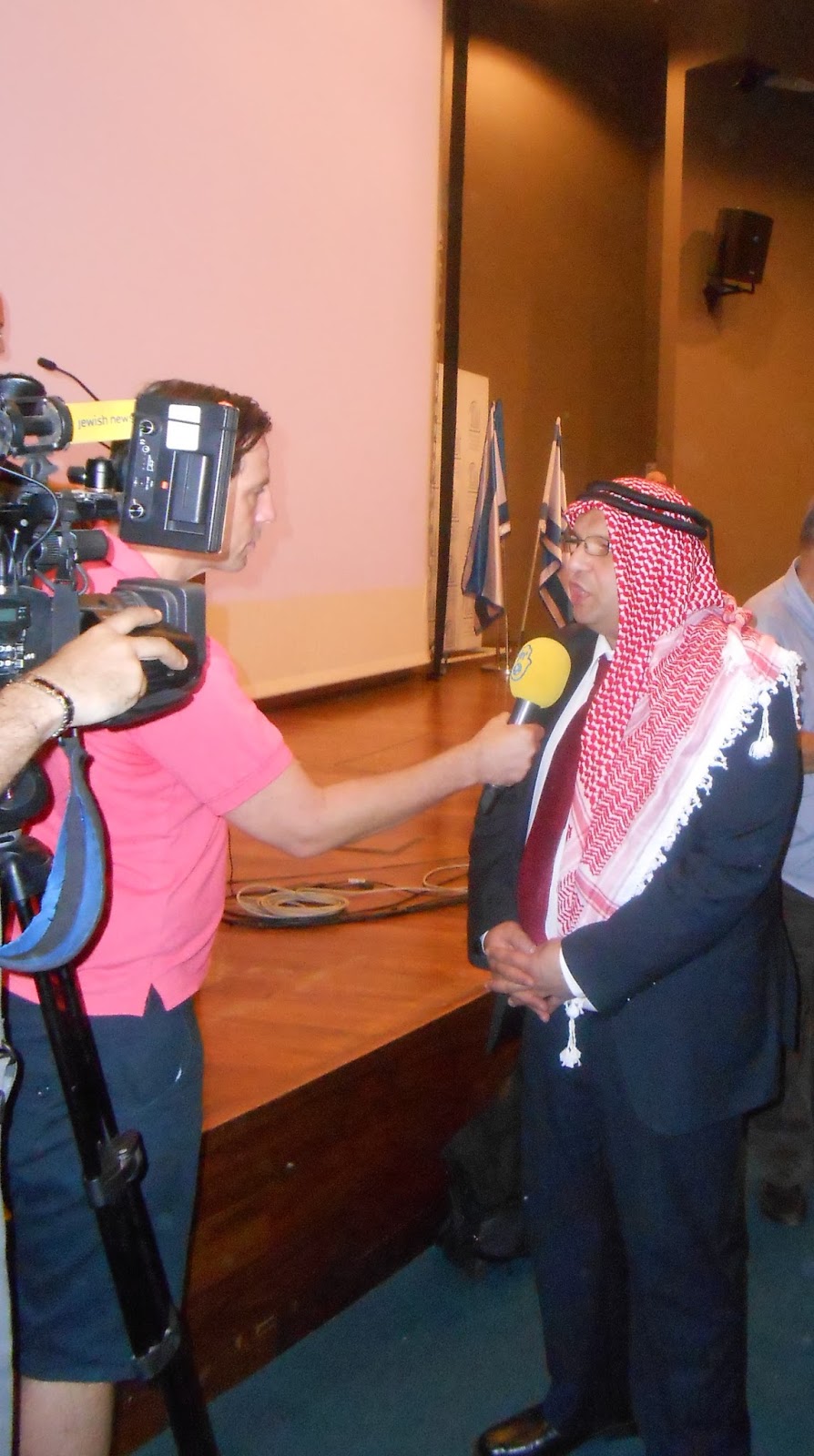
A Kaffiyeh at the Begin Center

The Professors for a Strong Israel held a conference today and one of the more noticeable participants was Mudar Zahran


The conference was held at the Menachem Begin Heritage Center which was simply the venue, as a rented hall.

But the picture is worth the mention.


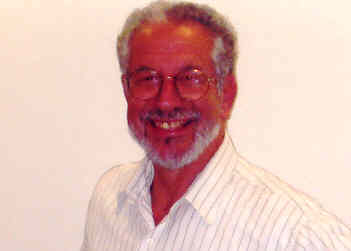
Another


^

CNN Carries An Untruth

IsraellyCool alerted us to a CNN story about the timeline of the 1978 Camp David peace accords between Israel and Egypt that claims that the Camp David Accords called for an end to Israeli settlements in the West Bank. And that "that part about the settlements and the transition is a bold-faced lie." 

How do we know?

Well, first of all, review the text.  The term "settlements" doesn't even appear.

And secondly, here is from Khaled Elgindy's Oslo and the Settlements: How the Oslo Accords Enabled Continued Settlement Growth.  He was a visiting fellow at the Brookings Institution’s Saban Center for Middle East Policy. He previously served with the Negotiations Support Unit in Ramallah as an advisor to the Palestinian leadership on permanent status negotiations with Israel (2004 –2009).


...the Oslo Accords, including the 1993 Declaration of Principles (“DOP”) and the 1995 Interim Agreement as well as subsequent agreements and protocols, did not deal directly with the issue of Israeli settlements, either with regard to their legal status (i.e., under international humanitarian law) or in terms of limiting their continued expansion.

...Oslo’s failure to bring about a genuine settlement freeze led to unprecedented settlement growth and severely undermined prospects for a negotiated two-state solution...we can identify at least three fundamental flaws in Oslo’s handling of Israeli settlements, which have had far-reaching implications:

...First and most obviously, the Oslo Accords failed to include an explicit reference to ending (or even limiting) Israeli settlement activity in the Occupied Palestinian Territories. Indeed, while Palestinians frequently cite continued settlement activity as a “violation of Oslo,” successive Israeli governments have assiduously pointed out that Oslo contains no reference to a settlement freeze as such...

That seems fairly clear so how did CNN flub it?

...the Oslo Accords deferred any resolution of the settlements, Jerusalem and other core issues of the conflict for a period of several years. Article V of the DOP (reiterated in Article XVII (1(a)) of the Interim Agreement) provided for a five year “transitional period” during which negotiations would take place on all remaining so-called “permanent status” issues, including Jerusalem, refugees, settlements, security arrangements, borders and other bilateral matters...not only did Israel continue to expand settlements throughout the interim period, the indefinite postponement of a permanent status agreement meant it would continue doing so indefinitely.

...Another problematic aspect of the Accords is their (and by extension, the PLO’s) implicit acceptance of Israeli definitions of key terms, including “settlements”, “West Bank” and “Jerusalem”. Article XII(5) of the Interim Agreement states:

For the purpose of this Agreement, “the Settlements” means, in the West Bank the settlements in Area C; and in the Gaza Strip – the Gush Katif and Erez settlement areas, as well as the other settlements in the Gaza Strip, as shown on attached map No. 2.

Meanwhile, Article XI(3)(c) defined “Area C” as “areas of the West Bank outside Areas A and B… except for the issues that will be negotiated in the permanent status negotiations…” [i.e., settlements and Jerusalem].

In addition, although the terms “West Bank” and “Jerusalem” were not expressly defined, various references throughout the agreement to “the Palestinian people of the West Bank, Jerusalem and the Gaza Strip” (Preamble, Article III(3), Article IV) make clear that these constitute separate and distinct geographic designations. In other words, whereas Palestinians (and international law) consider East Jerusalem an integral part of the West Bank, the Oslo agreements treat “Jerusalem” and “West Bank” as distinct and mutually exclusive geographic entities, in conformity with standard Israeli definitions and usage.

This has far reaching implications indeed. By lending de facto recognition to Israeli-defined “Jerusalem”, including the 70 square kilometers of the West Bank annexed by Israel in 1967 to unilaterally expand the Jerusalem municipality, both Oslo and its PLO negotiators confer a degree of legitimacy to Israel’s annexation of East Jerusalem, thereby undermining the legal basis for territorial negotiations—the 1967 line—as well as Palestinian claims to Jerusalem. In practical terms, it meant that the dozen or so settlements located within Israeli-defined municipal Jerusalem, at the time comprising 54% of the settler population, were not counted as settlements under Oslo. More importantly, this state of affairs applies not only to the interim period, but also to the Oslo-defined future permanent status negotiations. In other words, when it came time to negotiate the permanent fate of the settlements, Israel could claim (and indeed has done so consistently) that Jewish “neighborhoods” within Israeli municipal Jerusalem were simply not on the table as they are not “settlements”...

More here and also here.


^

Palestine, No; Southern Syria, Yes!

You might have read my posts [here; and here; and also here;] on the fact that the Arabs of the area of the Palestine Mandate did not consider themselves "Palestinians" but Southern Syrians into the 1920s, at least.

JT just sent me this, which I seemed to have missed from the minutes of the League of Nations Permanent Mandate Commission annual report for 1925 on Palestine and Transjordan, held in Geneva in June 1926.

Arab Grievances.

M. PALACIOS, returning to the concrete questions of a general character of which the Arabs complained, recalled those concerning the national title, the national hymn and the flag. These were really thorny questions, like all sentimental and patriotic questions, regarding which it was necessary to observe complete prudence and tact.

As regards the first point, the Arabs claimed that it was not in conformity with Article 22 of the Mandate to print the initials and even the words "Eretz Israel" after the name "Palestine" while refusing the Arabs the title "Surial Janonbiah" [
Suriyya al-Janubiyya]("Southern Syria"). The British Government had not accepted the use of this Arab title, but gave the place of honour to the Hebrew word used for 2,000 years and decided that the official name in Hebrew was "Palestina" followed by the initials signifying "Aleph Jod", the regular Hebrew name. Was the question still under discussion and could the accredited representative give the Commission any further information?

Colonel SYMES explained that the country was described as "Palestine" by Europeans and as "Falestin" by the Arabs. The Hebrew name for the country was the designation "Land of Israel", and the Government, to meet Jewish wishes, had agreed that the word "Palestine" in Hebrew characters should be followed in all official documents by the initials which stood for that designation. As a set-off to this, certain of the Arab politicians suggested that the country should be called "Southern Syria" in order to emphasise its close relation with another Arab State.


 ^

First Volume of New Series of Jabotinsky's Writings

The first volume in a planned 20-volume series of Ze'ev Jabotinsky's selected writings has appeared.


The contents of the volume, entitled Liberal Nationalism, the first of two volumes on the subject, which is in Hebrew, are as follows:

Forward
Translator's Note - Peter Kriksonov
Introduction - Arieh Naor
On the Free Masons, the Jesuits and Clericalists
On Manners in the Clericalist Press
From the Apocrypha
The Blank Page
On Matters of Clericalism
The Wizard of Words and the Humanity's Knight
Gabriele
Ben-Lefet, the Supreme Human
Letter from Naples
Revenge and True Justice
About Criminologists
On Prisoners' Work Details
The Peace League
Emile Zola's Contributions
The Left Foot
Why I Get Angry
On the Essence of Arguing
Old Truths
On Nationalism
A Letter on Autonomy
On Russia's Federation System
A Conversation with GV Plekhanov
An Introduction to Karl Renner's Staat und Nation
On Curiae
Self-Government of a National Minority


It is just over 250 pages with index.

A second one on the same subject is now being edited and the next three are two on Eretz-Yisrael and on on Anti-Semitism.
 
All articles that previously appeared in other editions have been retranslated as errors were made and in many instances, sections of the original Russian article was left out.

^


Saturday, August 24, 2013

Jimmy Carter's 1000 Year Peace Right of Israel

I found this in the minutes of the July 20, 1977 meeting between then US President Jummy Carter and then Israel Prime Minister Menachem Begin:


Where have I read that "1000 year" phrase before?

^


Ceding Territory Tested

Found this:

When is a Treaty Ceding Territory Not a Treaty Ceding Territory?

by Julian Ku


I am not sure if it is a trend, but recently several nations have raised dubious legal claims  over territory that was ceded away by treaty.  For instance, Spain has zero legal claim to Gibraltar, as far as I can tell, unless the 1713 Treaty of Utrecht ceding it to Britain “in perpetuity” can be wished away.  Bolivia has zero legal claim to the port it seeks from Chile, unless the 1904 treaty ceding it to Chile can be ignored as well.  And in the latest example, Nicaragua is raising a claim to portions of territory it ceded to Costa Rica, despite having signed a clear treaty of cession doing so.

The problem with this trend is obvious.  If treaties can’t settle territorial claims because they can always be reopened later, then the utility of having the treaty in the first place is decreased substantially. This poses a danger to the whole point of having international law for defining territorial boundaries.  I expect and hope the ICJ will reject these silly but dangerous claims in the Bolivia case.  But the broader international law community should be worried about this trend as well.

Now, you may think this would support a negative critical view of Israel in the future.  That is, if Israel cedes territory to the to-be-established-state-of-Palestine, perhaps a future government would demand that territory's return.

Of course, there is another way of looking at it.

Before the state of Israel was established, the World Zionist Organization accepted the first partition (Sykes-Picot) of the Jewish homeland, and then in 1922, the second, when TransJordan was removed from the ability of Jews to move there and reside there and then in 1947, the UN Partition, which the Arabs refused to accept in principle, as they did with an earlier suggestion in 1937.

Territory was handed back in 1957 to Egypt after the Sinai Campaign, in 1981 in the framework of the Egypt-Israel Peace Treaty and to Jordan in 1994.

But the ceding of territory has not halted the Arab demands for all of Israel.

Even if Israel cedes territory, does that not only not placate Arabs but they will they at some future date perhaps renew hostilities.

After all, that's what happened in 2005 and the Gaza Disengagement.

^

Friday, August 23, 2013

A Simple Question Regarding "Civilians"

Every week (for how long I know not), a report is issued called

     Protection of Civilians Weekly Report

Here is the latest, from 13 - 19 August 2013.

The word "Israelis" appear but only in the context of actions supposedly done by Jewish citizens of Israel against local Arab residents.

Similar material can be found at this site, at this page.

It is the site of  the OCHA office.

And that office is

"in the occupied Palestinian territory (oPt) [and] was established in late 2000...in response to the deteriorating humanitarian situation in the West Bank and Gaza caused by military incursions and closures - mobility restrictions imposed on the Palestinian civilians, local and international service providers. OCHA-oPt aims to improve the humanitarian situation by enhancing coordination between agencies to ensure effective distribution of humanitarian assistance. It also enhances coordination and decision making through its dissemination of humanitarian information and analysis of facts.  Their work includes: Inter-Agency Coordination, Humanitarian Information, Advocacy and Policy support, and Area Field Coordination."


There are, it would seem, no or very few Jewish civilians in Judea and Samaria.


That is a bit of an oversight.

I found this here, though:

Confrontations occurred this week between Israelis and Palestinians in the Old City of Jerusalem, when a group of Israelis entered and toured the yards of Al Aqsa Mosque compound. Three Palestinians were arrested after verbal clashes with the Israelis. Earlier in the week, tens of Israelis demonstrated in the Old City, protesting restrictions imposed by the Israeli authorities on non-Muslims to enter the Compound during the holy month of Ramadan.

During the period, Israeli media reported that Palestinians threw Molotov cocktails at an Israeli bus south of Nablus city. No injuries or damages were reported

I found this here:

Owing to its strategic location, Israeli settler groups have in recent years made persistent efforts to take over land and property in Sheikh Jarrah in order to establish new settlements in the area. In another incident on 25 July, Palestinians threw stones at a number of Israeli buses traveling near the Old City of East Jerusalem, injuring four Israelis.

Somehow, I do not think these reports reliably reflect on the reality on the ground.

^

^

Refugee Numbers

Read this:

New shame for Syria: One million children displaced from country, says UN

Two UN agencies report that child refugees risk being trafficked and sexually exploited

Children only.

Remind me, how many refugees were supposedly expelled form "Palestinen 1947-48, altogether, men, women and children?

540,000-800,000, maybe?

^

Words of Wisdom

The international community has given almost blanket endorsement to the Arab interpretation of "international legitimacy" as it pertains to the West Bank, meaning that the 1967 lines should be the border of Palestine...giving it, as I say, the aura of "revealed truth."

In fact, most world leaders have spent the past generation building up and inflating Palestinian expectations. Consequently, Palestinian demands have not been modified or moderated since the advent of the Oslo process; in fact, they have hardened.

Even Washington has sinned in this regard. President Barack Obama began talking about the 1967 lines (with some itsy-bitsy land swaps) as something sacrosanct five years ago, and Secretary of State John Kerry may have assured the Palestinians of America's support for the 1967 lines "as the basis of a Palestinian state" too...By adhering to this fraudulent "revealed truth" and robing it in ardent legalism, the West unhelpfully encourages Palestinian obduracy, and strips the peace process of any realism.

As a result, the Palestinian Authority has no need to compromise..

Israeli governments over the last 20 years share some of the blame for this sad state of international opinion on the Israeli-Palestinian conflict. Israel chose not to engage in exhausting yet essential debates on the legal rights conferred upon the Zionist endeavor by the League of Nations, or on the unsanctioned amputation of Transjordan in 1922 from the Mandate, or on the transient nature of the 1949 armistice lines (which the Arabs never recognized as borders -- until they lost control of the territories), or on the accurate meaning of Resolution 242, or the legal status of the Gaza Strip and the West Bank before 1967 as "Res Nullius" ("no one's property")...


^

Let's Get Facts As Accurate As Possible

As we all know, or should know, this, published here, is wrong:

Militants had bombed the King David Hotel in Jerusalem 

This, though, is quite historically accurate and correct:

Militants had bombed the the Mandate Secretariat and the offices of the Bristish Army in Palestine HQ in the southern wing of the King David Hotel in Jerusalem which had been appropriated by the British in 1939 and in which no tourist or civilian was located, except for the employees of the Mandatory government offices, a government that had reneged on its international commitment to reconstitute the Jewish national home, facilitate immigration to it and assist with close settlement on the land.

Not only wrong but misconstrued, misrepresented and twisted.

Is that what propaganda is?

^

Al-Aqsa To Collapse?

Methinks this fellow is either premature, expressing a self-fulfilling prophecy or just trying to be provocatively anti-Zionist for the sake of it.

The "news":-


The story:

 
Sheikh Yusuf Adeis, head of the Supreme Court and chairman of the Supreme Judicial Council for the Sharia Judiciary in Palestine, said that the Al-Aqsa Mosque is suffering from Jewish daily attacks.
 
"The Jews are desecrating Al-Aqsa through the repeated raids into its courtyards and the continued excavations under it, in addition to preventing the Muslim worshipers from performing their religious rites there," Adeis said in a press statement on Thursday, on the 44th anniversary of the burning of Al-Aqsa mosque.

He added that "all indicators and data confirm that the collapse of Al-Aqsa Mosque is close. This is confirmed by the successive collapses in Al-Aqsa mosque and its surroundings, the latest of which was the collapse that took place on Wednesday night in Housh Asila, which is 20 meters away from the Selsila gate, due to the continued excavations."

Sheikh Yusuf Adeis pointed out that the occupation authorities, in coordination with the Municipality Jerusalem, the Israel Antiquities Authority and leaders of extremist Jewish groups, are trying to divide the Al-Aqsa Mosque in preparation for demolishing it and building the alleged temple on its ruins.

He also warned that the Israeli authorities are taking advantage of the current conditions in the Arab region to implement its plans that aim to Judaize Jerusalem and its holy sites and to displace its indigenous population.

As much as I sympathize with his concern, for my own reasons, and others, too, I think only an earthquake will radically alter the situation in our favor in the near future.

But you never know when an earthquake strikes. 

362, 746, 1016, 1033, 1546, 1927.

On 1927.

^

A Very Graphic Jerusalem Novel

This book


has reached Jerusalem.

From a Ha-Ha-Haaaretz interview in April

“It’s not a memoir, and of course it does not purport to be a work of history,” Jewish-American film director Boaz Yakin ‏(“Fresh,” “Remember the Titans”‏) tells me at the outset of our conversation. He’s referring to his new graphic novel, “Jerusalem: A Family Portrait,” which tells the story of a family that lives in the Holy City from 1945 to 1948. “The book is influenced by the stories of my father, the mime and theater teacher Moni Yakin. He used to tell me and my younger brother stories about his childhood in Mahaneh Yehuda. But it’s a fictitious work − I used stories I heard from him and from other family members as a springboard for this story.” 

“This story” is a simultaneously intimate and panoramic work which is light-years away from the blockbusters for which Yakin, 46, is responsible as a Hollywood screenwriter, producer and director. Large-scale productions such as “Prince of Persia: The Sands of Time,” for which Yakin wrote the screenplay ‏(the film grossed more than $300 million in 2010‏), or “Safe” ‏(2012‏), which he wrote and directed, are aimed at the widest possible audience. 

For its part, “Jerusalem” investigates and deconstructs national myths and challenges its readers with a fragmentary, dense narrative featuring 12 protagonists. The result is a singular interpretation of historical events, most of them set in 1948, such as the siege of Jerusalem, the Deir Yassin massacre and the Battle of Latrun. The vivid artwork, by New York cartoonist Nick Bertozzi, turns the novel into an almost cinematic experience for the reader. 

Why has a successful director and screenwriter − one of whose first screenplays became Clint Eastwood’s film “The Rookie” ‏(1990‏) − chosen to publish a graphic novel set in Mandate-period Jerusalem?
“This project went through numberless incarnations,” Yakin tells me in an Upper West Side cafe, not far from the apartment he shares with his wife, the Tel Aviv-born Alma Har’el ‏(director of the acclaimed 2011 documentary “Bombay Beach”‏). “I was born and raised in New York, but my parents grew up in Israel,” he relates. 

“They both left the country − before they met − in the 1950s in order to study under pantomimist Marcel Marceau in Paris,” he continues. “They met in Paris, fell in love, and later moved to New York. But it was important for them to give me and my brother a Zionist education, and both of us attended a Zionist yeshiva.
“I knew that my mother’s whole family perished in the Holocaust, but every summer we went to Israel to visit the family on my father’s side. At the beginning of the 1990s, I started to conduct a comprehensive study of my father’s family. They came to Palestine from Syria at the end of the 19th century and settled in Jerusalem’s Yemin Moshe neighborhood, before moving to Mahaneh Yehuda [then predominantly a lower-class neighborhood, now known for its open-air market].

...the screenplay of ‘Jerusalem’ lay on the shelf,” he says. “It was an ambitious script of 200 pages, and I was certain it would never see the light of day. But then Jordan Mechner, who developed the ‘Prince of Persia’ computer game, put me in touch with Mark Siegel, from First Second Books [which publishes graphic novels]. They persuaded me to turn the script into a book.”

...“Jerusalem” moves away from the tradition of comic-book heroes and draws inspiration from graphic novels that tackle historical traumas, notably Art Spiegelman’s acclaimed “Maus,” which deals with the Holocaust.


“Jerusalem” is a portrait of a city fighting for its identity in the period just before Israel’s establishment. It focuses on the members of the fictional Halaby family...Ezra, Avraham, Motti and David − cannot abide British rule in the Land of Israel and become rebels, each in his own way. Avraham, for example, believes in Jewish-Arab coexistence and maintains close relations with the residents of the village of Deir Yassin, on the western edge of Jerusalem. Ezra, for his part, becomes an underground fighter who has no qualms about hurting innocent people in his desperate quest for revenge. He takes an active part in the conquest of Deir Yassin, in April 1948. 

Ezra is, of course, Ezra Yakin,  His own memoir, Elnakam, appears in English, too.  That way, you can get to know the reality and truth.

...Were there people in your family who took part in the conquest of Deir Yassin, like the character of Ezra in the novel?
 
“I met people like that and I also interviewed them. I have two relatives who participated in the conquest of Deir Yassin, and I spoke with them before writing, but the character of Ezra is not based on any of those people. He is a fusion of people I spoke to, and of testimonies I read.” 

The depiction of the massacre at Deir Yassin is one of the most violent scenes in the book. Ezra and his comrades enter the village in the dead of night and, using loudspeakers hooked up to trucks, call on the villagers to flee to Ein Karem, which was then a Palestinian village situated in the valley below. In Yakin’s version of events, the Jewish fighters encounter shooting and unexpected resistance by the village’s inhabitants. 

Their hysterical response makes use of all the weapons at their command.They open fire, throw grenades and employ explosives. At the height of the attack, Ezra and his friend Biram run into three people from the village. Suddenly, a woman armed with a pistol leaps out of a dark corner and shoots Biram, killing him. Ezra, who has a shrapnel wound in his eye, shoots the woman. [the real Ezra loses an eye on the attack on the walls of Jerusalem]

In the next scene, Ezra’s brother, David, who has joined the Haganah (the official prestate force and the forerunner of the Israel Defense Forces), arrives from the Arab village of Kastel, outside Jerusalem. A British soldier tells him, “Looks like your bloody terrorists had themselves a jolly old time ... I hear it was a pretty little massacre.” 

Against the background of a drawing of a refugee convoy, David and others from the Haganah collect the bodies of the Deir Yassin villagers in a heap, pour fuel on them and set them afire. 

“This is not a history book,” Yakin emphasizes again when asked whether he had no qualms about presenting his own illustrated version of one of the most controversial events in the War of Independence. “Nor is it an autobiography or a memoir. I was not at Deir Yassin, of course. I realized from the outset that there are numberless versions of that event, mainly because it was used as propaganda by both sides. I knew that no matter what I did, I would never be able to please everyone. But in general, my book is about the loss of innocence, both of human beings as individuals and of Israel as a nation. It is about understanding that you cannot survive without getting your hands dirty. The story of Jerusalem, and the story of the Halaby family, is a story of survival. Numberless people − Jews and Arabs − were killed in the years that led up to the state’s establishment. As a creative artist, I am not trying to single out suspects and determine who is to blame. I want to translate these historical numbers into human stories and characters that people can identify with.”

...Some people will probably say that your novel is another addition to the “shooting and crying” genre − works that seek to identify with the side of the conqueror.
“I think that is a very cynical way to read ‘Jerusalem,’ and I don’t agree with it. I find the very term ‘shooting and crying’ problematic and cynical. If you shoot and don’t cry, you are not a human being. Furthermore, art – and literature in particular – is capable of forging a space for emotional outlet and for observing reality critically. I think directors such as Ari Folman and Joseph Cedar are the moral conscience of Israeli society, because they make it possible for society to cope with its past in a manner that is both emotional and complex. Israelis don’t have the privilege of making John Wayne-type Westerns where there are ‘good guys’ and ‘bad guys.’ Violence exacts a steep price, and all the sides pay it. In any event, if my novel will be mentioned in the same breath as ‘Waltz with Bashir,’ I will regard that as a compliment.”

...The novel is packed with characters, events and information. Do you think American readers, or people who lack extensive knowledge about Israel’s history, will realize that what you are offering is one interpretation among many?
“From my point of view it is first of all a story, so what’s most important is for it to be interesting. When we decided to publish it as a book, I considered the possibility of adding footnotes of historical information. But I quickly realized that this would distract people from the reading experience. I also like the idea that readers feel a bit bewildered and helpless, just like the characters. The years that preceded Israel’s establishment were a turbulent period, in which every day brought new events. I wanted to recreate the feeling in which the onrush of events sweeps you up and you don’t have time to stop and figure out who’s against whom.”
Indeed, the reader sometimes feels a need to go back and reread in order not to lose his way amid the abundance of events and characters. Bertozzi’s vivid illustrations, in shades of black, white and gray, are able to transport the reader from a relaxed comic scene in which Motti, the youngest son of Izak Halaby, is memorizing Shakespearean monologues while working as a carpenter and installing sets in a local theater, to a scene in which Ezra hides weapons in the courtyard of the family’s home. I asked Yakin whether the character of Motti, who at the end of the novel becomes a Shakespearean actor, is based on his father. “Yes and no,” he replies. “Motti is a creative, very energetic youth, like my father was as a boy, and he too acted in a production of ‘A Midsummer Night’s Dream.’ But, like the other characters, he is a fictitious fusion of a few real people.”

...Did you also identify with Ezra, who murders quite a few people in the novel?
“Yes. When I started to work on the screenplay of ‘Jerusalem,’ it was largely in response to the education I received in an ultra-Zionist yeshiva in New York. My teacher was Rabbi Shlomo Riskin, who later moved to Israel and became one of the founders of the settlement of Efrat. In retrospect, I realize that I grew up in a highly effective propaganda machine. When I look back today on things I thought and said at age 17, it is obvious to me that I was completely influenced by pressures of my surroundings. It took me a long time to develop independent thinking. I think that the Jews live within a mythic narrative, which also dominates the education system. It takes a long time before you can look at events critically and develop a perspective.
“Thinking mythically hinders critical observation and makes reality – which consists of nuances – shallow,” he continues. “Another problem with the Jewish myth is that it perpetuates the idea that everything that happened to the Jews is the result of external forces that are stronger than they are. But, as I said, reality is more complex and everyone is responsible for what happens to him, even if there are particular external circumstances. Each person brings something to the table, and in the encounter between cultures there is a collision between those things. We need to acknowledge what each side brings with, in internal conflicts and not only in those that are external.”

...Yakin’s “schizophrenic childhood” helped him become a sensitive screenwriter and author. In “Jerusalem,” he creates a world in which all the characters lead double lives. It’s a world of secrets and lies: you need to lie constantly in order to protect the family, and that need takes the form of silences, tensions and quarrels in which no one is able to express his true feelings. Asked whether the Halaby family recalls his own family, Yakin offers another ambivalent reply: “My family was always a subject of fascination for me. We are a group of people, each of whom has a different take on things, especially when it comes to Israel and to politics. But despite the differences, it was always clear that we are one family. There is a love that binds us all, and the same is true for the Halaby family. At the same time, it was important for me to describe a historical situation in which no one talked about what happened in real time. Everyone had to live with his own secrets, and you couldn’t talk about anything.”

^

Thursday, August 22, 2013

Picture of Today's Temple Mount Jewish Visitors


Boys of the Bet Shean Yeshiva with their Rav, Shlomo Shushan.

^

And In What Country Is Jerusalem?

Here is a list from a UNESCO decision.  Note "Jerusalem":-

The World Heritage Committee,
1. Following the examination of the state of conservation reports of properties inscribed on the List of World Heritage in Danger (WHC-12/36.COM/7A and WHC-12/36.COM/7A.Add),
2. Decides to maintain the following properties on the List of World Heritage in Danger:
    • Afghanistan, Minaret and Archaeological Remains of Jam (Decision 36 COM 7A.25)
    • Afghanistan, Cultural Landscape and Archaeological Remains of the Bamiyan Valley (Decision 36 COM 7A.26)
    • Belize, Belize Barrier Reef Reserve System (Decision 36 COM 7A.15)
    • Central African Republic, Manovo-Gounda St Floris National Park (Decision 36 COM 7A.1)
    • Chile, Humberstone and Santa Laura Saltpeter Works (Decision 36 COM 7A.33)
    • Colombia, Los Katíos National Park (Decision 36 COM 7A.16)
    • Côte d'Ivoire, Comoé National Park (Decision 36 COM 7A.2)
    • Côte d'Ivoire / Guinea, Mount Nimba Strict Nature Reserve (Decision 36 COM 7A.3)
    • Democratic Rep. of the Congo, Virunga National Park (Decision 36 COM 7A.4)
    • Democratic Rep. of the Congo, Kahuzi-Biega National Park (Decision 36 COM 7A.5)
    • Democratic Rep. of the Congo, Garamba National Park (Decision 36 COM 7A.6)
    • Democratic Rep. of the Congo, Salonga National Park (Decision 36 COM 7A.7)
    • Democratic Rep. of the Congo, Okapi Wildlife Reserve (Decision 36 COM 7A.8)
    • Egypt, Abu Mena (Decision 36 COM 7A.20)
    • Ethiopia, Simien National Park (Decision 36 COM 7A.9)
    • Georgia, Bagrati Cathedral and Gelati Monastery (Decision 36 COM 7A.30)
    • Georgia, Historical Monuments of Mtskheta (Decision 36 COM 7A.31)
    • Honduras, Río Plátano Biosphere Reserve (Decision 36 COM 7A.17)
    • Indonesia, Tropical Rainforest Heritage of Sumatra (Decision 36 COM 7A.13)
    • Iraq, Ashur (Qal'at Sherqat) (Decision 36 COM 7A.21)
    • Iraq, Samarra Archaeological City (Decision 36 COM 7A.22)
    • Islamic Republic of Iran, Bam and its Cultural Landscape (Decision 36 COM 7A.27)
    • Jerusalem, Old City of Jerusalem and its Walls (Decision 36 COM 7A.23.I)
    • Madagascar, Rainforests of the Atsinanana (Decision 36 COM 7A.10)
    • Niger, Air and Ténéré Natural Reserves (Decision 36 COM 7A.11)
    • Peru, Chan Chan Archaelogical Zone (Decision 36 COM 7A.34)
    • Senegal, Niokolo-Koba National Park (Decision 36 COM 7A.12)
    • Serbia, Medieval Monuments in Kosovo (Decision 36 COM 7A.32)
    • United Rep. of Tanzania, Ruins of Kilwa Kisiwani and Ruins of Songo Mnara (Decision 36 COM 7A.19)
    • Uganda, Tombs of Buganda Kings at Kasubi (Decision 36 COM 7A.18)
    • United States of America, Everglades National Park (Decision 36 COM 7A.14)
    • Venezuela, Coro and its Port (Decision 36 COM 7A.35)
    • Yemen, Historic Town of Zabid (Decision 36 COM 7A.24)

"Jerusalem" is in what country?

^

Obama Is Making Statements

Let's do this slowly:

A.

Obama makes a statement


One year ago, President Obama said that the use of chemical weapons in Syria would be a "red line" that if crossed would result in "enormous consequences."

B.

Obama makes a statement
Earlier this year, the United States collected evidence that Assad used sarin gas on his own people, but Mr. Obama said he wanted to gather more evidence before declaring the red line crossed. 

C.

A White House official makes a statement

A White House spokesman on Wednesday said the United States is "deeply concerned" about reports of chemical weapons attacks in Syria and is calling on the United Nations to "urgently investigate" the matter.  At the same time, White House spokesperson Josh Earnest acknowledged that the pressure the United States and its partners has put on Syrian President Bashar al Assad "has not resulted in the outcome that we would like to see, which is Assad being completely removed from power."

What statement is President Obama now making?

It's a statement of vacillation, weakness, unwillingness to confront aggression and immoral actions.

Is this the president Israel can feel secure with facing the PLO, the Hamas, the Islamic Jihad, the Hezbollah?


^

Wednesday, August 21, 2013

Did That Collapse Happen?

Being (reliably/unreliably) reported:-
 
the Al-Aqsa Foundation and Cultural Heritage Organization said that an area collapsed near the western wall of the Al-Aqsa Mosque in Jerusalem late Tuesday. 
The collapse happened near the Bab as Silsila, on the western part of the mosque, according to an eyewitness.

“It is the second collapse near the western wall in 5 years,” Cum’a Usayle, an eyewitness said.

Usayle told Anadolu Agency, ”The collapse has caused a deep hole there. It is dangerous for the Al-Aqsa Mosque. It poses danger especially for children and women.”

No security precautions around the area have been taken by Israeli officials so far. There is also no statement about the event.


Bab-as-Silsileh [the Chain Gate] is the gate out of which Jews (and tourists) must exit when visiting the Temple Mount (why a complete circuit from the and to the Muhgrabi Gate is not permitted I do not know).   And we usually congregate there to sing and dance which is not allowed inside the Temple Mount.

Perhaps the Muslims are trying to create a provocation - "Jews destroying whatever" - so as to restrict even this activity?


_____________

UPDATE

the director of the media department at the Al-Aqsa Foundation Mahmoud Abu Atta said that "about 30 settlers stormed into the early morning hours ago Al Aqsa Mosque, and desecrated the courtyards trying to perform some of their own Talmudic prayers."

UPDATE

EOZ alerted us to some pictures and a story

The landslide occurred last night at the entrance to the house of Mahmoud Asseily in ancient Jerusalem neighborhood Asseily, just twenty meters from one of the doors of the al-Aqsa mosque - causing the creation of hole depth of six meters and a width of twenty meters - is the original arched a building down the neighborhood -


And take this into consideration:

...the Jordanian authorities express their deep concern about the archaeological excavations in the neighbourhood of Silwan;  the digging of tunnels towards the Al-Aqsa Mosque linking the city and the Haram ash-Sharif compound, and the collapses of buildings above. Other excavations are reported to continue in Al-Wad street, on the Western Wall (Al-Buraq) Plaza, below the offices of the Waqf and other buildings nearby, as well as expanding from the Western Wall tunnel affecting buildings such as Al-Manjaqiah, Al-Umariyyah and Al-Jawhariah schools

and this:

Israeli excavations in the Aqsa area began in the 1970s and took the form of tunnels focused on the area adjacent to the outer western wall of the compound. The digging eventually led to several cracks appearing in a number of ancient buildings belonging to the Islamic waqf along the western wall in the area of the Chains, Iron and Qataneen Gates, which date back to the Ayyubid, Mamluk and Ottoman eras respectively.

In 1981, Israeli archaeological digs exposed a well in the western courtyard. At the time, the Israeli archeological department claimed the well was actually a tunnel that extended beneath the Dome of the Rock. Within hours, however, the claim was proven false; what the archaeologists had discovered was a well whose stones dated back to the Mamluk period. In 1984, the excavations led to the collapse of the stairs leading to the waqf offices at the Majlis Gate, and in 1988 to the collapse of the corridor leading to the Ghawanmeh Gate.

Oh, and what is done to the Jews on the Temple Mount?

^


Qutoable Words on Islam

As always, our Islamic society, constantly at odds with itself, blames everyone for our misfortunes. In the days of the Prophet (S.A.A.S.), we blamed the Jews of Khaybar in the Arabian Peninsula for our ills. Now the imams who head the militant Islamist organizations tell us that the Jews, a tiny people who pose no threat to the might of Islam, are responsible for all our ills and for all our failures.

Islamic radicals, however, hate not only the Jews but also the Christians, who have become, we are told, our sworn enemies. Christianity, like Judaism, is also vilified. The history of our hatred for the Christians began with the Crusades, and over the years the same hated Crusaders became the hated European imperialists and the hated colonialists.

Ali Salim

Source


P. S.


the Palestinian model from which to work: when a violent, dictatorial organization tells you its goals and the means by which it plans to achieve them, believe them. When they say they're not democratic, that their ideology precludes a multi-ethnic and multi-religious society, believe them. When violence is part of their mandate and they prove over and over that they are prepared to use it in pursuit of their clearly defined aims, believe them. They are not fit partners for the United States.

Source


^

Uzi Dayan: School Pupils Should Visit the Temple Mount


Uzi Dayan suggests that schoolchildren in Israel must visit the Temple Mount.

An translated extract from the Maariv story:-

Visiting the Western Wall is not enough, and the school children must visit the Temple Mount.  It's only another 150 meters distant.  Yes, even in the political/security reality, they can ascend and if we arranged matters in Hebron, we can do it here, with all the sensitivity.  This is where the roots of the nation are and they must be able to visit there.  A similar place in Europe they'd visit without doubt.  And yes, it's a problem that locations connected with the Biblical narrative are the concern of religious persons solely.  I was raised in a secular environment but when we went on hikes, we took and quoted from the Bible.  And you can learn the material this way better than a Yeshiva student of 20 years study.

_____________

UPDATE

An Islamist response:

Gen. Uzi Dayan - the former deputy commanding general of the Israeli army and head of the National Security Council earlier - called on Israeli students to break into the Al Aqsa Mosque, and even intensify and allocate such intrusions of this site more than others, in the same context to repeat the scenario of the Ibrahimi Mosque in Al-Aqsa Mosque.
For its part, the "Al-Aqsa Foundation" warned against his words and considered them a scheme of the occupation to split the Al-Aqsa Mosque temporally and spatially, noting that these incursions and rituals of different kinds grow the seeds of implementation of the scheme of partition and conversion , and indicated that these calls to "visit the Temple Mount," are in fact crystal-clear terms to raise the frequency and diversity of incursions

 
^

And A Jewish Kingdom in Southern France?

According to this book, Jewish Princedom in Feudal France, 768-900 by Arthur J. Zuckerman, there was a Jewish Kingdom of Septimania in southern France, nestled just north of the Pyrenees, which arose in the eighth century, thriving for 140 years under the rule of six extraordinarily competent Jewish kings.

There is this:

Arthur Zuckerman maintains that Makhir was actually identical with Natronai ben Habibi, an exilarch deposed and exiled...in the late eighth century.[5] Zuckerman further proposed that Makhir(/Natronai) is to be identified with a Maghario, Count of Narbonne.... [and a] William I, Count of Toulouse led Frankish forces at the fall of Barcelona in 803. The account of the campaign in Ermold Niger's Latin poem dates the events according to the Jewish calendar and portrays William as an observant Jew. Count William was son of a Frankish Count of Septimania named Theoderic, leading Zuckerman to conclude that Theoderic was none other than Makhir, and that the well-documented descendants of Theoderic embodied a dynasty of Franco-Judeic kings of Narbonne, representing the union of the lineage of the exilarchs with that of Martel's Carolingians...However, this underlying chain of identifications has been shown to be flawed, a negative opinion shared by other scholars, while the broader suggestions of a Jewish principality in Southern France have likewise been refuted.
 
Where is that?


(Thanks to BT)

^