Showing posts with label Religion. Show all posts

Monday, June 24, 2024

Eighteen Years On

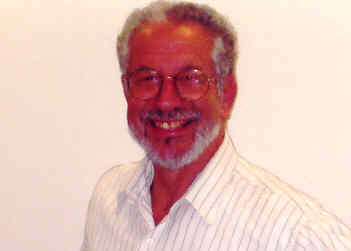
A close friend, N.S., sent me the snippet in which I appeared being interview by Ricard Dawkins in his January 2006 program, Root of All Evil. Earlier posts here, and also here.

"The Root of All Evil", later renamed The God Delusion, is a documentary written and presented by Richard Dawkins in which he argues that humanity would be better off without religion or the belief in any god . The documentary first aired in January 2006, as two 45-minute episodes (excluding commercial breaks), on the UK 's Channel 4 . Dawkins' book The God Delusion, published in September 2006, examines the issues raised in the documentary in greater detail.

Me:

From the transcript:

Dawkins: I’m in Jerusalem’s old city, trying to understand the role deeply-held faith plays in the bitter conflict here. One of the first things you notice is the edgy watchfulness, the different ethnic and religious communities live cheek-by-jowl, but there are security checkpoints throughout the old city, and one section above all is under heavy guard. For the Muslims, the compound enclosing the Dome of the Rock and Al-Aqsa mosque is, after Mecca and Medina, the third holiest site in Islam. It was from here, they believe, that the prophet Mohammad flew up to heaven. As bad luck would have it, the Jews believe the same place is the site of the long-destroyed first and second temples, the holiest shrine in Judaism.

Jews are not allowed to worship inside the compound, their prayers are restricted to the ruined western, or wailing, wall.

Yisrael Medad, Mount of the Lord Advocacy Group: “When Jesus came here to overturn the tables, there was no mosque in view.” “When the Arabs conquered this part of the world, they established the Al-Aqsa mosque.” And then they put over where we think is the main temple compound, where the altar was, where the holy of holy was, they put another building called the Dome of the Rock, it was not properly a mosque, and we at the present moment are simply not allowed in there, inside the compound, identifiably as Jews. 

The Muslims reject these Jewish claims.

Quite short, that. In actuality, we stood at the location overlooking the Kotel for over a half-hour and I think I stood my ground admirably.

Pics I grabbed at the time:


Thank you N.S.

^


Wednesday, July 25, 2012

Bruce Springsteen's Music As A Religious Experience


“A Springsteen show is a lot of things, and it’s partly a religious experience. Maybe he comes from the line of David, a shepherd boy who could play beautiful music, so that the crazy become less crazy and Saul the king finally chills out. Religion is a system of rules and order and expectations, and it unites people in a purpose. There really is a component of Bruce that is supernatural. Bruce is Moses! He led the people out of the land of disco!”

Jake Clemons
(the nephew of)

(for CD)


^

Saturday, January 14, 2012

How Good Is Displaying Religious Belief?

Is

displaying his religious views...and referring to his faith.

good?

“I think he’s doing the right thing...I think that he’s challenging other believers across the league to maybe be more open about their beliefs as well.”

Well, it seems to be in American football.

Politics?

That is another story but as for the Jewish people's connection to the Land of Israel, it works fine.

Sunday, November 13, 2011

A Vital Debate But With Whom?

And who wrote this?

There will be no peace in our world without an understanding of the place of religion within it...

...there are those that insisted that as the Arab revolution knocked over long-established regimes and created movements for democracy, so those societies' religiosity would take second place to the new politics. It hasn't happened. Religion is fundamental to those societies and if anything, in the foreseeable future, will become more so.

And do we seriously think the issue of Jerusalem can be resolved without at least some discussion of its religious significance to all three Abrahamic faiths?

Tony Blair.

And what country fits his bill?

Think:-

Those of us inspired by our faith must have the right to speak out on issues that concern us and in the name of our beliefs...this should lead to a vital debate about the nature of democracy, a debate all the more critical as we witness the Arab revolutions. I find it hard to define democracy by reference to one faith. The essence of democracy is that it is pluralistic. It is inherently secular, even if rooted in cultures that are profoundly religious. This is where democracy-friendly religion really means something very important in the way society is governed. It is about free media; freedom of expression; and about freedom of religion.

Does that outline fit any other country in the Middle East other than Israel?

With whom can Israel debate?

Blair has found the problem, pointed to a solution but nothing can be resolved.

In this situation, should Israel, faced with Temple denial, with identity theft, et al., not to talk about incitement and hostility and ongoing terror, weaken its claims to its national ethos, to its security, to its economic strength?

^

Tuesday, September 13, 2011

Academic Thinking

This goes for wisdom written by David Kyuman Kim and John L. Jackson, Jr.:

For all of the anxious murmurings about the Muslim Brotherhood filling the void left in the wake of Hosni Mubarak’s oligarchic regime, it was not religious extremism that unequivocally won the day but rather an ethos as much in sync with the legacies of Martin Luther King Jr. and Mahatma Gandhi as in dialogue with the reformist efforts of Muslim civil rights groups.

Source: The ANNALS of the American Academy of Political and Social Science, September 2011 vol. 637 no. 1

Luckily, they do realize that

democracy, race, and religion [are] not...“problems” to be solved but rather as a set of inextricably interconnected social, cultural, moral, and political forces that are to be taken up without the illusion that they represent mutually exclusive alternatives...For the political pragmatist, race and religion are causes of concern that enervate democracies. As should be clear by now, we think otherwise. Race and religion can be (though certainly are not always) sources for humanizing democratic possibilities, particularly when giving due consideration to the ways that race and religion serve as sites for the public life of love.

The issue is, as they note, has:

the return of repressed imperial and racial pasts...created conditions for the racialization of religions (including the religions of Abraham — Christianity, Islam, and Judaism) and for their conceptualization as perceived threats to democratic order.

We reply: no.

But Islam is something else.

^

Wednesday, July 15, 2009

The Rabbi, The Bishop and...the Swine Flu

Some tried to make fun of the Gerer Rebbe

The swine flu scare has recently prompted one of the leading spiritual figures of the ultra-Orthodox world to change one of Judaism's time-honored traditions - that of drinking wine together from the same glass.

Yaakov Aryeh Alter, seventh and current rabbi of the Hasidic dynasty of Ger, instructed his disciples in Jerusalem a few weeks ago to toast with individual and disposable plastic cups containing a few drops of wine from the rabbi's own glass.

Hasidic Jews have toasted from the same cup at events and meals for at least 200 years.

The rabbi, who heads the largest Hasidic group in Israel, is known for his sensitivity to health issues. A few years ago, when Israel was gripped by the avian flu scare, he refrained from eating eggs until he received ones specially-imported from abroad.


But it seems religious liquids are seen as problematic:

A bishop has advised that holy water be removed from churches in a bid to halt the spread of swine flu. The Bishop of Chelmsford, the Right Reverend John Gladwin, said at some churches people were invited make a sign of the cross using holy water.

"The water in stoups can easily become a source of infection and a means of rapidly spreading the virus," he said.

Sunday, April 26, 2009

Religiously Motivated

Religiously motivated, many people become monks, nuns, recluses, delusional, prophetic, observant, humanistic, etc.

And others?

Read on:-

Israeli authorities said Sunday they have caught a Palestinian man who killed an Israeli child and wounded another during a rampage in a West Bank settlement early this month. Authorities said Moussa Tayet, 26, confessed to the killing and handed over a knife used in the attack.

The assailant attacked a group of children in the Bat Ayin settlement with the knife and a pickax on April 2. A 13-year-old boy was killed, a 7-year-old was seriously wounded and a third boy escaped. The attacker fled the scene, leaving behind the small, red pickax.

Israeli military and police officials said Tayet was from a village next to the settlement...he meticulously planned the attack for weeks, picking up the weapons from a hiding place as he entered the settlement. They said he told investigators that the attack was religiously motivated.

One Year Difference

I started reading a book review on religion when I noticed the reviewer's info:

Mark Oppenheimer edits The New Haven Review and is the author of “Thirteen and a Day: The Bar and Bat Mitzvah Across America.”


Bar Mitzva is at age thirteen.

Bat Mitzva, though, is at age twelve.

Friday, February 06, 2009

Rain

This year has been a poor one in rainfall.

Out of an average annual rainfall of 550 millimeters - and the past two years have actually averaged only 350 mm. - we have had but 140 mm. until this past week.

We religious/observant Jews have added a special prayer to the morning Silent Devotion prayer these past two months or so.

Well, the farmers, agriculturists and rabbis in the Shiloh bloc area convened a special study/prayer day yesterday on Thursday, including those who undertook to fast.

Here's the flyer:-


13:30 Rav Ben-Tziyon Amar's lecture
14:15 Rav Elchanan Bin-Nun's lecture
15:15 Group study session
16:00 The Mincha afternoon prayer

Sponsored by the Meshek Achiyah company.

Saturday, December 06, 2008

Rav Menachem Froman Makes It into the NYTimes

Isabel Kershner's profile:

From an Israeli Settlement, a Rabbi’s Unorthodox Plan for Peace

Rabbi Froman, 63, is a founding member of Gush Emunim, the ideological, messianic [really?] settlement movement that sprang up after Israel’s conquest of the West Bank, with its biblical landmarks, in the 1967 war...Among his close friends, the rabbi counts not only Mr. Arafat, who was reviled by most Israelis by the time of his death in 2004, but also a wide array of Muslim sheiks. He believes in making peace with his Palestinian neighbors and has engaged in “thousands of hours” of dialogue, he said, with Palestinian leaders, including Mr. Arafat’s rivals in the militant Islamist group Hamas.

Rabbi Froman used to travel to Gaza for talks with Sheik Ahmed Yassin, the spiritual leader of Hamas who was killed in an Israeli missile strike in 2004 after his group spearheaded a years-long suicide bombing campaign that killed scores of Israelis.

The rabbi said he used to shout at the sheik and tell him, “you will go to hell because you are taking Islam, a religion whose name has connotations of peace, and turning it into a religion of terror.”

The sheik would reply that he was only defending himself, Rabbi Froman said.

This is BS.

See this picture here with him smiling and extending his hand, a hand the Sheikh refused to shake.

...he has an intriguing proposition for President-elect Barack Obama. The idea is to bring a delegation of two rabbis, two sheiks and two bishops from Jerusalem and the Holy Land to bless the new president on Inauguration Day, an effort to rekindle faith in the possibility of peace.

“I believe that he was elected by God,” Rabbi Froman said of Mr. Obama. “I want to create an opening for God to perform a miracle here.”

Rabbi Froman, who was born in the Galilee, was pulling hard for Mr. Obama, posting clips on YouTube and praying for his victory at the Cave of the Patriarchs in Hebron on the day of the American election. Now, Rabbi Froman said, he wants to put some practical content into Mr. Obama’s concept of change.

It would be easy to dismiss Rabbi Froman, who peppers his speech with talk of miracles and references to mystical texts, as a maverick, an eccentric and a kook.


You can say that again.

...“The Holy One tossed me into Tekoa,” he said, “because from the rooftops there is 2,500 years of Jewish history looking down on us.”

A settlement of about 250 families just south of Jerusalem, Tekoa has a reputation of being relaxed, with a mixed population of religious and non-religious Jews. It is in the shadow of the flat-topped hill of the Herodion, a fortress cum palace built by Herod the Great.


And when will they toss him out?

“From all my long talks with the Palestinians,” he said, “I came to the conclusion that while the problem is also political, about control over territory and so on, the core of the problem is religious.”

The quest for peace “won’t succeed without a religious, spiritual basis,” he said.


Is Hamas spiritual in its religion? That's the question.

Tuesday, November 18, 2008

The People of Sam'al Practiced Cremation, Israelites Didn't (it's a soul thing)

Found: An Ancient Monument to the Soul

In a mountainous kingdom in what is now southeastern Turkey, there lived in the eighth century B.C. a royal official, Kuttamuwa, who oversaw the completion of an inscribed stone monument, or stele, to be erected upon his death. The words instructed mourners to commemorate his life and afterlife with feasts “for my soul that is in this stele.”

University of Chicago archaeologists who made the discovery last summer in ruins of a walled city near the Syrian border said the stele provided the first written evidence that the people in this region held to the religious concept of the soul apart from the body. By contrast, Semitic contemporaries, including the Israelites, believed that the body and soul were inseparable, which for them made cremation unthinkable, as noted in the Bible.

Circumstantial evidence, archaeologists said, indicated that the people at Sam’al, the ancient city, practiced cremation. The site is known today as Zincirli (pronounced ZIN-jeer-lee).

Sunday, October 19, 2008

And Who Is Arrogant?

One C. Alex Alexander has this opinion, after reading an interview with Edgar Bronfman, Keeping the Faith (October 5, 2008):-

...the intellectual arrogance of most Westerners like him who may still believe in the creation myth of the Book of Genesis. The best scholarly estimate of Moses’s existence is dated around 1400-1500 B.C.E., while we know that the Code of Hammurabi preceded the Ten Commandments. Besides, the Vedas of Hindus (1500 B.C.E.) influenced the laws of precolonial India; the sayings of Confucius (fifth century B.C.E.) and Taoism (fourth century B.C.E.) formed the basis of the civilizations and laws of the Far Eastern countries.


Hmmm.

Let's look at the second law of Hammurabi's Code which reads, "If any one bring an accusation against a man, and the accused go to the river and leap into the river, if he sink in the river his accuser shall take possession of his house. But if the river prove that the accused is not guilty, and he escape unhurt, then he who had brought the accusation shall be put to death, while he who leaped into the river shall take possession of the house that had belonged to his accuser."

Would the Laws of Moses be a bit more palpable? Even better? Who is being aarogant?

Of course, while the 10 Commandments were given to Moses, Jewish practices were already evolving from the time of Abraham, if not before. The obligation of circumcision predates Mt. Sinai.

If Mr. Alexander wishes to be an athiest or whatever, fine. Just don't go around arrogantly bashing the religious.

Saturday, July 19, 2008

Guess It Didn't Really Work Out Well

A groundbreaking interfaith conference this week ended on a sour note, with a political spat between Muslims and Jews that Saudi organizers wanted to avoid.

Hopes of a follow-up meeting appeared to be dashed.

...televised exchanges between Jewish Rabbis and Muslim participants went too far, according to one Middle Eastern diplomat.

"This was too much, it crossed the line," said the diplomat, who asked not to be named.

These two participants are not Jews

(real but for illustrative purposes only; no anti-nonJewish feelings intended)


Organizers played down a discussion on Zionism between Ezzeddin Ibrahim, an adviser to the president of the United Arab Emirates, and Rabbi Marc

Schneier, North American chairman of the World Jewish Congress, which drew media attention.

"UAE Official Attacks Zionism at Saudi Conference," read a headline in the New York Sun newspaper (see this).

"People said I attacked Zionism, I did not," Ibrahim told reporters, adding that no interfaith conference would be complete without Jews.(*)

Schneier also gave a strong defense of Israel in a debate on Thursday, after a Muslim participant referred to Zionists.

"The fact there are some discrepancies, some differences between participants, that's normal," said Abdullah Al Turki, Secretary General of the Muslim World League organizers.


==================================

(*)

Here's from the report:-

But after a day’s worth of speeches by Christian, Jewish, Muslim, and Hindu leaders, in the middle of the fourth two-hour conference session, a government official from the United Arab Emirates urged Muslim leaders to avoid the company of Zionists.

“We have to distinguish between Judaism and Zionism,” the official, Izzeddin Mustafa Ibrahim, who is listed on the program as an adviser on cultural affairs to the president of the U.A.E., said. “Zionism is a political system. Judaism is a religion.”

He continued: “I can speak to pacifists but not bellicists, who are in favor of war.”

Mr. Ibrahim, a Muslim scholar of Christianity who said he has met with three popes in the interests of Christian-Muslim relations, then continued: “I have only one minute left,” referring to the amount of speaking time allotted to him, and finished off his statements with a broad appeal to begin a “Judaic and Islamic dialogue.”

“I believe it has to start,” Mr. Ibrahim said, referring to such a dialogue.

A New York rabbi, Marc Schneier, then took the lectern but did not directly respond to Mr. Ibrahim’s statements about Zionism. He spoke of outreach efforts in North America between imams and rabbis.

In an interview outside the conference room, however, another New York rabbi denounced Mr. Ibrahim’s remarks “as the same old rhetoric that has led to more hatred and the building of a wall between the Jews and the Muslims for the last 60 years.”

“Being anti-Zionist is the new canard for being an anti-Semite,” the rabbi, Jay Rosenbaum of Temple Israel in Lawrence, N.Y., said.

Sunday, September 09, 2007

Thank God for Freud, God

...in his last completed book, “Moses and Monotheism,” something new emerges. There Freud, without abandoning his atheism, begins to see the Jewish faith that he was born into as a source of cultural progress in the past and of personal inspiration in the present. Close to his own death, Freud starts to recognize the poetry and promise in religion.


...In his last book, written when he was old and ill, suffering badly from cancer of the jaw, Freud offers another perspective on faith. He argues that Judaism helped free humanity from bondage to the immediate empirical world, opening up fresh possibilities for human thought and action. He also suggests that faith in God facilitated a turn toward the life within, helping to make a rich life of introspection possible.


...Judaism’s distinction as a faith, he says, comes from its commitment to belief in an invisible God, and from this commitment, many consequential things follow. Freud argues that taking God into the mind enriches the individual immeasurably. The ability to believe in an internal, invisible God vastly improves people’s capacity for abstraction. “The prohibition against making an image of God — the compulsion to worship a God whom one cannot see,” he says, meant that in Judaism “a sensory perception was given second place to what may be called an abstract idea — a triumph of intellectuality over sensuality.”

If people can worship what is not there, they can also reflect on what is not there, or on what is presented to them in symbolic and not immediate terms. So the mental labor of monotheism prepared the Jews — as it would eventually prepare others in the West — to achieve distinction in law, in mathematics, in science and in literary art. It gave them an advantage in all activities that involved making an abstract model of experience, in words or numbers or lines, and working with the abstraction to achieve control over nature or to bring humane order to life. Freud calls this internalizing process an “advance in intellectuality,” and he credits it directly to religion.


Judaism, on the other hand, never let go of the great renunciation. The renunciation, according to Freud, gave the Jews remarkable strength of intellect, which he admired, but it also made them rather proud, for they felt that they, among all peoples, were the ones who could sustain such belief.

Freud’s argument suggests that belief in an unseen God may prepare the ground not only for science and literature and law but also for intense introspection. Someone who can contemplate an invisible God, Freud implies, is in a strong position to take seriously the invisible, but perhaps determining, dynamics of inner life. He is in a better position to know himself. To live well, the modern individual must learn to understand himself in all his singularity. He must be able to pause and consider his own character, his desires, his inhibitions and values, his inner contradictions. And Judaism, with its commitment to one unseen God, opens the way for doing so. It gives us the gift of inwardness.


Source.

Tuesday, September 04, 2007

The Jewish State's State Broadcasting Network

Several secular coworkers view Revah as a harmless curiosity. Others are very angry over what they see as missionary activity in a public workplace.

"The Broadcasting Authority is a public body and there is nothing wrong with it housing a synagogue on the premises," Shklar said. "Bringing a Torah scroll to the authority is a welcome move, because a synagogue without a Torah scroll is not a synagogue."

A former Broadcasting Authority senior executive thinks otherwise. "It's a scandal. It's forbidden to bring worshipers into a broadcasting facility, especially near the news department. It will start with prayers on the High Holy days, continue on regular Saturdays and then there will be a suit filed to stop broadcasting on Saturdays because it disrupts the service. So long as people sought a prayer corner in the workplace it was okay. Now they're starting to say they will pray in the Nakdi studio. Because the whole residential area around the authority is religious, who knows how it will end."


Source

Friday, May 11, 2007

A Little Religion

Read this, carefully:-

“Sometimes you don’t want to offend people who don’t believe in the Lord,” Fisher told reporters Thursday. “But I definitely think last night was some form of divine intervention.”


In other words, your own level of observance can tolerate and maybe be improved by acknowledging and respecting the non-observance of others.

Well, this comes from a basketball player who came late to a playoff match in Utah after already missing one game due to his insistence that he be with his infant daught for an eye operation in New York.

Story here.

Thursday, March 29, 2007

Is Religion That Negative a Force?

Excerpts from Believers are away with the fairies by AC Grayling who argues that we'd be better off without religion and that religion has lost respectability.

There is an increasingly noisy and bad-tempered quarrel between religious people and non-religious people in contemporary society.

It has flared up in the past few years, and has quickly taken a bitter turn. Why is this so?

...Until very recently...Most believers did not brandish their faith publicly, society had become increasingly secular in most major respects, and memories of the past's murderous religious factionalisms had bequeathed a reluctance to revive the problem. The latter's lingering consequences in Northern Ireland anyway served as a distasteful warning.

But all the major religions have become more assertive, more vocal, more demanding and therefore more salient in the public domain.

...There are two main reasons for the hardening of responses by non-religious folk.

One is that any increase in the influence of religious bodies in society threatens the de facto secular arrangement that allows all views and none to coexist. History has shown that in societies where one religious outlook becomes dominant, an uneasy situation ensues for other outlooks; at the extreme, religious control of society can degenerate into Taliban-like rule.

Look at the period in which liberty of conscience was at last secured in Christian Europe - the 16th and 17th centuries. It was an exceptionally bloody epoch: millions died as a result of a single church's reluctance to give up its control over what people can be allowed to think and believe.

The famous Treaty of Westphalia in 1648 accepted religious differences as the only way of preventing religion from being an endless source of war. Religious peace did not come straight away, but eventually it arrived, and most of Europe for most of the years since 1700 has been free of religiously motivated strife.

But this is under threat in the new climate of religious assertiveness.

...The absolute certainty, the unreflective credence given to ancient texts that relate to historically remote conditions, the zealotry and bigotry that flow from their certainty, are profoundly dangerous: at their extreme they result in mass murder, but long before then they issue in censorship, coercion to conform, the control of women, the closing of hearts and minds.

...Religion has lost respectability as a result of the atrocities committed in its name, because of its clamouring for an undue slice of the pie, and for its efforts to impose its views on others.

Where politeness once restrained non-religious folk from expressing their true feelings about religion, both politeness and restraint have been banished by the confrontational face that faith now turns to the modern world.

This, then, is why there is an acerbic quarrel going on between religion and non-religion today, and it does not look as if it will end soon.