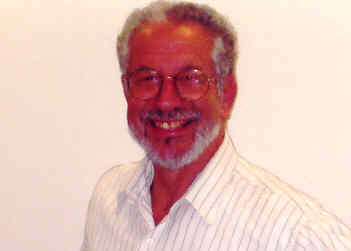
First, say hello to Eliezer Speter,our Holland horserider:
And say hello to our almost-inebriated Professor Ely Merzbach:
and as the day wears on, we have yet another day, Shushan Purim to eat, drink and make merry as our Rabbi is in doubt when the wall at Tel Shiloh existed, we get a bit unable to tell Mordechai from haman:
And my wife's video clip:
^
Showing posts with label Purim. Show all posts
Thursday, March 08, 2012
Tuesday, March 22, 2011
A Serious Purim Torah Based on a Zoharic Passage
The holiday of Purim this year fell within the lead-up to the weekly Torah portion of "Shmini".
The Zoharic commentary of the portion of "Shmini" includes these illuminations:
The link between the Torah portion for this week and the holiday of Purim would seem to be obvious.
At the time of the events of Purim, the Temple had not yet been rebuilt. The prominence of wine in the Megilla would seem to point to a major intervention based on the need to reveal a secret, a secret the jews at the time were uncomfortable with, perhaps, for that is why they subverted themselves to the King's command to participate in the feast despite the problems involved.
As this Chabad source explains:
As the Zohar makes clear, the quality of wine is its ability to release a person from restraints, from elements he would much rather keep secret. It removes barriers and in our specific case, caused the true Jewish voice to be raised and sounded.
Jerusalem is the great secret of the Megilla. God is not mentioned in the text and Jerusalem is mentioned once, in Chapter 2:
Jerusalem's downtrodden status as a razed city, with the Jewish people in exile is the opposite of what the normal position of the Jews should be. And in their Persian exile, they are confronted with a choice: to reveal the secret of Jewish existence, of Jewish essence or to drink the wine of the nations. Do they raise a voice, in all sorts of ways, do they exhibit their Judaism?
And due to the good deeds of a few, due to their wisdom, due to their 'right' - ish yemini - not only are the physical condition of the Jews protected, not only do they naturally and properly respond to the threats against them by defending themselves and subsequently assuring their security but by their actions also assure that the Temple will be rebuilt by first honoring Jerusalem by adding the second day which is defined by 'walled cities at the time of Yehoshua Bin-Nun' and then having the Persian King Cyrus declare the freedom to return to our holy city.
^
The Zoharic commentary of the portion of "Shmini" includes these illuminations:
64) Wine, oil, and water come from one place. The priests take the water and oil from the right and inherit them. Oil, Hochma, more than anything, is joy in the beginning and in the end, unlike wine, which ends in sadness...And wine, which is to the left, is what the Levis inherit, to raise the voice and to sing, and not to keep silent, since wine is never silent and oil is always in a whisper.
65) What is the difference between oil and wine? Oil is in secret and always in a whisper. It comes from the thought, Hochma, like an undisclosed thought. Hence, oil is from the right.
Wine is to raise the voice; it is never silent. This is because the drunk cannot keep silent. It comes from the side of Ima, from the left of Bina, and it is inherited by the Levis, which are to the left, and are ready to sing and to raise the voice. They are in judgment...
66) For this reason, when a priest begins to work at the Temple, he is forbidden to drink wine, since his actions are secretive. He comes secretly and makes unifications...And it is all in secret, for all his deeds are hidden. This is why he is forbidden to drink wine, which reveals secrets, because when wine enters, a secret exits, and in all his deeds, he is about to raise his voice.
Oil extends from Hochma, right, and AVI are always in covered Hassadim [acts of good and kindliness]. And the oil is in concealment and in secret, for it does not appear in illumination of Hochma. And from there the priests extend.
The wine is from the left of Bina that returned to being Hochma, illumination of Hochma, which reveals the Hassadim and sounds them. Hence, the wine reveals a secret. It raises the voice because voice is Hassadim and the wine reveals the Hassadim, for the outward appearance is tantamount to raising one’s voice. Hence, the priest, whose every action is in secret and in hiding, since he extends from Hochma and Hesed, is entirely right and covered Hassadim. This is why he is forbidden to drink wine, for he must be like his root above.
The link between the Torah portion for this week and the holiday of Purim would seem to be obvious.
At the time of the events of Purim, the Temple had not yet been rebuilt. The prominence of wine in the Megilla would seem to point to a major intervention based on the need to reveal a secret, a secret the jews at the time were uncomfortable with, perhaps, for that is why they subverted themselves to the King's command to participate in the feast despite the problems involved.
As this Chabad source explains:
This is one more reason why he made such a pompous feast. He felt secure and powerful, so much so that he did not hesitate to adorn his tables with the precious and sacred vessels of the Holy Temple, which had been captured by the wicked Nebuchadnezzar.
Like all other nations, the Jews also were invited to attend the King's feast. This was Haman's plan; he saw an opportunity of luring the Jews into eating non kosher food and then using G-d's momentary anger at His people for the persecution and destruction of the Jews which he had been planning.
Mordechai, the great Jewish leader at that time, was aware of this sly scheme. He exhorted the Jews to avoid the palace and thus avert G-d's anger. The vast majority of the Jews followed his advice, but many Jews did not heed his words of caution. They went to the feast at the palace. To their consternation they discovered the holy vessels of the Temple on the King's tables, and they drew back. But the King quickly commanded his servants to set up tables especially for the Jews. The Jewish guests swallowed their pride and remained for the feast, eating and drinking the non kosher food and wine, and making merry like the other guests.
As the Zohar makes clear, the quality of wine is its ability to release a person from restraints, from elements he would much rather keep secret. It removes barriers and in our specific case, caused the true Jewish voice to be raised and sounded.
Jerusalem is the great secret of the Megilla. God is not mentioned in the text and Jerusalem is mentioned once, in Chapter 2:
5-6: - 5 There was a certain Jew in Shushan the castle, whose name was Mordecai the son of Yair the son of Shimi the son of Kish, a Benjamite, 6 who had been carried away from Jerusalem with the captives that had been carried away with Yechoniah king of Judah...
Jerusalem's downtrodden status as a razed city, with the Jewish people in exile is the opposite of what the normal position of the Jews should be. And in their Persian exile, they are confronted with a choice: to reveal the secret of Jewish existence, of Jewish essence or to drink the wine of the nations. Do they raise a voice, in all sorts of ways, do they exhibit their Judaism?
And due to the good deeds of a few, due to their wisdom, due to their 'right' - ish yemini - not only are the physical condition of the Jews protected, not only do they naturally and properly respond to the threats against them by defending themselves and subsequently assuring their security but by their actions also assure that the Temple will be rebuilt by first honoring Jerusalem by adding the second day which is defined by 'walled cities at the time of Yehoshua Bin-Nun' and then having the Persian King Cyrus declare the freedom to return to our holy city.
^
Sunday, March 20, 2011
Hamataschen Recipe
From the NYTimes:-
Hamantashen With Poppy Seed
Time: 2 hours 15 minutes, plus at least 1 hour refrigeration
FOR THE DOUGH:
1 cup confectioners’ sugar
2 large egg yolks
8 ounces unsalted butter at room temperature, in small pieces
Grated zest of 1 lemon
2 1/4 cups all-purpose unbleached flour
Dash of salt
1 large egg, beaten, for the glaze
FOR POPPY SEED FILLING:
1 cup milk (or not if you want parve)
1/2 cup sugar
Grated zest of 1/2 orange
1 cup poppy seeds
1/3 cup raisins
Juice of 1/2 lemon
1/2 tablespoon brandy
1/2 tablespoon orange liqueur
1/2 tablespoon butter (or not if you want parve)
1/2 tablespoon vanilla extract.
1. Put the confectioners’ sugar and the egg yolks in a food processor and blend. Add butter and lemon zest and process to blend. Gradually add the flour and the salt, pulsing until it forms a ball. Cover with plastic wrap and refrigerate for an hour or overnight.
2. Meanwhile, prepare the filling: Put milk, sugar and orange zest in a saucepan over medium heat. Grind poppy seeds in coffee grinder. When mixture is warm, turn heat to low and add poppy seeds and raisins. Cook until the seeds absorb the milk and the mixture is thick, about 15 minutes. Add the lemon juice, brandy, orange liqueur and butter. Stir and cook for 2 minutes more. Stir in the vanilla extract, remove from the heat and cool.
3 Preheat the oven to 350 degrees. Line 2 pastry sheets with parchment paper.
4. Roll out the dough to 1/4-inch thickness and use a cookie cutter or glass to cut 3-inch circles. Put a heaping teaspoon of the filling in the center of each, and press up the sides to form triangles. Brush the tops with beaten egg.
5. Bake until golden and dough is delicately firm all the way through, about 15 minutes. If trays are on different racks, switch them after about 10 minutes.
Yield: About 30 cookies.
Note: You can skip Step 2 and use the recipe for chocolate chip cream filling.
Don't foget to eat them. They are not for show.
More recipes.
Hamantashen With Poppy Seed
Time: 2 hours 15 minutes, plus at least 1 hour refrigeration
FOR THE DOUGH:
1 cup confectioners’ sugar
2 large egg yolks
8 ounces unsalted butter at room temperature, in small pieces
Grated zest of 1 lemon
2 1/4 cups all-purpose unbleached flour
Dash of salt
1 large egg, beaten, for the glaze
FOR POPPY SEED FILLING:
1 cup milk (or not if you want parve)
1/2 cup sugar
Grated zest of 1/2 orange
1 cup poppy seeds
1/3 cup raisins
Juice of 1/2 lemon
1/2 tablespoon brandy
1/2 tablespoon orange liqueur
1/2 tablespoon butter (or not if you want parve)
1/2 tablespoon vanilla extract.
1. Put the confectioners’ sugar and the egg yolks in a food processor and blend. Add butter and lemon zest and process to blend. Gradually add the flour and the salt, pulsing until it forms a ball. Cover with plastic wrap and refrigerate for an hour or overnight.
2. Meanwhile, prepare the filling: Put milk, sugar and orange zest in a saucepan over medium heat. Grind poppy seeds in coffee grinder. When mixture is warm, turn heat to low and add poppy seeds and raisins. Cook until the seeds absorb the milk and the mixture is thick, about 15 minutes. Add the lemon juice, brandy, orange liqueur and butter. Stir and cook for 2 minutes more. Stir in the vanilla extract, remove from the heat and cool.
3 Preheat the oven to 350 degrees. Line 2 pastry sheets with parchment paper.
4. Roll out the dough to 1/4-inch thickness and use a cookie cutter or glass to cut 3-inch circles. Put a heaping teaspoon of the filling in the center of each, and press up the sides to form triangles. Brush the tops with beaten egg.
5. Bake until golden and dough is delicately firm all the way through, about 15 minutes. If trays are on different racks, switch them after about 10 minutes.
Yield: About 30 cookies.
Note: You can skip Step 2 and use the recipe for chocolate chip cream filling.
Don't foget to eat them. They are not for show.
More recipes.
Thursday, April 23, 2009
Purim, Jesus and Antisemitism in the Times Literary Supplement
Here:-
Sorry, couldn't find the original article online.
Purim
Sir, – Robert Fraser’s essay concerning Sir James Frazer’s response to the misappropriation of his work by anti-Semites was an interesting sidelight on the influential scholar’s life and work (Commentary, April 10). But Fraser distorts Sir James when he summarizes the argument that the Easter story may be linked to the version of the killing of the mock king found in the Purim story and associated rituals, which included the hanging of a Haman surrogate or burning of an effigy. Fraser states that Sir James “was at pains to argue” that in the year in question (the year of Jesus’ crucifixion) Passover and Purim “happened to coincide”. Frazer makes no such argument, as reference to the abridged edition of The Golden Bough, edited by Robert Fraser, makes clear.
Frazer points out that one objection to linking the crucifixion with the death of Haman is that Purim and Passover are a month apart (Purim is celebrated on the 14th of Adar and Passover on the 14th of Nissan). Frazer offers several “considerations” to overcome the objection. One is that Christians deliberately changed the date of Christ’s death from Purim to Passover. Another is that “occasionally, for special reason, the Jews should have celebrated . . . Purim, or at least the death of Haman, at or about the time of Passover” in keeping with parallel rituals in the Saturnalia that gave the mock king “licence of thirty days before he was put to death”. But Frazer, ever the cautious writer, offers no argument in support of these suppositions; he merely is throwing out “some hints and suggestions...in the hope of stimulating and directing further inquiry”.
MARTIN GREEN
609 West 114th Street, New York, New York 10025.
Sorry, couldn't find the original article online.
Thursday, March 26, 2009
Thursday, March 12, 2009
Rest Of Purim Pics
Some fuel:

Our local plumber disguised as a blockage:
The grill:
Grandson Yochai
Granddaughter Porat
Sabba and Yochai
Daughter and Yochai and Granddaughter Hallel
Purim Trance
Yesterday, Shushan Purim, the second day of Purim celebrated as the Purim in Jerusalem, I passed by the Nahla'ot neighborhood on the way to the Machaneh Yehudah shuq and fell upon this:
I didn't ask but these happy Jews are probably from the local Carlebach community.
Enjoy.
Enjoy.
Wednesday, March 11, 2009
Purim At Shiloh
The famous Mincha Afternoon Minyan
The Rosh Yeshivah Areleh Harel being escorted home
The Kedusha of the Mincha Service
Tuesday, March 10, 2009
A Bit of Religious Intolerance and Terror
It's Purim.
So, how do the Arabs celebrate?
1.
2.
So, how do the Arabs celebrate?
1.
Every year Jewish and Palestinians worshippers are allowed 10 days [when they are allowed full access by themselves] at the holy cave. On Monday Jewish prayer-goers arrived to find their holy books vandalized during one of the Muslim days of worship at the cave.
According to Arnon, the incident was not the first to occur. "After every such day we gather shards and appraise the damage. This time the damage occurred to prayer and psalm books; in the past it was mezuzot, furniture, pipes, and faucets," he said.
He added that complaints had been filed before, to no avail. "No one has ever been interrogated or brought to justice. No sanctions exist to prevent such incidents," he said...
Police launched an investigation...
...Spokesman for the Jewish settlement in Hebron, Noam Arnon, claimed a double standard was at play. "If Quran books had been torn up I have no doubt the case would be handled drastically and immediately, but when it's damage done to Jewish holy sites there is disregard and whitewashing," he said.
2.
Two Qassam rockets were fired Monday morning from the Gaza Strip into the western Negev. One rocket landed in an open area in the Sdot Negev Regional Council, without causing injuries or damage.
The second rocket hit an open area near a kibbutz south of Ashkelon. There were no injuries, but the kibbutz fence sustained damage.
Sunday, March 08, 2009
You're Invited To A Drag Purim Party
Pasted up in Jerusalem.
"Rebbitzen" Hadassah Gross is throwing a Purim Party...in Drag:
Tuesday, Erev Shushan Purim, 9:30 PM at the Mabada.
Can't wait to see Vashti (here and here)
"On the seventh day, when the heart of the king was merry with wine." And till then, what did he do? Was he not till then merry with wine? Said Rabha: The seventh day was Sabbath. When Israelites eat and drink on Sabbath, they begin with sayings of the Law and praises to God; but the nations, when they feast, speak about women. These said the Medians are beautiful, and those said the Persian women are more fair. And Ahasuerus said to them: The one that I have is neither Median nor Persian, but Chaldean, and she is fairer than they all; and if you wish you can see her. They said: Yea, we wish to see her, but she must be naked. And the same measure which one uses, is used against one: as Vashti used to take Israelite maidens, and make them work nude, on Sabbath, so also it was decreed that she should be brought nude. And this is what is written [Esther, ii. 1]: "After these events, as the king's fury was appeased, he remembered Vashti, and what she had done, and what had been decreed concerning her"; i.e., the decree had been the same as what she had done.
Thursday, March 05, 2009
Saturday, March 22, 2008
Talking to the "Wall"
Taken Thursday evening during Megillah reading at the Kotel:-


Pictures taken by my dear friend Ben Rappaport
Sunday, March 04, 2007
Purim 2007 - The Second Time Around
Shiloh celebrates, due to the lack of a firm decision yet to be decided by our Rabbi, two days as he's not sure that the wall around the Tel originates from the time of Joshua as the Halacha demands. I don't mean to be disrespectful but the wall is Canaanite, Canaanite pottery has been found in amongst its rocks and I can't for the life of me figure out how a Canaanite wall could have been built and possibly disappear at Joshua's time and yet still be there.
Anyway, I arrive at our neighborhood synagogue, for those who have been following this blog you know it as the Ramat Shmuel Synagogue, for this evening's prayers and Megillah reading and lo and behold! half the congregation is, well, inebriated.
Below are three representative photographs of the lively crowd. At one point we had two Chazzanim going at the same, okay, not quite the same time. I wil not identify anybody therein to protect the guilty.
I understand that the Mincha service was even more lively, if that is the term.
Purim Sameach - Happy Purim!


Anyway, I arrive at our neighborhood synagogue, for those who have been following this blog you know it as the Ramat Shmuel Synagogue, for this evening's prayers and Megillah reading and lo and behold! half the congregation is, well, inebriated.
Below are three representative photographs of the lively crowd. At one point we had two Chazzanim going at the same, okay, not quite the same time. I wil not identify anybody therein to protect the guilty.
I understand that the Mincha service was even more lively, if that is the term.
Purim Sameach - Happy Purim!


Saturday, March 03, 2007
Purim Pranks
From KolKoreh:-
(Kippah tip: Protexia)
To prevent the possible threat of eye contact, verbal communication and any sort of interaction between the holy men and saintly women of Klal Yisroel, we the undersigned hereby proclaim that 13th Avenue in Boro Park, Brooklyn NY, should have alternate days for men and women, this applies to both pedestrian shoppers and Rachmono Litzlon women drivers.
After extensive discussions with a wide range of both of our followers, we have developed the following schedule which we feel will be amenable to all. To ensure optimal mobility, we hereby designate 14th Avenue as the alternative to be used by the gender that is banned from 13th avenue.
We also hereby permit members of Hatzoloh to use whatever route is needed to expedite them in their holy work, but to respect the nature of our ruling and not use red flashing lights when in proximity of 13th avenue as red lights and sirens may arouse certain desires in our fellow Yidden. If they must use lights and sirens, they should purchase our special "13th Avenue Approved" light & siren kit.
SUNDAY/YOM RISHON: Women
MONDAY/YOM SHEINI: Men
TUESDAY/YOM SHLISHI: Women
WEDNESDAY/YOM REVIE: Men
THURSDAY/YOM CHAMISHI/EREV EREV SHABBOS KOYDESH: WOMEN (except after 11 pm, when men are permitted to visit select establishments to partake in Thursday night cholent and kugel
FRIDAY/YOM SHISHI/EREV SHABBOS KOYDESH: Men
SHABBOS KOYDESH: Men 5:30 am-10:30 am, Women 10:31 am to 12:06 pm, Men 4 pm to Shkiyah
NOTE: Motzei Shabbos Koydesh 13th Avenue is prohibited for all-if you are planning a Melave Malkeh, please call Amnon's or Kosher Delight to arrange for delivery.
We the undersigned strongly urge all members of our holy nation to adhere and respect the above schedule and the meaning behind it. We beseech you not to laugh behind our backs and mutter about how Kol Korehs like this result in simply alienating our people as they don't really address the root of the problem but rather choose to gloss over it with meaningless mindless declarations in the vain hope that it will make them relevant to someone beyond their ever shrinking circle of tunnel-visioned followers.
Rav Getzel Langhoisen
Admor M'Pleytsah
Rav Ginendal Krumkitzel
Yageder Rebbe, Shlita
HaGaon Anshel Bluhteh
Iluy M'Galeh
(Kippah tip: Protexia)
Thursday, March 01, 2007
Purim Going on Pritzut
I spotted this poster for a Purim Party.
Unfortunately, for those who can read the Hebrew, what is promised is a
Pritzah Show.
The Yiddish is "pritzus" (I found this attempt at definition here: "Pritzus" is something like "unseemliness" or "inappropriateness". It is the opposite of Tznius. Tight, provocative (even the slightest bit provocative), or sexy clothing is Pritzus.)
So, that's how the secular adopt Orthodox customs.
Unfortunately, for those who can read the Hebrew, what is promised is aPritzah Show.
The Yiddish is "pritzus" (I found this attempt at definition here: "Pritzus" is something like "unseemliness" or "inappropriateness". It is the opposite of Tznius. Tight, provocative (even the slightest bit provocative), or sexy clothing is Pritzus.)
So, that's how the secular adopt Orthodox customs.
Subscribe to:
Posts (Atom)