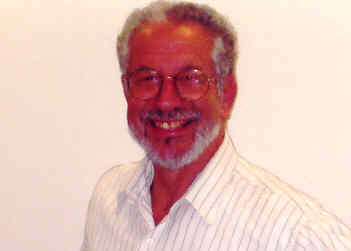
In today's Jerusalem Post Weekend Magazine, and thanks the Miriam Feyga Bunimovich for the photograph:
^
Showing posts with label Yisrael Medad. Show all posts
Friday, November 03, 2017
Friday, May 12, 2017
Amos Schocken and I and Friends Tweeting
Over at my twitter feed, we had a doozy today.
The beginning is almost lost, but archived somewhere, but after I tweeted a dig,
got a response:
and then it basically really took off with this:
And here it went on:
and on
and on
and on
and on
I appreciate Amos Schocken being probably one of the most accessible newspaper owners/publishers.
And the conversation may still be going on in some form still (it is). And more.
And on:
The beginning is almost lost, but archived somewhere, but after I tweeted a dig,
got a response:
and then it basically really took off with this:
And here it went on:
and on
and on
and on
and on
I appreciate Amos Schocken being probably one of the most accessible newspaper owners/publishers.
And the conversation may still be going on in some form still (it is). And more.
And on:
Thank you, Amos.
^
Wednesday, August 03, 2011
Smiling Like A Cheshire Cat
I was sent this excerpt from 1990 from:
BTW, Obey "left Congress in January 2011, and was succeeded by Republican Sean Duffy. He began working for Gephardt Government Affairs, a lobbying firm founded by former U.S. House Majority Leader Dick Gephardt, in June 2011."
I'm still in Shiloh.
(k/t = DG)
________________
UPDATE
I went searching for more Friedman pieces and found this:
"Far, far worse"?
That's what made Friedman a bad journalist.
^
Making Way for the Messiah
October 11, 1990
Robert I. Friedman
“The Saddamization of Kuwait has won us a lot of friends,” said Rabbi Yechiel Leiter, the mayor of a small Jewish settlement in the center of downtown Hebron on the Israeli-occupied West Bank. As far as Leiter and other militant settlement leaders I talked to recently are concerned, Iraq’s invasion of Kuwait greatly buttresses their claim that, in a treacherous neighborhood, Jewish settlements reinforce Israel’s security.
“We are grinning like Cheshire cats,” said Yisrael Medad, aide to Geula Cohen, a leader of the ultranationalist Tehiya party and a resident of Shiloh on the West Bank, who believes that Israelis will be much less willing to trade territory for peace now that the PLO and a great many Palestinians in the territories have embraced Saddam Hussein—a move that has even provoked the anger of an embittered and demoralized Israeli left.
Over the years, Jewish settlements have been condemned by the US as an obstacle to peace. Just before the crisis in the Gulf, Representative David Obey, chairman of the House Subcommittee on Foreign Operations, which establishes funding levels for US aid programs, warned Israel that it risked having its aid cut if it built new settletments or expanded existing ones. And Israel’s request for $400 million in US loan guarantees to house Soviet Jews has been held up by the Bush administration out of concern that the money would flow into settlements in East Jerusalem, the West Bank, and Gaza or would be used to free up money in Israel’s treasury for settlements...
BTW, Obey "left Congress in January 2011, and was succeeded by Republican Sean Duffy. He began working for Gephardt Government Affairs, a lobbying firm founded by former U.S. House Majority Leader Dick Gephardt, in June 2011."
I'm still in Shiloh.
(k/t = DG)
________________
UPDATE
I went searching for more Friedman pieces and found this:
As bad as life has become for Israelis, it is far, far worse for Palestinians: Their economy has crumbled; IDF roadblocks prevent Palestinians from getting to work, children from getting to school and the sick from getting to hospitals; missiles and rockets crash through apartment buildings in the middle of the night and tanks rumble down streets maliciously crushing cars. More than 770 Palestinians have been killed and some 16,000 injured by the army and settlers since the onset of the second intifada.
"Far, far worse"?
That's what made Friedman a bad journalist.
^
Saturday, April 02, 2011
I'm 'Upcoming'
Be sure to check out the Sh'ma magazine soon.
I'm "upcoming":
^
I'm "upcoming":
Yisrael Medad & Dan Heller on the founding myths of the Herut movement
^
Tuesday, March 29, 2011
JPost Report on My Appearance at Begin Memorial
The Jerusalem Post reported on Sunday evening's Likud Anglos' Menachem Begin memorial event here:
I posted pictures here and I am quoted so:
^
Edelstein: Hasbara activists can learn from Begin
I posted pictures here and I am quoted so:
Returning to the issue of semantics, Yisrael Medad, director of information resources at the Begin Heritage Center, told attendees, “We don’t have ‘settlements,’ we have ‘Jewish communities.’” He also objected American leaders’ description of those communities as “illegitimate” because, “It tells the enemies of the Jews that you are an outlaw, and it allows Jewish blood to become cheap. If you’re ‘illegitimate,’ it means people can kill you.”
Begin believed former Egyptian President Anwar Sadat was a true partner for peace – despite disagreements that arose during negotiations – and he felt he could agree to a withdrawal from Sinai because unlike Judea, Samaria, Gaza and Jerusalem, Sinai was not included in the mandate the League of Nations assigned to the British for a Jewish national home.
Medad also reminded audience members that Begin supported Palestinian autonomy, but not statehood.
Begin held out hope that a period of autonomy “would convince them that they’re better off with us,” said Medad.
^
Wednesday, February 09, 2011
My Appearance on the Russian RT TV's "CrossTalk"
Recorded yesterday evening and broadcast today:
I did not know a Muslim Brotherhood spokesperson was a partner or that another is a Pal. propagandist.
And pay attention to the Hitler reference at around 23 minutes.
You can go to the YouTube location and comment.
UPDATE
He was worse than I thought:
It's the Jews who are the problem.
^
I did not know a Muslim Brotherhood spokesperson was a partner or that another is a Pal. propagandist.
And pay attention to the Hitler reference at around 23 minutes.
You can go to the YouTube location and comment.
UPDATE
He was worse than I thought:
Iran revolution example to follow, says Egyptian scholar
London, Feb 10, IRNA – The Islamic revolution in Iran over three decades ago has set an example for others to follow, according to a prominent Egyptian scholar.
“It has had an impact not only on Egypt but all over the Muslim world,” Kamal Helbawi said on the eve of the 32nd anniversary of the 1979 revolution in Iran. “It was a revolution for freedom, a revolution for dignity and for the respect and worship of God,” Helbawi said in an interview with IRNA. “We are with freedom now, until the people are ready to accept Islam,” the scholar and researcher said. “Christians and Muslims have no problem, the only problem is with Mubarak and the regime.”
It's the Jews who are the problem.
^
Sunday, November 14, 2010
Friday, November 27, 2009
Photos From My Temple Mount Ascent Yesterday
Yesterday, Thursday morning, bright but overcast at 7:30 AM, I stood outside the gate to the right of the entrance into the Western Wall Plaza to hand in my Identification Card to be checked and about 10 minutes later, was allowed in for the security check (a group of non-Jewish tourists who arrived a bit later went through first perfunctorily).
We few ascended to the Mughrabi Gate where a policeman and Waqf guard were waiting and off we went.
This is me at the southern section with the Dome of the Rock behind:

Such litter. That is an Arabic-language newspaper. And where?

In this Islamic structure near the Mughrabi Gate:

At the Southern Wall, wood beams and stone columns of historic and archeological interest:

A peek towards Mount of Olives where the ceremony of the Red Heifer was conducted:

Song of Songs, 2:15:

The entrance to the underground Marwani Mosque, the construction of which was a major factor in the loss of many historical artifacts:

We few ascended to the Mughrabi Gate where a policeman and Waqf guard were waiting and off we went.
This is me at the southern section with the Dome of the Rock behind:

Such litter. That is an Arabic-language newspaper. And where?

In this Islamic structure near the Mughrabi Gate:

At the Southern Wall, wood beams and stone columns of historic and archeological interest:

A peek towards Mount of Olives where the ceremony of the Red Heifer was conducted:

Song of Songs, 2:15:

The entrance to the underground Marwani Mosque, the construction of which was a major factor in the loss of many historical artifacts:

Friday, August 07, 2009
Would You Like To Listen To Me? Literally
If you go here, you can hear an interview with me over Arutz 7 radio.
Click on Part 2.
I'm speaking about Shiloh, its history and archeology in honor of Tu B'Av.
Click on Part 2.
I'm speaking about Shiloh, its history and archeology in honor of Tu B'Av.
Thursday, March 05, 2009
Meet Me in the Radio Studio
So, my stint behind the mike is over.
The archived material, where you listen in, is here.
And, since radio you can't "see", here are some pics:


The archived material, where you listen in, is here.
Substituting for Eve Harow, Yisrael Medad brought on four guests to discuss issues that are in the forefront of Jewish political life in Israel and abroad. Yisrael, a blogger at Arutz 7 and a long-time Yesha activist who resides in Shiloh, spoke with Elizabeth Berney who is the Republican candidate running for election in 2010 in New York's 5th Congressional District, the seat held by 13-term incumbent Gary Ackerman. Liz, interviewed in her Great Neck home, highlighted some troublesome developments relating to Ackerman's positions on Israel as well as other issues important to the 600,000 voters of Norht-east Queens and North-west Nassau County.
Caroline Glick spoke about her new Hebrew-language web site, www.latma.co.il, which is taking on Israel's own media with an especially satirical, sardonic and critical perspective. Explaining the central role the media plays in framing the knowledge and information Israelis receive, as well as that which is denied them, in addition to the left-wing bias, Caroline expanded on the uniqueness of the site and, in a new development, the use of humor to "take down" the media with webcast clips.
Executive Vice-President of Bnai Brith Canada and publisher of The Jewish Tribune, Frank Dimant, speaking from Toronto, reviewed the major problems of harassment and actual physical threating behavior that Jewish students on Canadian campuses are facing during such events as "Israel Apartheid Week" and other instances. Frank and Yisrael spoke of Canada's Conservative government and its support for Israel versus the Jewish kowtowing to the new radical trend of anti-Zionism on campuses and the trade unions.
Yisrael's last guest was Eve Harow who spoke of her insights on the American scene, having just gotten back from a two-week personal trip.
And, since radio you can't "see", here are some pics:


Wednesday, December 31, 2008
You Never Know Where You'll Find Me
Stephen Leavitt of WebAds, LLC, Niche and Community Targeted Advertising, sent me this located at RotterNet, somewhere:-
Tuesday, May 13, 2008
Shmuel Katz - My Appreciation
I "met" Shmuel Katz for the first time, as probably most people have done, through one of his books. I was on a year's program in Israel in 1966 when "Days of Fire" in its original Hebrew edition appeared and it was one of several dozen books I brought back with me. Unlike some of the other Irgun memoirs, this book presented history not only from a personal perspective but it read on an additional level entirely as if an academic was writing. Dr. Rafael Medoff, of the Wynman Institute, has noted that this was the first book to expose the Allies’ failure to bomb the Auschwitz death camp.
Using documents from British and Zionist archives and a map, Katz recounted how Jewish Agency leaders were rebuffed by British Foreign Minister Anthony Eden in July 1944 when they requested an Allied air attack on Auschwitz and its rail lines. “It was fifty-seven days, September 1, before the British Foreign Office sent its reply, a period during which the majority of the Jews of Hungary were exterminated,” Katz wrote. At that same time, air drops to the Polish Home Army forces were undertaken by British planes, flying from the Foggia air base in Allied-occupied Italy. “The death camp at Auschwitz was 200 miles nearer than Warsaw to the base at Foggia,” Katz pointed out.
In 1973, when his classic "Battleground", putting forth the Zionist claim for a national homeland and unraveling the mendaciousness of anti-Zionist propaganda was published, "Moekie" Katz's position as the foremost disciple of Ze'ev Jabotinsky had been cemented. Shortly thereafter, I made contact with him (although we never really managed to pinpoint the exact circumstances of our first meeting. I seem to recall a meeting in Flushing, Queens on one of his Land of Israel Movement trips when I also happened to be in New York but it could have been earlier and in Israel). Upon my return from a two-year stint working with Betar England, during which time, incidentally, Barbara Oberman and I traveled to Paris to join Moekie for the launching of the French edition of Battleground when I first met Michel Gurfinkiel, we discussed my working with him. He was expecting that Menachem Begin would appoint him Minister for Public Diplomacy and that we would set aright the failings of Israel's chronic Hasbara (information services). But it was not to be as Moshe Dayan sabotaged the project.
I had been working for Geula Cohen at her Academy for National Studies in Tel Aviv and returned there when employment with Moekie panned out. Finding myself occasionally stranded in Tel Aviv, Moekie offered me his couch at his Dizengoff apartment. Until he moved to the WIZO home for seniors a few years ago, I estimate I had made use of that couch hundreds of times. And every time, before going to bed and just before leaving, Moekie and I would discuss the political events of the day. Moekie was invited to family events which he attended with relish and always made a point to inquire how I was doing in my work and income. He found ways to supplement my salary for which I was grateful despite my protestations that just doing the work for him was payment enough for me.
After leaving his position as Begin's advisor in early 1978, he began publishing op-eds in Ma'ariv and the Jerusalem Post. In 1981, after the appearance of "The Hollow Peace", his devastating critique of the Likud peace efforts, Moekie asked me to edit what became "Battletruth" which appeared in 1983. His next book was "Lone Wolf", his monumental biography of Jabotinsky for which he turned me into his research assistant, a position I gladly held until his death. From then on, several times a year, either for a book, an article or for some other project, a call would come from Moekie and I’d be off to the Zionist Archives, Knesset newspaper archives or another library. For example, last year I was engaged in seeking out documents on the French-British arrangement which lost Israel the Golan in 1923 when the British traded the region for Mosul. Moekie was seeking another act of British betrayal. During the long period when he wrote "Lone Wolf", I would never ask him how he was feeling (he always suffered in his feet; a circulatory problem) but would ask 'what year are you in?', referring to the progress he was making in the book.
These last few months, I was attempting to collect his articles for a sequel to "Battletruth" which he very much wanted to be published. He also wanted very much that Chapter Four of "Battleground" be reprinted for mass distribution among students. He was concerned that he would not be leaving a body of thought that represented his last 30 years of political analysis.
We agreed that the anthology would follow the pattern I had proposed 25 years earlier: the articles on a specific subject would follow in a chronological pattern to show how Moekie had been correct in his analysis. I supplemented my own files with archive material made available through Elliot Jager from the Jerusalem Post and the total number of articles from which we were to make our selection seemed to be over 400. But I succeeded in transferring to him only the titles and my idea that the section headings would be more generalized. I had come up with a name, "Battlesense", but that, too, came too late. My hope is that the book will yet be published.
I was especially proud to witness Moekie on the occasion of his 90th birthday which we celebrated at the Begin Center. It was a most honorable tribute. The book launching of "The Aaronsohn Saga", on the NILI spy ring during World War I, held on February 29th this year was also a great occasion for him. Sir Martin Gilbert spoke and praised Moekie and Moekie, in his wheelchair and already displaying his frailness, responded for some 20 minutes. His last public appearance was a fortnight later, at a gathering of the South African Zionist Federation in Israel when he was honored again.
My last visit was two weeks or so before Passover, just after he came out of hospital where they had amputated his lower left leg. He repeated what he had been saying for a few years, that he was satisfied that, at the least, everything above his neck was in perfect condition. And that was true. Until his last hospital stay, he read two newspapers daily and we talked usually once a week or so when he displayed a complete grasp of events - and jokes - along with, by now, his regular withering critique of Israel's leadership. What was obvious to us both was that it pained him to be as pessimistic as he was and I am sure that contributed to his final physical breakdown of his body.
There exists a public persona of each of us and in that role, Moekie was towering. As an unofficial diplomat, as a participant in academic colloquia, an advisor, commentator and author, he was undefeatable and indefatigable. Rarely did I observe become angry but he could do that, too, and his words and tone could become slashing. He never hesitated to criticize, those near and far, when an error he perceived was to be made. But he was kind, gentle and considerate and, as he sometimes admitted to me, all he wanted to be was a Yiddishe mentsch, a good Jewish person.
Using documents from British and Zionist archives and a map, Katz recounted how Jewish Agency leaders were rebuffed by British Foreign Minister Anthony Eden in July 1944 when they requested an Allied air attack on Auschwitz and its rail lines. “It was fifty-seven days, September 1, before the British Foreign Office sent its reply, a period during which the majority of the Jews of Hungary were exterminated,” Katz wrote. At that same time, air drops to the Polish Home Army forces were undertaken by British planes, flying from the Foggia air base in Allied-occupied Italy. “The death camp at Auschwitz was 200 miles nearer than Warsaw to the base at Foggia,” Katz pointed out.
In 1973, when his classic "Battleground", putting forth the Zionist claim for a national homeland and unraveling the mendaciousness of anti-Zionist propaganda was published, "Moekie" Katz's position as the foremost disciple of Ze'ev Jabotinsky had been cemented. Shortly thereafter, I made contact with him (although we never really managed to pinpoint the exact circumstances of our first meeting. I seem to recall a meeting in Flushing, Queens on one of his Land of Israel Movement trips when I also happened to be in New York but it could have been earlier and in Israel). Upon my return from a two-year stint working with Betar England, during which time, incidentally, Barbara Oberman and I traveled to Paris to join Moekie for the launching of the French edition of Battleground when I first met Michel Gurfinkiel, we discussed my working with him. He was expecting that Menachem Begin would appoint him Minister for Public Diplomacy and that we would set aright the failings of Israel's chronic Hasbara (information services). But it was not to be as Moshe Dayan sabotaged the project.
I had been working for Geula Cohen at her Academy for National Studies in Tel Aviv and returned there when employment with Moekie panned out. Finding myself occasionally stranded in Tel Aviv, Moekie offered me his couch at his Dizengoff apartment. Until he moved to the WIZO home for seniors a few years ago, I estimate I had made use of that couch hundreds of times. And every time, before going to bed and just before leaving, Moekie and I would discuss the political events of the day. Moekie was invited to family events which he attended with relish and always made a point to inquire how I was doing in my work and income. He found ways to supplement my salary for which I was grateful despite my protestations that just doing the work for him was payment enough for me.
After leaving his position as Begin's advisor in early 1978, he began publishing op-eds in Ma'ariv and the Jerusalem Post. In 1981, after the appearance of "The Hollow Peace", his devastating critique of the Likud peace efforts, Moekie asked me to edit what became "Battletruth" which appeared in 1983. His next book was "Lone Wolf", his monumental biography of Jabotinsky for which he turned me into his research assistant, a position I gladly held until his death. From then on, several times a year, either for a book, an article or for some other project, a call would come from Moekie and I’d be off to the Zionist Archives, Knesset newspaper archives or another library. For example, last year I was engaged in seeking out documents on the French-British arrangement which lost Israel the Golan in 1923 when the British traded the region for Mosul. Moekie was seeking another act of British betrayal. During the long period when he wrote "Lone Wolf", I would never ask him how he was feeling (he always suffered in his feet; a circulatory problem) but would ask 'what year are you in?', referring to the progress he was making in the book.
These last few months, I was attempting to collect his articles for a sequel to "Battletruth" which he very much wanted to be published. He also wanted very much that Chapter Four of "Battleground" be reprinted for mass distribution among students. He was concerned that he would not be leaving a body of thought that represented his last 30 years of political analysis.
We agreed that the anthology would follow the pattern I had proposed 25 years earlier: the articles on a specific subject would follow in a chronological pattern to show how Moekie had been correct in his analysis. I supplemented my own files with archive material made available through Elliot Jager from the Jerusalem Post and the total number of articles from which we were to make our selection seemed to be over 400. But I succeeded in transferring to him only the titles and my idea that the section headings would be more generalized. I had come up with a name, "Battlesense", but that, too, came too late. My hope is that the book will yet be published.
I was especially proud to witness Moekie on the occasion of his 90th birthday which we celebrated at the Begin Center. It was a most honorable tribute. The book launching of "The Aaronsohn Saga", on the NILI spy ring during World War I, held on February 29th this year was also a great occasion for him. Sir Martin Gilbert spoke and praised Moekie and Moekie, in his wheelchair and already displaying his frailness, responded for some 20 minutes. His last public appearance was a fortnight later, at a gathering of the South African Zionist Federation in Israel when he was honored again.
My last visit was two weeks or so before Passover, just after he came out of hospital where they had amputated his lower left leg. He repeated what he had been saying for a few years, that he was satisfied that, at the least, everything above his neck was in perfect condition. And that was true. Until his last hospital stay, he read two newspapers daily and we talked usually once a week or so when he displayed a complete grasp of events - and jokes - along with, by now, his regular withering critique of Israel's leadership. What was obvious to us both was that it pained him to be as pessimistic as he was and I am sure that contributed to his final physical breakdown of his body.
There exists a public persona of each of us and in that role, Moekie was towering. As an unofficial diplomat, as a participant in academic colloquia, an advisor, commentator and author, he was undefeatable and indefatigable. Rarely did I observe become angry but he could do that, too, and his words and tone could become slashing. He never hesitated to criticize, those near and far, when an error he perceived was to be made. But he was kind, gentle and considerate and, as he sometimes admitted to me, all he wanted to be was a Yiddishe mentsch, a good Jewish person.
Friday, March 07, 2008
Another Shmuel Katz Event
Saturday, July 28, 2007
I am Quoted in CNS News
"It is utterly devastating to realize how [ill]-equipped mentally and politically Israel's current leadership is in facing the challenges to Israel's existence, security and Zionist ethos," said Yisrael Medad, a resident of the West Bank settlement of Shilo[h] and a volunteer spokesman for the Jewish communities there. Since 1992, Israel has been going in the wrong direction -
yielding territory, granting the Palestinians a form of self-rule and arming the
Palestinians, Medad said in a telephone interview on Friday. Israel needs to be firm with the Palestinians and tell them no terror. Maybe they can have some kind of autonomy now, and maybe sometime in the future when they've stopped killing themselves and everyone else, they can talk about more, he said. For the past 80 years, the Palestinian national movement has been at odds with the Jewish national movement - Zionism, said Medad. "The way out is certainly not yielding territory and pampering a people that continuously violate every agreement you've signed with them."
Source
Original
Wednesday, June 06, 2007
Two More Interview Results
Here
and its repeated - or is that syndicated - here.
On the morning of June 5, Israel launched air strikes against Egyptian, Syrian, Jordanian and Iraqi airfields. In the days that followed, Israeli ground forces swept into the Sinai, up the Golan Heights and eastward to the River Jordan, fighting their way into the heart of Jerusalem's Old City and to the Western Wall. In six days, Israeli forces defeated three Arab armies and reunified Jerusalem. Yisrael Medad says the 1967 War resolved issues left over from Israel's War of Independence in 1948.
"You could say a lot of people felt that the '67 War was the last stage of the '48 War that had never been finished," he explains. "Here, we felt what should have happened in '48 - a very strong military and uncontested victory - made clear that Israel is here to stay and we are not temporary and foreign. That was a sense of emotion that ran through many people."
and its repeated - or is that syndicated - here.
Sunday, June 03, 2007
I Am in the Baltimore Sun
In an article entitled:-
A city still divided after 40 years
The city's polarization would appear to make the city ripe for a formal division as was proposed during the failed Camp David peace talks in 2000, when Prime Minister Ehud Barak offered Palestinians concessions on East Jerusalem and authority over the Temple Mount, or what Muslims call Haram al-Sharif.
But there is a deep-seated feeling among many Israelis, especially among the conservative and religious, that their government should not surrender any part of their holy city.
"If the international community cares about keeping Jerusalem as an open city for all faiths, only a free and democratic Israel can protect Jerusalem for all religions," says Dore Gold, former Israeli ambassador to the United Nations and author of The Fight for Jerusalem.
Yisrael Medad, who lives in Jerusalem, recalls how as a college student in 1966, he would he walk to the top of the building outside the Old City just to get a glimpse of a corner of the Western Wall, which the Jordanians forbade Jews from visiting.
Medad, now director of [Information Resources at] the Menachem Begin Heritage Center, says he is not willing to trust anyone except Israel with guarding his right to worship.
"I believe the city has no other comparable legal status ... except as a capital to the Jewish people," he says.
The strength of that belief among many Israelis could be witnessed last month during the annual Jerusalem Day parade. Thousands of Israelis poured into the streets dancing, singing and waving Israeli flags on their way to the Western Wall.
Yours Truly in Spanish
Yisrael Medad, al frente de una organización que defiende los derechos de los judÃos sobre el Monte del Templo (Explanada de las Mezquitas), es categórico. Cuenta que cada sábado por la noche, cuando era niño, antes de la conquista de Cisjordania, acudÃa al monte Sión, en Jerusalén Oeste, para gritar: "¡Volveremos!". "La ciudad, desde el punto de vista polÃtico, cultural, económico y religioso es vital para los judÃos como no lo es para nadie", dice. "Judea y Samaria permanecerán bajo soberanÃa israelÃ. La fórmula de los dos Estados se intentó y no funcionó. Es sencillo. Hay problemas sin solución y es necesario convivir con ellos".
Here.
Friday, March 30, 2007
I Am in This Reuters Story
Fate of refugees bedevils quest for Mideast peace
Tue Mar 27, 2007 12:57PM EDT
By Alistair Lyon, Special Correspondent
Tue Mar 27, 2007 12:57PM EDT
By Alistair Lyon, Special Correspondent
JERUSALEM (Reuters) - Munir Jaber was seven years old when Jewish fighters assaulted the thinly defended village of Deir Yassin near Jerusalem before dawn on April 9, 1948 and killed scores of men, women and children.
Now a dapper man of 66, met by chance in Shuafat refugee camp in Jerusalem, he fingers blue worry beads as he recalls an episode that terrified Palestinians at the time and created an enduring symbol of their exodus from their homeland.
"Thirty seven of my family were killed," Jaber said, telling how his brother's throat was slit and his cousin was shot.
Ali Mohammed, 69, said his family had fled the village of Beit Thul, west of Jerusalem, in panic soon afterwards.
"There was no attack on our village, but we saw soldiers blowing up houses in the nearby village of Saris. We were afraid after what happened in Deir Yassin," he remembered.
Deir Yassin fell five weeks before British Mandate rule ended and Israel was created. Some 700,000 Palestinians fled or were expelled into nearby Syria, Jordan or Lebanon in 1947-49 fighting, leaving 165,000 who became Arab Israeli citizens.
The 1948 refugees and their descendants make up the bulk of the 4.3 million refugees cared for by the U.N. Relief and Works Agency, many in slum-like camps in Arab countries and in the occupied West Bank and Gaza Strip. All claim a right to return.
No issue, with the possible exception of Jerusalem, is as emotive and troubling for Palestinians and Israelis as the fate of these people at the core of the Middle East conflict.
This week an Arab League summit in Riyadh is expected to renew an offer of full peace and normal relations with Israel if it withdraws from all the land it occupied in the 1967 Middle East war, accepts the creation of a Palestinian state and reaches an "agreed, just solution" for the refugees.
Israeli leaders have said the plan has positive aspects, but others, such as the proposal on refugees, are "problematic."
"RIGHT OF RETURN"
The Arab plan endorses a 1948 U.N. resolution which calls for refugees to be allowed to return or be compensated.
Neither Resolution 194 nor the Arab peace proposal contains the phrase "right of return," although this remains a longstanding Palestinian demand -- and anathema to Israel.
Mere talk of refugees sets off alarm bells for Israelis.
They fear that any mass return would threaten the Jewish character of the state carved out in 1948 on land partly assigned by a U.N. partition plan and partly gained in a war with Palestinians and Arab states which rejected that plan.
Israelis say the refugees should be resettled where they are or elsewhere in the Arab world.
Benny Morris, an Israeli historian who has chronicled what he calls the "partial ethnic cleansing" of Palestinians in 1948, says "morality would dictate that people have a right to return to their homes" when this concerns displaced individuals.
"But we aren't talking about individuals, but about a political problem involving millions of people and a vast demographic change if it (return) happens," he told Reuters.
"So on the political level, I would reject the right of return because it implies not just a moral return of people to their homes, but the disestablishment, destabilization and basically the destruction of the state of Israel."
Nobody knows how many refugees would actually want to go home to a country that many would find alien, with their villages long since demolished or settled by Jews.
Many enjoy citizenship in Jordan and full rights short of citizenship in Syria. Only Lebanon's estimated 400,000 refugees are confined to camps, barred from many jobs. The idea of accepting them permanently is taboo in Lebanon, which fears upsetting its own delicate sectarian balance.
UNDERMINING ZIONISM?
What Palestinians want above all is for Israel to accept that it is responsible for a historic injustice which, in their eyes, created the Jewish homeland at their expense.
"Israel has to agree to the principle of return," said Palestinian political scientist Ali Jarbawi.
"By acknowledging that, they are acknowledging the responsibility. Then you can go into the details of how many are going to return and how many compensated."
What Palestinians view as a matter of essential dignity, Israelis see as an admission that would threaten the legitimacy of the entire Zionist enterprise.
They have long argued that a population exchange took place in effect, with Palestinian refugees roughly balanced by the Jews who left Arab countries after 1948. Some were forced out, others migrated willingly with active Israeli encouragement.
Jarbawi denied that Israel risked being dismantled if it simply recognized its role in what Palestinians term the "Nakba," or catastrophe, of their 1948 dispossession.
"If you acknowledge you have done something wrong, there are many ways of rectifying it," he contended.
Yisrael Medad, a settler spokesman in the West Bank, denied any Israeli responsibility for Palestinian refugees, saying a fraction of Arab oil money could take care of them.
"You can't start a war against Zionism...and kill hundreds of Jews even before the state is created...and then go to war again, this time with Arab states, and expect to continue to live where you are," he said.
Under most readings of international law, refugees do not lose their individual rights because of the actions of their leaders, the uncertainties of war or the passage of time.
But in the Arab-Israeli conflict, international law has often collided with realpolitik and come off worst.
Israel and the Palestinians have had no formal peace talks since U.S. President Bill Clinton left office in January 2001. He had proposed that a future Palestinian state in the West Bank and Gaza be the "focal point" for refugees choosing to return "without ruling out that Israel will accept some of them."
Palestinian refugees will not disappear any time soon, to be absorbed in a wider Arab world unwilling to integrate them for reasons that combine principle with hard-nosed expediency.
They yearn for what they have lost.
"I would never accept compensation," said Jaber, the Deir Yassin survivor, wearing an embroidered black cap.
"It's my home, my land, my country. There can be no peace unless they let us return."
Subscribe to:
Posts (Atom)