
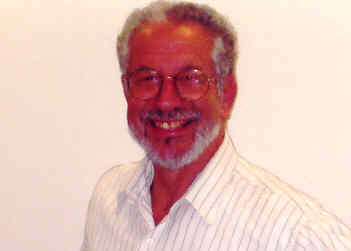
I was interviewed, by telephone, by Mella Fuchs for the Dutch newspaper, Trouw. Incidently, that paper is a bit famous amongst Israelis as way back on March 31, 1977, it published an interview with PLO Executive Committee member Zuhayr Muhsein (see below) with a remarkable admission about the existence of a "Palestinian people".
The headline of the story is "What would Joseph and Mary's journey to Bethlehem have looked like in 2025?" with the Trouw correspondent speaking with residents along the route.

"For Yisrael, it's relatively easy to travel from Nazareth to Bethlehem, he says. Unlike Palestinians (without an Israeli passport), he's allowed to cross the border between Israel and the West Bank. Entering Bethlehem itself is a different story: he needs special permission from Israel, unless he—a native American—poses as a tourist. Bethlehem is located in Area A.
Under the 1995 Oslo Accords, which were intended to lead to Palestinian self-government, the occupied West Bank was administratively divided into three zones. Area A (18 percent of the West Bank) is officially administered by the Palestinian Authority (PA). This does not mean the Israeli army remains absent; Jenin, for example, also falls under this zone. In Area B (22 percent), the PA and Israel share control. Area C (the remaining 60 percent) is entirely under Israeli authority. This division was intended as a temporary solution: power would gradually be transferred to the PA. But almost thirty years later, nothing has come of it.
The route Mary and Joseph have traveled thus far is one that Yisrael would never take. After all, it runs through Palestinian urban areas (mostly Areas A and B) in the north, around Jenin. Moreover, there are few settlements in that part of the West Bank. Settlers travel on their own roads, which are often directly connected to Israeli highways, such as Routes 55 and 5, and are (partially) prohibited to Palestinians.
Yisrael himself usually travels by hitchhiking, as he doesn't own a car. He only gets into cars with yellow license plates, avoiding green Palestinian ones. "That's the first check," he says. "The driver's accent is the second." In 2014, three hitchhiking Israeli boys in a settlement were kidnapped and killed by Hamas. "Since then, we've been very categorical," Yisrael says. "We don't get into cars that aren't driven by Jews."
According to Yisrael, the idea that settlers have their own road network is "propaganda" and that "apartheid" is a fabricated concept. But he also says he takes the bus to Jerusalem three times a week, where Palestinians are only allowed with special permits. And that he's never locked out of his settlement, while Palestinians are often confined to their towns or villages.
Yisrael doesn't find it strange that Palestinians have to pass through checkpoints constantly. "If I cross a border in Europe, I have to show my travel documents. There's no Palestinian state, but the principle is the same." Yisrael believes that the nearly 1,000 roadblocks within the West Bank are also necessary. "The army is looking for terrorists. It's not because they're trying to cause problems for people. Yes, they sometimes get stuck. But sometimes I also have to travel long distances to get somewhere."
Yisrael doesn't think it would be dangerous for Joseph and Mary to walk to the settlement where he lives. "They were Jewish, right? Then there wouldn't be any problems."
An overnight stay is likely necessary after traveling 35 kilometers from Nablus. In Shilo, there's a kosher winery, where Joseph might enjoy a glass, unless he were in solidarity with Mary. "We produce hundreds of thousands of bottles of wine a year and win gold medals in Europe," Yisrael says."

----------------------------------
The words of Zuhayr Muhsein:
The Palestinian people does not exist. The creation of a Palestinian state is only a means for continuing our struggle against the state of Israel for our Arab unity. In reality today there is no difference between Jordanians, Palestinians, Syrians and Lebanese. Only for political and tactical reasons do we speak today about the existence of a Palestinian people, since Arab national interests demand that we posit the existence of a distinct "Palestinian people" to oppose Zionism.
For tactical reasons, Jordan, which is a sovereign state with defined borders, cannot raise claims to Haifa and Jaffa, while as a Palestinian, I can undoubtedly demand Haifa, Jaffa, Beer-Sheva and Jerusalem. However, the moment we reclaim our right to all of Palestine, we will not wait even a minute to unite Palestine and Jordan.
^







 Posts
Posts


No comments:
Post a Comment