Showing posts with label settlers. Show all posts

Monday, October 20, 2025

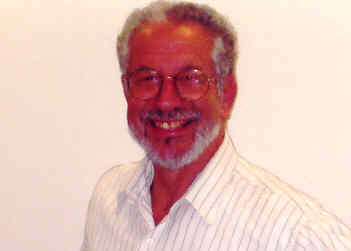
Mamdani the Elder in 2004

It seems that I never uploaded this post from 2015. But now that his son is running for election as New York City's next mayor with his 2023 Not On Our Dime Bill lurking, I realized it should appear as better late than never.

The things one finds as in “Representing Settlers” by Assaf Harel -
Mahmood Mamdani (2004. Good Muslim, Bad Muslim: Post-Apartheid Perspectives on America and Israel, PoLAR 27(1):1-15), for instance, opened a recent lecture by claiming that “The violence of the settler and the suicide bomber, more than any other, has come to define the contemporary work of terrorism and counter-terrorism.” [he establishes equality and equivalency] The settler has come to represent unbridgeable difference from the secular, liberal humanists of the West. [does the PLO, PA and/or Hamas do something to Western liberalism?] At the same time the settlement project in Israeli post-1967 occupied territories is seen as a break from the previous trajectory of the Israeli state. These depictions have become widely acceptable, especially in liberal academic circles. But they are not only analytically weak, they actually participate in a political purpose that might be unintended. As we have seen, many studies (Lustick 1988; Lustick 1993; Silberstein 1993; Sivan 1995; Feige 2003; Zertal and Eldar 2007) emphasize ideological differences or point to the settler project inthe Occupied Territories as having fundamentally altered the foundations of Israeli society. This discursive construction depicts religious settlers and their project as different from legitimate Israeli state practices by inscribing a moral high ground for those who vilify and denounce the settlers in the Occupied Territories.

The “settlers’” project, it would seem, is not really Zionism at all, [as if all that went on previously, of Jews emigrating and repatriating back to the Jewish historic homeland, resettling and creating agricultural communities throughout the centuries is not Zionism] and so the Zionism of mainstream Israel is morally elevated in its distinction from beliefs and practices in the Occupied Territories. Religiously motivated settlers are often condemned for the violence of their settlement project. This includes both the structural violence of territorial expansion and the face-to-face violence between settlers and Palestinians. Yet if we move beyond demonizing religious settlers and seek instead to apply a post-structural istanalytical framework to them, then we must seek commonalities with those who currently oppose these settlers.

Did Peter Beinart read that and become influenced? 

^

Sunday, December 29, 2024

Jewish "settlers" in 1932, in Russia

Mr. Medad, are Jews in their historic national homeland termed "settlers"?

That's the language everyone now uses. In the London Times of August 20, 1932, however, Jews from Mandate Palestine going to Birobijan, Russia were also "settlers" and "colonists". Perhaps the word did not possess today's perjorative level.


Go figure it out.

On the Jewish Autonomous Oblast of Birobijan, see here. And here. On Menachem Elkind,


Sketch of Elkind by Mendel Gorshman 1933

see this.

P.S. A hint as to Elkind's problem with the Gudud Ha'Avodah:

"After having familiarised itself with the situation in Gdud Avoda, the Eastern Secretariat states a disillusionment with the national chauvinistic frenzy that has arisen in the milieu of Jewish workers in Palestine and also in Gdud, which has overcome its 'theory' of constructive socialism and is taking the path of consistent class struggle."


^

Sunday, September 10, 2017

The Dominant Interest of American Jewish Citizens in Palestine in...1940

It seems that we Jewish Americans at the time were known as "American settlers".

In 1940.

As per a telegram of May 20, 1940 that deals with evacuating American citizens from Mandate Palestine from the Consul General at Jerusalem to the Secretary of State, which, in part, reads:


...the estimated 8,000-odd American citizens in Palestine present a very special problem.
Almost 90 percent are Jews, of whom at least two-thirds are naturalized citizens. They have been admitted to Palestine under immigration schedules on visas authorizing permanent residence. For the most part ardent Zionists, their dominant interest is Jewish settlement and realization of the National Home ideal. Their first and preeminent loyalty is to that ideal and its concomitant concept of Jewish statehood in their lifetime.
It follows that retention of American citizenship by these settlers is in many cases primarily a matter of not wanting to burn one’s bridges. Few only among them, I believe, will want to leave Palestine even in the event of Italy entering the war and consequent hostilities in the Mediterranean. To these relatively few, of whom I anticipate most will apply to me for advice, I propose to communicate the pertinent substance of the telegram under reference and to extend all possible assistance in obtaining transportation.
Other American residents include several hundred naturalized citizens of Palestine, Arab origin, against at least a majority of whom presumption of expatriation due to protracted residence abroad has arisen. They are for the most part safely situated in scattered inland villages. If desirous of returning at this time, they may be counted on to consult my office. Its advice and assistance will be freely given.


And on July 20, 1940 we read:


As to the general problem of evacuating American Jews from Haifa, and possibly Tel Aviv, I early suggested to Jewish-American leaders that these communities would do well to consider, through their local organizations, the question of how their position might be affected by a possible spread of hostilities to the Eastern Mediterranean...I arranged for the formation of a small committee of three representative Americans with whom the Consulate General might consult informally regarding any emergency which might arise. Its members were:

Dr. J. L. Magnes, President of the Hebrew UniversityDr. Totah, Director of the American Friends’ SchoolsMr. A. L. Miller, Director of the Jerusalem Y. M. C. A.

Subsequently, and largely on Dr. Magnes’ recommendation, we decided it would be advisable to form a special subcommittee of leading American Jews to consider the problems especially affecting resident citizens of that faith. Such a committee finally met with me on June 26. Its members were:

Dr. J. L. Magnes, as ChairmanMr. J. Simon, President of the Palestine Economic CorporationDr. I. Kligler, of the Hadassah Medical OrganizationMr. H. Viteles, of the Central Bank of CooperativesMr. H. Margalith, head of the Jerusalem branch of the American-Jewish Association of Palestine.

...In conclusion and to recapitulate the major points made in the present despatch and its enclosures:
1) Some 250 resident citizens have left Palestine since receipt of the Department’s telegram of May 16 advising Americans to return to the United States; and an approximately equal number are known to wish to leave and to possess funds more or less sufficient for the purpose;

2) There remain in the country some 7,000 citizens (roughly 6,500 Jews, 400 Arabs and 100 others) against at least 3,000 of whom presumption of expatriation is believed to have arisen; 

Saturday, August 03, 2013

Who Are The "Settlers"?

The question is asked:

Who are these settlers that have to be removed?

And someone presents a fair appraisal:


Well, first of all they are not a homogenous, monolithic force. When one speaks of “the settlers”, one sees before one’s mind’s eye a mass of half-crazed, religious fanatics, expecting the messiah at any moment, ready to shoot anyone who comes to remove them from their strongholds.

This is pure imagination. There are such settlers, of course. They are the hard core, the ones who appear on television...they are a tiny minority.


He continues
Much more important is the so-called ”national-religious” core, the real leadership of the settlement enterprise...This group has enormous political power. It is they who dragged successive governments of all parties, into putting them where they are – sometimes unwillingly, sometimes more than willingly...They have infiltrated the army and the government apparatus and terrify the politicians...Any government interested in making peace will have to grapple with them. But they are a minority among the settlers.

...The majority of the settlers are less vocal...They are called “quality of life settlers”, because they went there to enjoy the clean air...[and] their dream-villas, with the Swiss red-tile roofs, for next to nothing...A category by itself are the orthodox...Quite another story is the settlements in East Jerusalem. The hundreds of thousands of Israeli Jews now living in the new neighborhoods there do not think of themselves as settlers at all, they have forgotten all about the Green Line.

And the writer's solution?

The “quality of life” settlers must be bought out. It’s a simple question of money...There remain the hard-core settlers, the “ideological” ones, those who serve God by living on stolen land. What about them?  The simplest solution was that provided by Charles de Gaulle. After signing the peace agreement that put an end to the occupation of Algeria after a hundred years, he announced that the French army would leave the country on a certain date. He told the more than a million settlers, many of them fourth or fifth generation: If you want to leave, leave. If you want to stay, stay. The result was a last minute frantic mass exodus of historic dimensions.

I can’t imagine an Israeli leader bold enough to follow that prescription...Some naïve Israelis say: ”Why not? There are a million and a half Arab citizens in Israel. Why can’t there be some hundreds of thousands of Israeli Jews in Palestine?”  Unlikely. The Arabs in Israel live on their own land, where they have lived for centuries. The settlers live on “expropriated” land, and they have justly earned the hatred of their neighbors. I don’t see how a Palestinian government could allow it.

That was Uri Avnery writing.  And, yes, I did leave out some of his biased non-factual descriptions.

Sunday, April 28, 2013

Those 'Settlers' Again

As the media pumps it, all the problems of post-1967 Israel, you know, the "territories", the "settlements", the "occupation", the "settlers", are what are at the root of the "conflict".

Right?

Well, here is part the The Guardian's story on Mandate period documents now released:

The documents, which have a remarkable contemporary resonance, reveal how British officials looked on as Jewish settlers took over more and more Arab land.
 
That sentence, an anachronistic interpretation of history, the "throwback" version, followed this:

The British government knew from the moment it planned to withdraw its forces from Palestine more than 60 years ago that partition of the territory and the founding of the state of Israel would lead to war and defeat for the Arabs, secret documents released make clear.

So, were those "Jewish settlers" taking over land - how?

Militarily?  Or simply purchasing it?  The "British officials" simply "looked on"?  But wait, wasn't the purpose of the Mandate to reconstitute the Jewish national home?

True.  But in 1939 the British reneged on that Mandate, avoided the Geneva-based League of Nations Mandates Commission reprimand since war broke out and subverted the legal rights of the Jews.

And this part:

After an increase in violent attacks by the militant Zionists of the Stern group and Irgun, British officials reported later in 1946: "Arab leaders appear to be still disposed to defer active opposition so long as a chance of a political decision acceptable to Arab interests exists." But they warned: "There is a real danger lest any further Jewish provocation may result in isolated acts of retaliation spreading inevitably to wider Arab-Jewish clashes".
 
makes no sense.  Why?  Because in 1946, neither the Irgun or the Lehi (the Stern Group) were attacking Arabs.  So, they were being provoked because...

...well, perhaps because the Jews were obtaining their lawful and legal rights?  A country?  Even a partitioned one (after the first partition of 1921 forcibly incorporated in the Mandate by the British in 1922 when Transjordan was separated from the Jewish National Home territory)?

There was another document, as the Jewish Chronicle relays:
The report on "Great Britain and Arab Nationalism" was completed at the height of the Second World War, but remained secret for 70 years until its release at the National Archives this week.  AH Hourani, who compiled it, found evidence of an "obsession with Zionism" among Arab nationalists, out of a misguided belief "that it aims at dominating all Arab Asia". He wrote of the belief that the allies were "committed to support of Zionism" over Arab aims, and noted "widespread feeling in favour of Germany"...Mr Hourani wrote that the Arabs were by 1943 more disposed to accept the British White Paper that they had rejected in 1939 "by a tactical blunder"...Mr Hourani delved into the structure of Arab nationalism across the region, noting that there was an "absence of constructive thought and organisation".
That last bit, which is an earlier formulation of Abba Eban's quip that the Arabs never miss an opportunity to miss an opportunity, is an example of what is all wrong with those who support the Arabs against Zionism for it indicates that the conflict is not about land, or borders or the "settlers" but is about the very existence of a state of the Jews.  And it so much so that they would favor Nazi Germany in their cause.

^

Wednesday, January 02, 2013

'Palestinians' Are..."Settlers"

What a break.  "Palestinians" are termed settlers.

A fellow Arab, Nayal Tueni, published on January 2, 2013 on the 'Palestinians", from a Lebanese viewpoint:


The Palestinian burden once more
We in Lebanon understand the moral obligation that hinders the closing of borders in the face of Syrian refugees and we have nothing against Syrians who oppose a regime that occupied and killed our people. We have never turned down Palestinians who sought asylum in Lebanon unless they constitute a direct threat to its sovereignty like what happened before when they assumed that Lebanon could be an alternative homeland together with the Syrian turned the country into a battlefield and a venue for settling scores and operating intelligence agencies.

...Syrian refugees [however] can go back home as soon as the conflict is resolved especially of the new regime offers to compensate them for their losses and also because life in Lebanon is too expensive for them. But this is not the case with Palestinians. Syrians still have the chance to get rid of their burden, but Palestinians do not, especially that the Palestinian cause has not become as pressing as it had once been in the midst of the current development.
...Lebanon is the only country that is unable to take a firm stance on the matter citing humanitarian considerations. The Lebanese government, which contains parties that support the Assad regime, is not expected to make such a daring decision as limiting the number of refugees flocking from Syria, particularly Palestinians because once they create their own security islands inside refugee camps, authorities are never capable of tracking them down. The number of Palestinian refugees will, therefore, increase and we will find ourselves dealing with a new reality, new settlers, and a new burden that will summon up the memory of the Palestinian nightmare of the 1970s. 
...the Lebanese people take precedent and that they should be given priority in benefiting from the country’s already-diminishing resources… 

(Nayla Tueni is a Lebanese journalist and politician. She won the Greek Orthodox seat for Achrafieh in the 2009 Lebanese Elections and and she is one of the few elected female politicians in the country. She can be found on Twitter: @naylatueni.)

*This article was first published in the Lebanon-based Annahar on Dec. 31, 2012

(Thanks or k/t [kippa tip] = AH)

^

Friday, September 14, 2012

Israel Hayom's Semantic Slip-up

From Israel Hayom, that "right-wing"/"religious" newspaper:

The Jerusalem District Court ruled on Thursday that a disputed four-story building near Kiryat Arba, known as "Beit Hashalom" (house of peace), belongs to Jewish settlers.

"Settlers"?

Are there refugees from Haaretz there?

C'mon guys, use "residents" or plain "Jews" or "the Jewish owners".

Oh, the news is great!

The structure was claimed by an Arab man who at first sold it to the settlers and then reneged on the deal, declaring it invalid. The court, however, ruled that the deal was still valid and that Tal Construction and the Development of Karnei Shomron company would take legal possession of the property. The Arab petitioner was also ordered by the court to pay the company 50,000 shekels ($12,700) for court expenses and indemnities. Due to the dispute, it was agreed that the property would temporarily be placed in the custody of the state until the court issued a ruling on the matter. After the ruling on Thursday, the court agreed to transfer the rights to the property to the settlers within 30 days.

^

Tuesday, April 24, 2012

Jeffrey Goldberg: Settlers = Hamas

Jeffrey Goldberg equalizes and equates the Hamas with the Jewish residents of Judea and Samaria (in an attack on Peter Beinart k/t=LK):-

In other news from Happyland, the number-two of Hamas, Moussa Abu Marzook, gave an interview to the Forward in which he -- and this will be very surprising to people who aren't paying attention, and to Peter Beinart -- rules out recognizing Israel, and says that the most Hamas could offer Israel is a long-term truce. "We will not recognize Israel as a state. It will be like the relationship between Lebanon and Israel or Syria and Israel."


And those are excellent relationships!
I mention Peter because he has argued for quite a while that Hamas is actually moderating, and that we should not pay too much attention to the group's charter (which calls for, you know, killing a lot of Israelis and destroying their country). One of the irksome qualities of Peter's benign interpretation of Hamas is that he doesn't extend the same benefit of the doubt to another group of bearded fundamentalists, the Jewish settlers. For Peter, settler ideology is deadly and should be treated as such; Hamas, on the other hand, is just waiting for the right moment to emerge as a moderate, non-anti-Semitic force. I think it's better to take all religious fundamentalists at their word, which is why I worry incessantly about the willingness of some settlers to bring about the apocalypse, as I wrote here.

Two liberals fight each other and both dump on the Jews.

^

Wednesday, December 28, 2011

"Settlers" Getting in the Way

No, not in Judea and Samaria.

In Turkey:

Some Turkish settlers would be welcome in united Cyprus

Any deal to unite the Greek and Turkish halves of Cyprus would require hundreds of thousands of Turkish settlers to leave the island nation, Cyprus‘ foreign minister said.

Erato Kozakou-Marcoullis said the Republic of Cyprus would be willing to let 40,000 to 50,000 Turkish settlers with Cypriot family ties remain on the island.

But “we cannot accept the 200 or 300 thousand settlers who have come illegally to the occupied areas during the last 37 years,” Mrs. Kozakou-Marcoullis told The Washington Times. “They have to leave.”

Government officials from the Greek and Turkish halves of Cyprus are to meet next month at the United Nations to discuss an agreement on uniting the island, where large reserves of oil and gas have been found offshore.

"Whether or not we will reach an agreement is yet to be seen,” said Dervis Eroglu, president of the Turkish Republic of Northern Cyprus, according to World Bulletin.

With a population of 1.1 million, Cyprus has been divided since 1974, when Turkey began occupying the northeastern half. Efforts to reunite the island have failed, in part, over the issue of Turkish settlers...

^

Monday, December 05, 2011

"Settlers"? Grotesque

In a post about her two recent visits to Hebron, Melanie Phillips notes of the Jewish residents there, in passem, that

It is also grotesque to call them 'settlers' as if they are colonising land with which they have no connection. Jews have lived in Hebron for thousands of years but have been repeatedly driven out, as in the 1929 pogrom when Arabs slaughtered 67 adults and children.

As I have insisted, the media-preferred term of "settlers" and "settlements" are selected with malice aforethought, to pejoratively influence the media consumer, the diplomat, the politician, the potential supporter. The terms corrupt. They alter reality. They misrepresent.

^

Saturday, September 17, 2011

Settlers Haunt Peace Process; Settler Houses to be Repaired

Are those settlers Jews?

Are we referring to the disputed territories of Judea and Samaria.

No.

Really.  No.

We are talking about Cyprus:

The Cyprus settlers would always haunt peace talks


...The late Dr Fazil Kuchuk, a former Vice-President of Cyprus and a former leader of the Turkish Cypriot community, launched a bitter attack on the settlement policy of the Turkish Government as far back as 1978, complaining that settlers transformed “this paradise island into hell”...Dr Kuchuk appealed to the then Prime Minister of Turkey Bulent Ecevit to have undesirable settlers repatriated “so that this island that they have liberated will not be turned into a grave.”

The Cyprus Government complained regularly about a "reign of terror" by the Turkish settlers in the occupied area, directed at forcing the few remaining Greek Cypriots there to abandon their homes and flee to the free areas of the republic...as many as 40,000 settlers had been brought from the main- land in an attempt to change the demographic character of Cyprus and the balance of its population, which until the Turkish invasion consisted of just 120,000 Turkish Cypriots and 500,000 Greek Cypriots.

...This problem was always going to be the thorn in peace talks...

Turkey, of course, has far less claim to Cyprus than Israel to Judea and Samaria.
 
Found this comment there:
 
You expelled Turkish Cypriots from the government in 1963 by attacking civilians when Makarios' 13 amendments were refused and took up arms. You started the slippery slope to division, you rejected Ecevit's cantonal offer in 1974 in Geneva, and with each step you ended up in a worse position. You rejected the UN brokered peace offer in 2004, which Turkish Cypriots accepted...

And settler houses to be repaired.  In Malaysia.

^

Sunday, January 02, 2011

To All My Kibbutz Friends, You 'Settlers', You

Do you know to what this term is referring?

"a communitarian settler"

Well, here's the context, from a review of Tony Judt's book, "The Memory Chalet":-

...“Before even turning 20 I had become, been and ceased to be a Zionist, a Marxist and a communitarian settler: no mean achievement for a South London [Jewish] teenager.”

So, you, too, are "settlers", at least in the mind of the radical, progressive, humanitarian camp.

^

Sunday, December 05, 2010

Israel Replies To NYTimes "Settlers" Slur

NYTimes allows official Israel opinion to appear:

Residents of Jerusalem

To the Editor:

In “Eviction of Palestinian Family, After a Legal Battle, Underlines Tensions Over Jerusalem” (news article, Nov. 24), you call Israelis who move into homes legally purchased from Palestinians in Jerusalem “settlers.”

Today, hundreds of Palestinians are moving legally into homes owned by Jews in Jerusalem. We, however, do not disparage them as “settlers.” Rather, we call them “residents” and “neighbors.”

The notion that some areas of Jerusalem — the capital of the Jewish people for 3,000 years — should be off-limits to Jews, while the entire city is open to Arabs, is deeply prejudicial. The suggestion that Jews, or any other ethnic group, would be denied residence in an American city would instantly be condemned as racist.

Moreover, there are no settlers in Jerusalem, which is sovereign Israeli territory, just as there are no settlers in Tel Aviv and Haifa.

While The Times often reports on construction in Israel, it reports much less often on the constant incitement against Israel from the Palestinian Authority, including a delegitimization campaign against the State of Israel — the biblical sites, the history and the borders of the country.

Joel Lion
Spokesman and Consul for Media
Consulate General of Israel


But Joel, there are no settlers in Judea or Samaria either.

^

Monday, March 15, 2010

Police Lie, Fib, Fabricate

Don't believe all the stories about "settlers".

Especially when police provide the facts. Sorry, "facts".


Police Lied and Slandered, Will Pay Shomron Residents

(Israelnationalnews.com) Jerusalem Magistrates Court ruled that a policeman lied in official reports, another one misled the court, and a third one slandered Yitzhar residents. All in all, the police must pay them 50,000 shekels.

Judge Irit Cohen ruled that Shomron Police District Intelligence Chief Yaakov Golan wrote three false reports against Yitzhar residents, that Detective Officer Gil Desheh submitted similarly deceptive information to courts on several occasions, and that Police Officer Eliezer Alharar, who served then as Commander of the Serious Crime Unit in the Samaria/Judea Police District, slandered the same residents on the radio and elsewhere.

Yitzhar spokesman Avraham Binyamin said, “It has once again been proven that police reports in the media about Yitzchar are slanders and libels sewn up very coarsely. The lies disseminated by the police against the residents come to cover up their ineptitude, lack of professionalism and chronic negligence in the fight against Arab crime.”...

Thursday, September 24, 2009

Again, Why I Don't Like the Term "Settlers"

The word to describe Jews living in Yesha, that is, Judea and Samaria, is revenant. Someone who returns after a long absence to his ancestral homeland.

Not "settler".

In a review in the Times Literary Supplement of James Belich's "REPLENISHING THE EARTH: The settler revolution and the rise of the Anglo-world", we read this:

...recent chroniclers and analysts of the Anglo-Americanization of the world in the nineteenth and twentieth centuries, the filters used have been those that show up the “imperialism” of the process...

...Belich’s approach brings out two further features...First, “settlerism” was transnational, in several senses, quite apart from the obvious one that it pushed beyond national frontiers. Other peoples did it besides Britons...

The second is that this kind of colonization was not necessarily a case of the centre “exploiting” the periphery. Settlers positively sought out “oldland” goods and capital rather than having them forced on them. They arguably gained more from the exchange than the metropoles did. At the very worst, “exploitation was mutual”. The cultural ties between them were also voluntary. It was the Australians who wanted to retain their British identity, rather than its being forced on them, and Britain which eventually cut the tie between them...

Belich’s own analysis of “Anglo” settlerism in the nineteenth and twentieth centuries will be the most contentious section of this book. He is insistent that neither Britain’s early start (which in fact was quite late), nor her institutions, nor any particular virtues or other qualities of the “Anglos”, had much to do with it. Instead he relies on a strict typology of what he takes to be its different stages: “incremental”, “explosive”, “recolonisation”, and “decolonisation”, of which the middle two are further subdivided into “boom”, “bust” (the second) and “export rescue” (the third), which apparently operated in virtually every successful case of “Anglo” settlerism in this period...What he is describing here, surely, are the normal travails of free market capitalism as socialists see them, anywhere, including in metropoles (today, for example), but exaggerated in settler contexts because they were so free...

All this comes from uncoupling “settlerism” from “imperialism” (or from other sorts of imperialism: it depends on your definition), which is the most valuable insight of this book. One effect of it is to free the former from some of the stigmas attaching to the latter; but then, settlerism had quite enough stigmas of its own. Belich deals with most of them, and one in particular: the injury (to put it mildly) done to most of the indigenous races that stood in the settlers’ path...


Settlers went to places that were foreign to them, that were strange, that didn't belong to them.

We Jews came home, to the landscapes of our history, where we developed as a people, where our religion was fashioned, where our kings and prophets and priests acted and spoke, where our language and literature flowered.

No imperialists we; no exploiters; no strangers.

We live in the Land of Israel, in Judea, in Samaria, in its hills, and plains and along its shores.

We are revenants.

Wednesday, August 05, 2009

Tibi's "Settlers"

INN reports:

Knesset Member Ahmad Tibi [spoke] at the Fatah convention in Bethlehem Tuesday.

Speaking of Arabs like himself who have Israeli citizenship, Tibi said: “We are an inseparable part of the Palestinian people, we are the original residents of the place and we will never leave it. We are the owners of these lands and we are not guests… Let he who arrived last leave first.”

Israel, he said must not only freeze the settlements in Judea and Samaria but dismantle them. There will be no peace “as long as there are settlers,” he said. “The land must be clean of settlers,” he then proclaimed, adding: “Get out of the Palestinian lands, get out of our souls.”


A reaction:

Minister Michael Eitan (Likud) responded to a speech made by MK Ahmad Tibi at a Fatah convention Tuesday. Tibi called on settlers to leave Palestinian lands.

"Those who want to remove Jews from their homes because of a national objection to their being located near Arabs provide an opening for similar statements to be made by Jews about Arabs. This speech is an obstacle to peace and a dangerous radicalization unhelpful to the bridging of gaps between the people," Eitan said.


But I just wanted to make sure you truly understand that Tibi means all Israelis all over Israel.

As PMW detailed:

The following is an excerpt from the speech by the high school graduates:

Sign on stage: "Tribute to high school graduates under the auspices of Mahmoud Abbas, Fatah."
Male graduate: "In the name of the Shahids (Martyrs), in the name of the prisoners, in the name of the stone and the rifle."
Female graduate: "In the name of Fatah, the school that taught us the meaning of nationalism."
Male graduate: "in the name of Palestine: Haifa, Acre, Jaffa, and our Arab Jerusalem."
Female graduate: "In the name of Palestine: Gaza, the West Bank and the flag of national unity."
...
Male graduate: "Fatah is [still] with the rifle. And our rifles are not rusty even if they have fired thousands of bullets."
[Al-Filistiniya TV (Fatah), July 28, 2009]

Tuesday, June 02, 2009

Someone Up There Likes Us

One never knows where the truth will come from.

West Bank police chief: I love settlers, Tel Aviv does nothing for Israel

The outgoing commander of the Israel Police in the West Bank praised the settlers and took umbrage with their detractors, particularly residents of Tel Aviv "whose willingness to contribute to the state is one big zero."

"I love the settlers, they are the salt of the earth," Police Major General Shlomi Katabi told Army Radio on Monday. "The insufferable ease with which they are denigrated and harmed and the statements made against them is just disgusting."

Katabi, who will retire from the police force after 30 years of service, launched a lengthy verbal diatribe against "those who sit in Tel Aviv, park their jeeps on the sidewalk on Sheinkin Street, drink espresso with one foot resting on the other, and allow themselves to level criticism and to tell stories."

The retiring police officer said he did not think that the evacuation of West Bank settler outposts would ignite riots or widespread unrest...


And here it is in Hebrew if you have trouble believing.

Wednesday, March 04, 2009

Wait, This Story Has A Twist

If you read the first part of this story reported by Haaretz, you're missing the good part.

Here's the headline:

West Bank yeshiva calls in bomb squad over students' explosives trophies

Reads a bit ominous, right?

Let's continue:

Students at the yeshiva high school in the West Bank settlement of Elad have been collecting potentially dangerous explosives as trophies after picking them up in Israel Defense Forces firing ranges near the school, police discovered on Tuesday.


Well, as for being a "settlement", Elad is just over the Green Line and currently, it's population is over 32,000.

So, was this a new "settler underground" being formed?

The police got involved when a yeshiva official reported that several students had brought back weapons found near the school. "We immediately called the Sharon district sapper unit, and when we got to the yeshiva, it turned out the youths who had gone for a walk in the area had found a 52-millimeter mortar shell," said Elad police commander Dekel Ra'anan.


Nope, the staff and Rabbis were fully civic-minded and law-abiding.

So, were the kids intent on doing crimes?

Nope, again:

"The biggest problem is that they have no idea how dangerous it is," said Alon Assor, commander of the Rosh Ha'ayin police station, whose jurisdiction includes Elad. "No one ever explained to them what a weapon is, or a bomb, or a missile, or what damage can be caused by getting involved with that."


Well, does that end that?

Or will Haaretz continue trying to fool its readers, or, at least, those who just read headlines and maybe a lead-in paragraph.

Monday, November 10, 2008

Just Who is "The Settler From Brooklyn"?

Martin Kramer makes a great observation:-

...Christopher Hitchens [a columnist for Vanity Fair]...announces that the Khalidi family "hold[s] a celebrated house and position in the city [of Jerusalem] since approximately the time of the Crusades. I have had the honor of being invited to this very house. If Rashid chooses to state that he doesn't care to be evicted from his ancestral home in order to make way for some settler from Brooklyn who claims to have God on his side, I think he has a perfect right to say so."

Let us leave aside the typically English schoolboy enchantment with assumed Arab aristocracy (please, don't get me started). Rashid Khalidi was himself born and raised in... Brooklyn. Here is testimony from a witness: "I lived in Brooklyn and watched young Rashid and his brothers grow, even held him as an infant while listening to his father, Ismail, talk about Palestine and the diplomatic issues he dealt with." On the maternal side, Rashid's roots in Brooklyn go back a good ways: "His grandmother," he is reported to have told an audience, "who immigrated to America from Lebanon was a member of First Unitarian Church in Brooklyn." His mother and father married in that church, and he attended Sunday school there.

So were Khalidi to forgo the familiar pleasures and privileges of Columbia University for the rigors of Jerusalem, wouldn't he also be a settler from Brooklyn?


Just to clear: I myself was born in the Bronx and grew up in Queens.

Tuesday, October 28, 2008

We Shiloh Residents Are Not "Settlers"

We are not "settlers" and Shiloh is not a "settlement" even if this gets published:-

African-American settlers made a home in Saskatchewan

A little-known piece of Saskatchewan history is about to receive a high honour.

It's a history steeped in slavery, segregation, civil war and the emancipation of African-American families who received free land in Canada.

All that remains of Saskatchewan's only black pioneer settlement is a log church nestled in a grove of trees, a cemetery stippled with simple white crosses and a handful of descendants who've worked to save it all.


The proper term is revenant.

Revenant.