Showing posts with label illegality. Show all posts

Tuesday, July 17, 2012

The Gordis Not


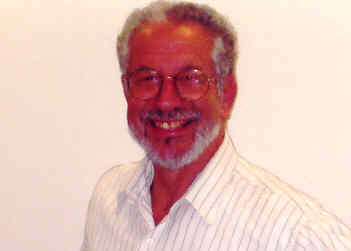
Daniel Gordis said "no" to the Levy Report in signing on to the far-left "Open Letter" (and the full text is below) released this week which has been fisked a bit here. At Haaretz, rather than his usual Jerusalem Post base, he defends his co-joining the left-of-center American Jews who decided to become very publicly upset at the publication of the Levy Report on Israel's rights in, and to, Judea and Samaria.  He published this piece, Choose hope: Don't adopt the Levy report.

In short, he thinks that

To state publicly that what we have in Judea and Samaria is not an occupation might be a legally justifiable claim. But it would also signal that it is time to give up even thinking about how a different reality in the Middle East might be achieved. That, we must not do.

Might be?  And why is that "different reality" abhorrent enough for Gordis to join the left-of-center crowd, lend them his name, and that of the Shalem Center?  Is the issue that important for him to decide to run with this group of Israeli critics?

Well, we need to review his thinking and so here are some extracts from his defense:-

The letter did not argue that Justice Levy’s legal argument was legally incorrect; it also took no stand on settlement issue writ large...The letter simply asserts that if the Prime Minister adopts the Levy Commission report, he will do Israel serious damage.

And how much damage does the letter cause, and I am not arguing that Gordis, et al., do not have the legal right to publish their thinking, but need it have been such a public shaming?  Here's how AP had it in an analysis:

Jewish settlements are at the heart of a 3-year-old deadlock in Mideast peace efforts.

Is that the portrayal that Gordis is comforable with?  He cannot offset that?  The "heart"?  Not the 90-year old Arab total rejection of Jewish nationalism and a Jewish presence anywhere inEretz-Yisrael?

The letter caused no damage or is it only the damage Netanyahu could possibly cause that is a problem?

He then outlines the damage to Pals. are doing to themselves:

Sadly, Israel has no partner with which to make peace. Today’s Palestinian leadership insists on the refugees’ right of return, something Israel cannot permit if it is to remain a Jewish State. The Palestinians have also rejected Netanyahu’s demand that they recognize Israel’s right to exist as a Jewish State, something that Israel must insist on if precluding the refugees’ return is to be defensible. Neither of those will change anytime soon.

He skips over a bit of terror, some incitement, the corrupt regime that is the Palestinian Authority vis-a-vis its own people and other aspects of a horrific reality but that is ignored.  Given, though, those two problematic demands, what is Israel to do?

...A wise Israeli leadership would do everything in its power to communicate to the world that beyond those two existential issues [Israel as a Jewish state and the no return of refugees - YM], which are not negotiable, Israel will discuss virtually anything. There are matters on which Israel will compromise, and others on which it will not...

What "anything" is "virtual"? What issues can be compromised?

Jerusalem?

True Arab democracy?

Demilitarization?

IDF presence, long- or short-term on the Jordan River?

Educational curriculum change?


What about Rabin's formula?  From his October 5,1995 Knesset speech, where he summarized his


...vision of the permanent solution. It will include united Jerusalem under Israeli sovereignty, the country's security border will be on the River Jordan, there will be no return to the 4 June 1967 lines and new blocs of settlements will be built in Judea and Samaria and the Gaza Strip. He spoke of the coming elections to the Palestinian Council, the IDF's re-deployment and the creation of three zones in the territories.


Or that isn't left or liberal enough for Gordis' fellow-signers?


Israel should not establish itself on principles of law?

...While the Levy Commission insisted that its findings were legal and not political, that distinction would be utterly lost on the international community.

Really?  And here we all thought that the most incriminating charge against Israel's presence beyond the Green Line, what justifies the BDS movement, was the illegality of it all.  That charge the world does understand but Israel proving that its presence in not illegal is incomprehensible?  "Illegality" subverts Israel's legitimacy but to disprove that is somehow no good?


Gordis then takes a large step forward which all Israel's governments have avoided for 45 years and more and asserts that now it will lose its ability to maintain a status quo which serves its policies best of all:

Observers everywhere would read the adoption of the Levy report as tantamount to annexing the West Bank. 

I hope.  But I don't think so.  And I am pretty sure Gordis knows that Netanyahu will not do that either.  Not because he doesn't want it but that in everything else he has done in his second term as Prime Minister has been to cover Israel with the US for the Iranian threat.  Gordis knows that that is what Bibi has been doing and so there was no need for him to publicly shame him and Israel in such a manner.

Moreover, he thinks profound damage will be caused:

It would be read as putting the Palestinians on notice that Israel plans never to evacuate any settlements, and that hopes for a Palestinian state are dead.

Wait.  With peace, and coexistence, being the goal to be achieved with the Arabs resident in the areas of the former Mandate that was established to "reconstitute" the Jewish National Home not under Israel's sovereignty, why should Jews remove themselves from where they live?

Will Arabs be removed from Nazereth, Rahat, Um El-Fahm?  Are Jews to be treated to a very different - and discriminatory and even immoral - reality?


He is also concerned:

...Israelis [will think] their political leadership believes that the status quo is actually the ideal and that young people should give up even dreaming that the conflict might, one day, be behind us. Can we imagine ourselves in an interminable conflict without numbing our moral sensibilities?

Well, better a status quo that provides security rather than a jump off the cliff is what most Israelis prefer.


He then waxes emotional:

Zionism at its best is aspirational..Zionism struggles to survive...It hopes for a richer and more sophisticated conversation about how a state can be Jewish. It should aspire to greater social equality. And it should yearn for a day when its sons and daughters will not have to go to war...

Zionism also strives for the time when Jews in the Diaspora, more properly, the Galut/Exile, will stop seeing themselves as equal to the Jewish community in Israel.  Yes, we are partners, yes we share the same visionary aspirations, the same wish for a thriving Jewish culture.  But Jews abroad need know that there is a line that doesn't always have to be crossed.  To be Jewish, nowadays, seems, especially in the camp Gordis chose to be aligned with, is to show just how much you can criticize Israel.

"I criticize Israel, thereby I am" is the now catchword, and so Gordis psoits that

To state publicly now that what we have in Judea and Samaria is not an occupation might be a legally justifiable claim. But it would also signal that it is time to give up even thinking about how a different reality in the Middle East might be achieved. That, we must not do.

Rabbi Dr. Gordis, Daniel, you erred in your own aspirational exuberance.  You erred in the 'friends' you chose.

As you wrote: "Not for naught is Israel’s anthem called “The Hope”, and yes, so we, too, have hope - for you.

As it is written in Psalms, in order to achieve peace, one must first distance oneself from evil.  One must stop speaking guile and do good.

^
P.S.  From Jonathan Tobin:


But what Gordis and the other 40 signers of the IPF letter miss is that by consciously downplaying its legal rights in the dispute, Israel has unwittingly strengthened the hand of those who oppose its existence, be it inside or outside the green line. By ceasing to speak of the justice of Israel’s case, the so-called “peace camp” played into the hands of those who think Jews have no more right to live in Tel Aviv than in Jerusalem or the most remote hilltop West Bank settlement...The assertion of Jewish rights is not incompatible with peace talks or even the surrender of much of the West Bank as part of a genuine peace accord. It is hard to imagine such talks succeeding under any circumstances in the absence of a sea change in the political culture of the Palestinians that would enable them to live with a Jewish state. But they have no hope of succeeding so long as the Palestinians think Israel can be made to give up all of the land without peace. Nor will the international community ever support an Israel they believe has “stolen” Palestinian land.

A generation of abdication of Jewish rights to the West Bank has not softened the hearts of the world or the Palestinians. If Israel is ever to negotiate a peace that will bring security, it must start by saying that it comes to the table not as a thief but as a party whose legal rights must be respected.


_________________________

The Letter:


July 13, 2012
The Honorable Benjamin Netanyahu
Prime Minister of the State of Israel

Dear Mr. Prime Minister:

As strong advocates for Israel’s security and well-being as a Jewish and democratic state, we are deeply concerned about the recent findings of the government commission led by Supreme Court Jurist (Ret.) Edmund Levy. We fear that if approved, this report will place the two-state solution, and the prestige of Israel as a democratic member of the international community, in peril.

As you boldly stated in your address to the United States Congress last May, “I recognize that in a genuine peace, we’ll be required to give up parts of the ancestral Jewish homeland.” As you said clearly, doing so is not easy. While the Jewish people indeed share a biblical connection to the lands of Judea and Samaria, you told Congress, “there is another truth: The Palestinians share this small land with us. We seek a peace in which they’ll be neither Israel’s subjects nor its citizens. They should enjoy a national life of dignity as a free, viable and independent people living in their own state.”

Securing Israel’s future as a Jewish and democratic state requires diplomatic and political leadership, not legal maneuverings. We recognize and regret that the Palestinian Authority has abdicated leadership by not returning to the negotiating table. Nonetheless, our great fear is that the Levy Report will not strengthen Israel's position in this conflict, but rather add fuel to those who seek to delegitimize Israel’s right to exist. At this moment, it is more critical than ever that Israel strengthen its claim in the international community that it is committed to a two-state vision, which is, in turn, central to Israel’s future as a Jewish and democratic state.
We are confident that with your deep understanding of the gravity of this situation, and your unprecedented political strength, you will ensure that adoption of this report does not take place.

Sincerely,

Karen R. Adler
Jack C. Bendheim
Michael Berenbaum
Howard M. Bernstein
Charles R. Bronfman
Steven M. Cohen
Rabbi Marion Lev Cohen
Lester Crown
Thomas A. Dine
Rabbi David Ellenson
Edith Everett
Susie Gelman
E. Robert Goodkind
Stanley P. Gold
Rabbi Daniel Gordis
David A. Halperin
Harold R. Handler
Alan S. Jaffe
Peter A. Joseph
Rabbi Jeremy Kalmanofsky
Peter S. Kolevzon
Steven C. Koppel
Burton Lehman
Marvin Lender
Geoffrey H. Lewis
Deborah Lipstadt
Rabbi J. Rolando Matalon
Harriet Mouchly-Weiss
Burt Neuborne
Bernard Nussbaum
Richard Pearlstone
Marcia Riklis
Rabbi Jennie Rosenn
David Sable
Rabbi David Saperstein
Jeffrey R. Solomon
Joel D. Tauber
Melvyn I. Weiss
Rabbi Eric H. Yoffie
Michael D. Young
Lawrence Zicklin

___________________

An open letter to Gordis.

P.S.

Baker now responds.

P.P.S.   Maurice Ostroff's reply.

^

Tuesday, July 10, 2012

British Boycott Babble

Reported:

European governments have every right to boycott trade with West Bank settlements, according to a leading international counsel, British newspaper The Independent reported Monday.  Cambridge professor of international law James Crawford formulated the formal opinion in a 60-page document obtained by The Independent. “There do not appear to be any EC [European Commission] laws which could be breached by a member state taking the decision to ban the import of settlement produce on public policy grounds,” Crawford asserted in the document.

He continued that imposing a ban on trade with settlements would not breach obligations to the World Trade Organization, because “as a member of international law, the West Bank and Gaza cannot be considered to be Israel’s territory.”

(k/t+=VozIzNeaiis)

Crawford, oddly enough, is Director of the Lauterpacht Centre.  Why?

Well, as for Lauterpacht legality, read on:

The international lawyer Dr. Elihu Lauterpacht has written that in order to determine the title to a particular area the normal procedure is to "trace the chain of title back from the present claimant to a holder whose rights were unquestioned".(2)

In the case of Palestine, of which the West Bank is part of, Turkey was the unquestioned holder and one need not go further back than the period of Ottoman rule. In July 1923, Turkey signed the Treaty of Lausanne, in which she renounced her rights and title to various territories which included Palestine.(3) By that time(4) the Council of the League of Nations had already granted the Palestine Mandate to Britain.(5) The question of Sovereignty over mandated territories had puzzled international lawyers for decades and there are a number of possibilities as to where the sovereignty rested. These include the League of Nations, the Mandatory Powers, or that the sovereignty was in abeyance.(6) A possible solution to this question came in 1950 when Sir Arnold McNair in his separate opinion on the International Status of South-West Africa stated that "Sovereignty over a Mandated Territory is in abeyance".(7)

The sovereignty over Palestine when the Mandate over Palestine terminated is discussed by Lauterpacht and he suggested the possibility of a sovereignty gap.(8) In accordance with the opinion of Sir Arnold McNair, this would be a continuation of the Sovereignty vacuum which existed during the life of the League of Nations.

However, since all are agreed that sovereignty was located somewhere or was in abeyance, it has been pointed out by international lawyers that "no mandated territory can be regarded, on the termination of the mandate over it, as a res nullius open to acquisition by the first comer,"(9) and that "sovereignty could only be acquired by lawful action."(10)

Dr. Elihu Lauterpacht (Lecturer in Law at the University of Cambridge): "Jordan was not entitled to claim any of the areas west of the river Jordan [West Bank]" and "Egypt was not entitled to assert sovereignty over the Gaza Strip."(16)

(2) Elihu Lauterpacht, Jerusalem and the Holy Places, (London: The Anglo-Israel Association, 1988), p.38
(3) Lausanne Treaty, signed between British Empire, France et al. on one side and Turkey on the other, on 24 July 1923, Article 16. The text may be found in The Treaties of Peace 1919-1923 vol.2, (New York: Carnegie Endowment for International Peace, 1924), pp.959ff.
(4) The Palestine Mandate was signed in London on 24 July 1922.
(5) British Mandate for Palestine, League of Nations, Official Journal, 3rd year, no.8, August 1922, Annex 391, pp.1007-12.
(6) Yehuda Blum, "The Missing Reversioner", Israel Law Review, vol.3, no.2, April 1968, p.282; Alan Levine, "The Status of Sovereignty in East Jerusalem and the West Bank," New York University Journal of International Law & Politics, vol.5, no.3, Winter 1972, p.489.
(7) International Court of Justice, Reports of Judgments, Advisory Opinions and Orders, 1950, International Status of South-West Africa, Advisory Opinion of July 11th, 1950, Separate Opinion by Sir Arnold McNair, p.150.
(8) Lauterpact, op. cit., pp.40-41.
(9) Blum, op. cit., p.283.
(10) Lauterpacht, op .cit., p.42.
(16) Lauterpacht, op. cit., p.44.


And this collection.  And this by Julius Stone.  And this from Eli Hertz.

In any case,

Prof. Crawford’s opinion rejects arguments suggesting that EU member states are obliged – rather than merely able – to enforce a ban.  According to the report, the legalist’s brief will be published by the Trades Union Congress later this week.

^

Monday, July 09, 2012

The ABCs of "Occupation"

A.  I repeat, we are not occupiers.  Yes, really.

B.  Here is Yesh Din's screech. Pitiful.

Attorney Michael Sfard, Yesh Din’s Legal Advsior: The Levy Committee was Conceived in Sin to Legalize a Crime, and Has Accomplished its Mission

There are basic errors in the committee's conclusions that contradict Israeli and international law The committee's conclusions will detract from the little protection afforded to Palestinian rights in the West Bank Adoption of the committee's recommendations will legalize land theft and complicate Israel's relations with the entire world Yesh Din refused to appear before the committee because its purpose was to bypass the State Attorney's Office, and its very establishment violates the principles of the rule of law. Yesh Din will present a legal opinion to the Attorney General.

Following the publication of the conclusions of the Edmund Levy Committee, Attorney Michael Sfard, the legal advisor to the human rights organization Yesh Din, said today: "The Levy Committee was conceived in sin to legalize a crime, and it has fully accomplished its mission. Its report is not a legal report but an ideological report that ignores the basic principles of the rule of law. The members of the Levy Committee apparently fell down the rabbit hole, and their report was written in Wonderland, governed by the laws of absurdity: there is no occupation, there are no illegal outposts and there is apparently no Palestinian people either. To that we must say in the words of Alice: ‘This is the silliest tea party I have ever been to.’”

Attorney Sfard explained that the committee's conclusions suffered from elementary errors: "For example, the committee's ruling that the government's conduct ought to be viewed as consent to establishing the outposts is no less than embarrassing. According to law, the Government of Israel expresses its consent to establish settlements solely by explicit decisions of its plenum or by a committee it authorizes to do so. The Levy Committee's suggestion to view illegal statements or actions by various ministers as government consent undermines the principles of the rule of law and good governance."

As for the determination that Israel is not occupying the West Bank, Sfard says that "the members of the Levy Committee are living in ‘La La Land.’ Israel occupied the West Bank by armed force and even though Jordan ceded the territory, the international community, via its binding resolutions (such as the Partition Resolution and many others) has designated it for a Palestinian state. Therefore, Israeli rule of the territory is a rule of occupation as long as there has been no agreement otherwise between the parties."

Adoption of the committee's recommendations would lead to widespread land theft and complicate Israel's relations with the rest of the world. The committee's recommendations are a targeted assassination of the rule of law and, consequently, of the protection of the rights of Palestinians in the occupied territories.

From the outset, Yesh Din refused to appear before the committee, because it was established with the goal of bypassing the Attorney General and the State Attorney’s Office, and, accordingly, the organization's position was that the committee's formation was itself a violation of the principles of the rule of law. In a letter sent to the committee upon its establishment, and signed by Yesh Din's Public Council, which includes several former senior officials of the State Attorney’s Office: Michael Ben Yair (the former Attorney General), Talia Sasson (the author of the Sasson Report on the unauthorized outposts), and Yehudit Karp (the former Deputy Attorney General), Yair Rotlevy, Chair of Yesh Din’s Public Council, emphasized that the Attorney General is the sole authority that is supposed to advise the Government of Israel on legal matters. “The leaders of the State were displeased with the advice they received from the Attorney General,” the letter stated, “and set out to seek advice from an external source. And thus, in the search for advice to bypass that of the Attorney General, the committee was conceived. The committee was conceived in sin and is contrary to the rule of law and the status of the head of law enforcement in Israel – the Attorney General. Accordingly, Yesh Din, which has devoted itself to the struggle to defend human rights by strengthening the rule of law, cannot lend its hand to a process that is essentially an act of defiance against the authority responsible for law enforcement.”

Yesh Din will present the Attorney General, the sole authorized interpreter of the law for the Government of Israel, with the organization's opinion on the issue of the unauthorized outposts, before he decides how to act on the Levy Committee's recommendations. For further details, please contact the Yesh Din Spokesperson, Hila Aloni –...

C.

I sent Hila this:-

I have received your press release,

Can I have your responses to my short questions so I can properly relate to your claims:

1.  Attorney Sfard writes:  "illegal statements or actions by various ministers as government consent undermines the principles of the rule of law and good governance."

but if the actions were not illegal, according to the present interpretation of international law, why would there be any undermining?

2.  He writes that there were "binding resolutions (such as the Partition Resolution...".

indeed, is the 1947 Partition Resolution a "resolution" or was it a recommendation?  And if the Arab states and the local Arab population living in the Mandate did not accept it and furthermore, went to war in a blatant act of aggression, indeed, did they not reject that decision, resolution or recommendation?

3.  He writes that "the international community...designated [the territory of Judea and Samaria] for a Palestinian state."

Was not the term an "Arab state"?

4.  There is no response to any of the interpretations of the international law opinions by several other legal experts (here and see below) such as the former President of the Hague Court for Justice concerning the issues.

Why was this?

I could have added this:

If Yesh Din presumes it acted correctly in not appearing, was then the State of Israel correct not to appear before the investigation by the Goldstone Committee and now, the new UN Human Rights Council team coming to investigate the "settlements" issue?

I also received this note:

The partition resolution was a resolution. It made a recommendation, but that doesn’t make it any less a resolution. It just means that it was not binding. And, incidentally, if the partition resolution had been binding (i.e., if the General Assembly had the authority to make a definitive determination of borders and if the resolution had been passed as such a definitive determination, rather than as a recommendation), the rejection of the Arab states would not have made it any less so. The Arab rejection is only important as a demonstration that the non-binding resolution did not subsequently morph into a binding agreement between the parties. [well, that was my point]

As to Sfard’s opinion, I would state the opposition much more clearly. Sfard writes that “the international community, via its binding resolutions (such as the Partition Resolution and many others [but which wasn't]) has designated it [the West Bank] for a Palestinian state.” This is simply false. The “international community” made only one binding resolution designating the status of the territory. This occurred in 1922, when the League of Nations designated the territory, together with the remainder of Palestine for “reconstituting the national homeland” of “the Jewish people.” The “international community” never had the authority to make any subsequent legally binding resolution re-designating the territory for a different people, and it never purported to do so.

I rest my case.

UPDATE

D.  Her first reaction:

Hey Yisrael,

Are you a reporter? Where do you write for?

Best,

Hila

P.S.

PM Netanyahu Comments on Retired Judge Edmund Levy's Report
(Communicated by the Prime Minister's Media Adviser)

Prime Minister Benjamin Netanyahu, today (Monday, 9 July 2012), commented on retired Supreme Court Judge Edmund Levy's report:

"First of all, I very much appreciate the efforts of Judge Levy and the people who worked with him. They did serious, quiet work over long months. I will submit this report to the Ministerial Committee on Settlement Affairs that I established and we will discuss it and make a decision.

This is important. This report, in my opinion, discusses the question of the legality and legitimacy of the settlement movement in Judea and Samaria on the basis of the facts and claims that merit serious examination."
_______________

Articles on the legality of Settlements (in chronological order)

Eugene V. Rostow: “Resolved: Are the Settlements Legal?” New Republic, October, 1991
CAMERA.ORG: “Jewish Settlements and the Media”, by Ricki Hollander, October, 2001
Joseph Farah: “The ‘Settlements’ Issue”, 2002
Jeffrey Helmreich: “Diplomatic and legal Aspects of the Settlement issue”, January, 2003
Julius Stone: “Israel and Palestine – Assault on the Law of Nations”
Yoram Shifftan: “Israeli Complicity in the Delegitimization of the Settlements”, September 2004
David Meir-Levi: “Occupation and Settlememt: The Myth and Reality”, June, 2005
Moshe Dann against Akiva Eldar: “The War over Israel’s Settlements”, Spring 2009
Gerald M. Adler: “Preserving a legal inheritance: settlement rights in the ‘Occupied Palestinian Territories’” September, 2009
David Phillips: The Illegal-Settlement Myth, December 2009
Alan Baker: “The Settlements Issue: Distorting the Geneva Convention and the Oslo Accords” , January, 2011
David Matas: “The Settlements: Dismantlement or Deconstruction”, June 2011
Israeli Foreign Ministry: “Israel’s use of land for settlements conforms to all rules and norms of international law.” (undated)

MORE

by Howard Grief: LEGAL RIGHTS AND TITLE OF SOVEREIGNTY OF THE JEWISH PEOPLE TO THE LAND OF ISRAEL AND PALESTINE UNDER INTERNATIONAL LAW

http://myrightword.blogspot.com/2010/11/yes-no.html
http://myrightword.blogspot.com/2011/06/illegitimate-illegitimacy.html
http://myrightword.blogspot.com/2009/06/shmuel-katz-2001.html
http://myrightword.blogspot.com/2010/03/legal-ilegal-legal.html
http://myrightword.blogspot.com/2009/11/that-anglo-american-convention-of-1924.html


Yehuda Z. Blum, Ambassador and Permanent Representative of Israel to the United Nations had this to say on June 11, 1979,  (via Eli Hertz):

"A corollary of the inalienable right of the Jewish people to its Land is the right to live in any part of Eretz Yisrael, including Judea and Samaria which are an integral part of Eretz Yisrael. Jews are not foreigners anywhere in the Land of Israel. Anyone who asserts that it is illegal for a Jew to live in Judea and Samaria just because he is a Jew, is in fact advocating a concept that is disturbingly reminiscent of the 'Judenrein' policies of Nazi Germany banning Jews from certain spheres of life for no other reason than that they were Jews. The Jewish villages in Judea, Samaria and the Gaza district are there as of right and are there to stay.

"The right of Jews to settle in the Land of Israel was also recognised in the League of Nations 'Mandate for Palestine' which stressed 'the historical connection of the Jewish people with Palestine and ... the grounds for reconstituting' - I repeat, reconstituting 'their national home in that country.'

"The Mandatory Power was also entrusted with the duty to encourage 'close settlement by Jews on the land, including state lands and waste lands not required for public purposes.'"


^

Monday, February 28, 2011

Legal Mumbo-Jumbo on a 'Palestinian' State

I found this excerpt from "Sovereignty, Colonialism and the 'State' of Palestine Under International Law" by John Reynolds, Irish Centre for Human Rights, June 13, 2009 and my comments follow:

The creation of a Palestinian State in some form has been envisaged since at least 1922, when Palestine came under British Mandate pursuant to Article 22 of the League of Nations Covenant. According to the British Colonial Secretary:

His Majesty’s Government conceived it as of the essence of such a mandate as the Palestine mandate, an A mandate, and of Article 22 of the Covenant, that Palestine should be developed, not as a British colony permanently under British rule, but as a self-governing State or States with the right of autonomous evolution.25

By the time of the UN Partition Plan in 1947, conceptions of that State had changed according to prevailing social and political circumstances, but it still had not come to fruition. The annex on Palestine contained in the 1945 Pact of the Arab League stated that:

Even though Palestine was not able to control her own destiny, it was on the basis of the recognition of her independence that the Covenant of the League of Nations determined a system of government for her.


Her existence and her independence among the nations can, therefore, no more be questioned de jure than the independence of any of the other Arab States.


Even though the outward signs of this independence have remained veiled as a result of force majeure, it is not fitting that this should be an obstacle to the participation of Palestine in the work of the League.

Palestine formally became a member of the League of Arab States on 9 September 1976, and on 15 November 1988 the Palestine National Council (PNC) declared the existence of the State of Palestine, in what is known as the ‘Algiers Declaration’.26 The Declaration was “an attempt to affirm the reasonableness and international legal legitimacy of the Palestinian cause”,27 and was followed by attempts on the part of the Palestine Liberation Organisation (PLO)28 to accede to international legal treaties and elicit membership of several UN specialised agencies. The recent declaration to the International Criminal Court by the Minister of Justice of the Palestinian Authority (the interim self-government authority established by the Oslo Accords between Israel and the PLO in the 1990s) appears to be a continuation of this strategy, which is broadly aimed at advancing the PLO’s political aspiration of Palestinian statehood by reconciling it with the legal framework established by the UN and accepted by the majority of the international community for resolution of the question of Palestine; that is, a two-state solution. The question with which this paper is concerned is not whether such a solution is viable or desirable or realistic, or whether placing faith in the established paradigm of State-building generally is even, given the history of decolonisation, the appropriate framework for succeeding foreign rule, but whether the Palestinian claims to statehood are supported by the salient norms of international law, set out briefly in the previous section.

On the face of it, many of the criteria for statehood could be said to be satisfied to certain extents in the Palestinian context. The Palestinians, as a people that identifies itself as a national group connected to a Palestinian homeland, are recognised as a people with the right to self-determination. Part of that people, the Palestinian population of the OPT — comprising the vast majority of that territory’s population and living together in it as an organised community—could be said to constitute a permanent population for the purposes of the criteria for statehood in international law.29


25 See the statement dated 5 August 1937 by Mr. Ormsby-Gore, the Colonial Secretary, at the League of Nations, Permanent Mandates Commission, Minutes of the Thirty-Second (Extraordinary) Session devoted to Palestine, held at Geneva from 30 July 30 to 18 August 18 1937, including the Report of the Commission to the Council, Official No. C.330.M.222 1937. VI, p. 87.
26 Palestine National Council, Declaration of Independence, 15 November 1988, UN Doc. A/43/827-S/20278, 18 November 1988.
27 Omar Dajani, ‘Stalled between seasons: The International Legal Status of Palestine During the Interim Period’, (1997-98) 26 Denver Journal of International Law and Policy 27, at 59.
28 The PLO has been recognised by the UN General Assembly, as well as by the Government of Israel, as the legitimate representative of the Palestinian people. See General Assembly resolution 3236 (1974), UN Doc. A/9361, and Letter from Yitzhak Rabin to Yasser Arafat (9 September 1993), reprinted in The Palestinian-Israeli Peace Agreement: A Documentary Record (Institute for Palestine Studies, 1993), at 128-129, respectively. 
29 It must be noted, however, that Israel at present retains ultimate control over that population in terms of its population registry, of who may enter and leave the OPT, where they may reside, etc.

The first problem with this presentation begins with the very first presumption of

The creation of a Palestinian State

Actually, the idea was the reconstitution of the Jewish national home in which Arabs had no special mention but were lumped together in the demographic pool of simply "non-Jews".

Here:

Whereas the Principal Allied Powers have also agreed that the Mandatory should be responsible for putting into effect the declaration originally made on November 2nd, 1917, by the Government of His Britannic Majesty, and adopted by the said Powers, in favor of the establishment in Palestine of a national home for the Jewish people, it being clearly understood that nothing should be done which might prejudice the civil and religious rights of existing non-Jewish communities in Palestine, or the rights and political status enjoyed by Jews in any other country; and Whereas recognition has thereby been given to the historical connection of the Jewish people with Palestine and to the grounds for reconstituting their national home in that country;

The second problem is in this formulation:

conceptions of that State had changed according to prevailing social and political circumstances,

Those circumstances were mainly the illegal attempt by Arabs to violently thwart the Mandate decision and deny Jews any place for their "home" anywhere in the territory definbed as "Palestine". Moreover, the British betrayed the Mandate decision in 1939 by issuing a White Paper policy statement that was considered an illegal act in that it broke with the terms of the British Mandate as decreed by the League of Nations and the Balfour Declaration.

As happened

...in the report of the Permanent Mandates Commission to the Council of the League, the Commission unanimously stated that:

•... the policy set out in the White Paper was not in accordance with the interpretation which, in agreement with the Mandatory Power and the Council, the Commission had placed upon the Palestine Mandate.

As the paper makes clear:

...His Majesty's Government therefore now declare unequivocally that it is not part of their policy that Palestine should become a Jewish State.

A third point is this terminology:

the history of decolonisation, the appropriate framework for succeeding foreign rule

Despite repeated attempts by Arabs and their supporters, Jews returning to their national patrimony were not and are not "colonisers" or engaged in "colonisation". (and read this)

The fourth negative element is this

The Palestinians, as a people that identifies itself as a national group connected to a Palestinian homeland

Self-identification is simply not sufficient especially as there is an internationally legally-recognized pre-claim by the Jewish people that surely is superior to any Arab-related claim since the Arabs were conquerors and occupiers of the Jewish homeland beginning in 638 CE, 2000 years after the Jewish presence.  During the Mandate period, the nationality of "Palestinian" applied to Jews and non-Jews as so even according to this "analysis", Jews still have at least (and so much more) an equal claim as any Arab.

Today, the assertion of a separate "Arab Palestinian" identity, which is distinct from, say, Jordanian identity in that Jordan was a fiction of British colonialism from the March 1921 Cairo Conference, is a fabrication and cannot compare with the historical, religious, cultural and physical connection Jews had and have with the Land of Israel.

In all, Reynold's legal mumbo-jumbo is all blarney (in the sense of: cajolery; deceptive or misleading talk; nonsense; hooey).  Which is too bad since Reynold is a doctoral candidate at the Irish Centre for Human Rights and also a Government of Ireland Scholar; NUI Travelling Scholar; LL.M International Human Rights Law (NUI Galway); BBLS (University College Dublin) .  His academic papers are here.

Mr. Reynold seems to be be ideologically driven by a political viewpoint, which is unfortunate for him and academia.

^

Friday, December 24, 2010

More on the Charge of "Illegality"

A collection from my mentor, Shmuel Katz, from the blog site that David Isaac maintains, researching and composing from Moekie's articles we found and collected.

Here.

^

Monday, August 17, 2009

So, That Is What "Illegal" Can Mean?

From Haaretz:

In early July, Haaretz reported on such preparations for 10 trailers in the settlement of Eli. A little more than a month after initial work at the location, most of the trailers have been built and appear to be ready to accommodate residents shortly.

The site is defined as state-owned land and lies within the settlement's municipal boundaries. But because Eli does not have a development plan, the construction is considered illegal.


There you have it: illegal, criminal, war crime.

A development plan is lacking a few details to be fully authorized.

Harumph.

Tuesday, August 11, 2009

This Is Clarification?

ICRC clarifies


Sir, - Moshe Dann's op-ed of July 24 "How settlements became 'illegal,'" contained a number of misrepresentations with regard to the International Committee of the Red Cross (ICRC), two of which I would like to put right.

First, the ICRC did not "make up the law" which considers the settlements to be illegal. This law, also known as the law of occupation, is part of International Humanitarian Law (IHL), the law applicable in times of armed conflict, including situations of belligerent occupation. Occupation law is encoded in the Hague Regulations of 1907 and in the Fourth Geneva Convention of 1949, both drafted and agreed upon by States.

[this is obfuscation. what Moshe meant was that in the 1970s, no formal court or international legal body had delivered any judicial-like decision, so by adopting the position of "illegality" as regards Jewish communities, the ICRC was indeed 'making up the law']

The applicability of this law to the West Bank is widely accepted by the international community, including the UN. The Fourth Geneva Convention prohibits the transfer of the civilian population of the occupying power into the occupied territory. The establishment of settlements, as a form of population transfer into occupied territory, is therefore forbidden under IHL.

[no, the "establishment of settlements" is not a form of transfer. moving Jews out of territory assigned to them by the League of Nations as their national homeland, while assuring them of the 'right of close settlement on the land', as the Mandate reads, is true transfer as the sometimes successful attempts by Arabs to kick Jews out of their homes during the Mandate period was ethnic cleansing]

Second, the ICRC has never condemned or accused Israel of "illegal occupation" because it is not the role of IHL or the mandate of the ICRC to make determinations regarding the legality of occupation; this is another area of international law (known as jus ad bellum) which is governed by the UN Charter. Once a situation exists which factually amounts to an occupation, however, as is undoubtedly the situation in the West Bank, the ICRC works for the faithful application of the relevant rules of IHL in accordance with the mandate given to it by the international community.

[ah, "settlements" are "illegal" but the "occupation is not "illegal"? does Monsieur Wettach think we are idiots?]

The ICRC will therefore continue its dialogue with the Israeli authorities on the issue of the settlements and their humanitarian implications while strictly adhering to its humanitarian, neutral, impartial and independent nature.

PIERRE WETTACH

Head of ICRC Delegation

Israel Occupied & Autonomous Territories Tel Aviv