Showing posts with label John le Carre. Show all posts

Sunday, September 04, 2016

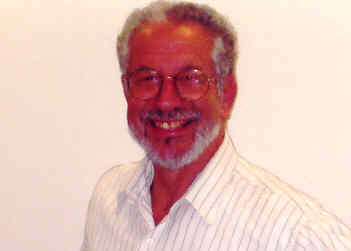
John Le Carre and His 'Palestinians'. And Margaret Thatcher


The prime minister’s office wished to recommend me for a medal, and I had declined. I had not voted for her, but that fact had nothing to do with my decision. I felt, as I feel today, that I was not cut out for our honours system, that it represents much of what I most dislike about our country. In my letter of reply, I took care to assure the prime minister’s office that my churlishness did not spring from any personal or political animosity, offered my thanks and compliments to the prime minister, and assumed I would hear no more.

I was wrong. In a second letter, her office struck a more intimate note. Lest I was regretting a decision taken in heat, the writer wished me to know that the door to an honour was still open. I replied, equally courteously I hope, that as far as I was concerned the door was firmly shut, and would remain so in any similar contingency. Again, my thanks. Again, my compliments to the prime minister. And again I assumed the matter was closed, until a third letter arrived, inviting me to lunch. There were six tables set in the dining room of 10 Downing Street that day, but I only remember ours, which had Mrs Thatcher at its head and the Dutch prime minister Ruud Lubbers on her right, and myself in a tight new grey suit on her left. The year must have been 1982. I was just back from the Middle East, Lubbers had just been appointed. Our other three guests remain a pink blob to me. I assumed, for reasons that today escape me, that they were industrialists from the north. Neither do I remember any opening exchanges between the six of us, but perhaps they had happened over cocktails before we sat down. But I do remember Mrs Thatcher turning to the Dutch prime minister and acquainting him with my distinction. “Now, Mr Lubbers,” she announced in a tone to prepare him for a nice surprise, “this is Mr Cornwell, but you will know him better as the writer John le Carré.”

Leaning forward, Mr Lubbers took a close look at me. He had a youthful face, almost a playful one. He smiled, I smiled: really friendly smiles. “No,” he said. And sat back in his chair, still smiling. But Mrs Thatcher, it is well known, did not lightly take no for an answer.

“Oh, come, Mr Lubbers. You’ve heard of John le Carré. He wrote The Spy Who Came In From The Cold and…” – fumbling slightly – “… other wonderful books.”

Lubbers, nothing if not a politician, reconsidered his position. Again he leaned forward and took another, longer look at me, as amiable as the first, but more considered, more statesmanlike.

“No,” he repeated.

Now it was Mrs Thatcher’s turn to take a long look at me, and I underwent something of what her all-male cabinet must have experienced when they, too, incurred her displeasure. “Well, Mr Cornwell,” she said, as to an errant schoolboy who had been brought to account, “since you’re here” – implying that I had somehow talked my way in – “have you anything you wish to say to me?”

Belatedly, it occurred to me that I had indeed something to say to her, if badly. Having recently returned from South Lebanon, I felt obliged to plead the cause of stateless Palestinians. Lubbers listened. The gentlemen from the industrial north listened. But Mrs Thatcher listened more attentively than all of them, and with no sign of the impatience of which she was frequently accused. Even when I had stumbled to the end of my aria, she went on listening before delivering herself of her response.

“Don’t give me sob stories,” she ordered me with sudden vehemence, striking the key words for emphasis. “Every day people appeal to my emotions. You can’t govern that way. It simply isn’t fair.”

Whereupon, appealing to my emotions, she reminded me that it was the Palestinians who had trained the IRA bombers who had murdered her friend Airey Neave, the British war hero and politician, and her close adviser. After that, I don’t believe we spoke to each other much. Occasionally I do ask myself whether Mrs Thatcher nevertheless had an ulterior motive in inviting me. Was she, for instance, sizing me up for one of her quangos – those strange quasi-official public bodies that have authority but no power, or is it the other way round? But I found it hard to imagine what possible use she could have for me – unless, of course, she wanted guidance from the horse’s mouth on how to sort out her squabbling spies.

My previous posts on him and his attitude towards Jews:

Here.

Here.

His description of the Jerusale Central Prison and its gallows in The Little Drummer Girl is off.

And this exchange is interesting.  As is his attack on Israel in 2006.

^

Saturday, December 25, 2010

John le Carre and Israel (And the Jews)

In his new book, "Our Kind of Traitor", he manages to get in a mention of Israel in a neutral fashion on p. 121:

...his son Ben having invited an Israeli school friend...

I point this out because of le Carre's conflict with the issue of anti-semitism:

a) 1996

...people might say you were embracing anti-Semitic stereotypes?

I have carried that label around with me ever since I wrote "The Little Drummer Girl." I received such awful letters from organized Jewish groups that I never felt on safe ground after that. My great sin was suggesting that the state of Israel — that Palestine — was in fact a twice-promised land.

Still, I didn't feel queasy about addressing the tradition of Jewish tailors in the East End.

b) 1997

In his Nov. 15 article Mr. le Carre said he was warned by friends of the futility of responding to the Times review that appeared on Oct. 20, 1996, which he contended ''smeared'' him as an anti-Semite. The review, by Norman Rush, a novelist, praised the book as a ''tour de force'' but faulted it for portraying the principal character, a Jew, as ''yet another literary avatar of Judas.'' Mr. Rush said the association, ''however little Mr. le Carre intended it,'' left him with a feeling of ''unease.''

Mr. le Carre described his reaction in the article, saying, ''I realized that we were dealing not with offbeat accusations of anti-Semitism so much as the whole oppressive weight of political correctness, a kind of McCarthyite movement in reverse.'' He said he wished he had ignored his friends' advice and gone ahead and written to The Times.

But in fact he did. The Times published his letter complaining that he had been ''tarred with the anti-Semitic brush.'' on Nov. 3, 1996, along with a response from Mr. Rush denying the contention. ''I have not said or implied that Mr. le Carre is an anti-Semite, and I do not think it,'' Mr. Rush wrote.

c) 1998


Here, in the plush surroundings of London's Savoy Hotel, John Le Carre wants to talk about the pain of the outsider and the yearning to belong, about Smiley and Jews and anti-Semitism. And, of course, about Israel.

"Perhaps I learned too early how the British can treat you if you are not quite one of them," he says. "Perhaps that lesson continued as I discovered how the English punish their artists.

"Or perhaps," he suggests, "I am no different from any other artist anywhere in the world who feels himself an outsider in his own country and believes there's another country somewhere else where he will be happier and safer."

..."I knew nothing of the Middle East, but then I have always seen my novels as opportunities for self-education," he says. "Investing my ignorance in my central character -- a leftist English actress -- and making a virtue of her naivety, I set off on a journey of self-enlightenment, living my character, leaning with each breeze -- now toward Israel, now away from it -- in a series of schizophrenic visits to Amman, Damascus, Beirut, South Lebanon and later Tunis. Then back to Israel, across the Allenby Bridge or by way of Cyprus."

Israel, he says, "rocked me to my boots. I had arrived expecting whatever European sentimentalists expect -- a re-creation of the better quarters of Hampstead [in London]. Or old Danzig, or Vienna or Berlin. The strains of Mendelssohn issuing from open windows of a sumer's evening. Happy kids in seamen's hats clattering to school with violin cases in their hands..."

Instead, what he found was "the most extraordinary carnival of human variety that I have ever set eyes on, a nation in the process of re-assembling itself from the shards of its past, now Oriental, now Western, now secular, now religious, but always anxiously moralizing about itself, criticizing itself with Maoist ferocity, a nation crackling with debate, rediscovering its past while it fought for its future."

"No nation on earth," he says passionately, " was more deserving of peace -- or more condemned to fight for it."

In the offices and homes of his Israeli hosts, Le Carre bounced around ideas and probed -- without, he notes, ever having to persuade anyone of his goodwill. "And when I told my hosts that I was about to walk through the looking-glass and take my questions to the Palestinians, they said, 'good idea' and wished me luck. And I believe they meant it."

...What exercises him above all -- wounds him -- are dark charges of anti-Semitism from the United States that have persistently hung over him and his closely examined, intricately dissected work.

"In my perception of the Jewish identity -- in my continuing dialogue with it, in private and in my novels -- I have been aware from early of a spiritual kinship that embraces what is creative in me, and forgives what is despicable, and shares with me the dignity and solitude and anger that are born of alienation.

"Ever since I can remember, my ears have been pricked up for the careless chamber music of English prejudice. And certainly I pride myself on having as good an ear as anyone for the nuances of that repulsive, but mercifully dying art-form, British anti-Semitism in the chattering classes.

"I have been so keen to reproduce it in my books that sometimes the undiscerning have mistaken the singer for the song. These are nervous times. They were nervous from the day I started writing some 40 years ago."

d) and let's go back to 1983

...examining Fiedler in The Spy Who Came in from the Cold, a character Mr. Laqueur summarily dismisses. There are four main characters in the book, a spy novel which has not been equaled since its publication in 1963: Leamas, the disillusioned anti-hero who works for London; Mundt, the ex-Nazi who runs East German security; Fiedler, the brooding intellectual East German Communist who suspects his superior of treason; and Liz Gold, the naive, idealistic British Communist party member. Her Jewishness is crucial to the story, but it is inexplicably overlooked by Mr. Laqueur.

London wants Fiedler destroyed to save Mundt, its “mole” in the East German regime. London's plan hinges on the mutual sympathy that will develop between Leamas and Fiedler: behind their cynical, jaded façades, both men in fact . . . attempt to stay true to what they perceive as their ideals. It is the book's supreme irony that in a fearfully symmetrical denouement, Leamas unwittingly helps destroy Fiedler, thus helping to restore Mundt's credibility in the eyes of the East Germans. . . .

But The Spy Who Came in from the Cold should be read on another level: as a reflection of the Stalinist show trials of the late 40's and early 50's in Eastern Europe. Fiedler personifies the old guard, intellectual Communists—mostly Jewish—whom the Stalinist apparat had to destroy. Leamas's words to the tribunal: “I'll tell you something—no one else will. . . . Mundt had Fiedler beaten up, and all the time, while it was going on, Mundt baited him and jeered at him for being a Jew.” This mirrors the actual truth: Hungarian, Polish, and Czech Communists of Jewish background were above all jeered at as Jews during their interrogation and torture. Nowhere was this as obvious as in Czechoslovakia; seven out of nine “deviationist” Communists tried in Prague, including Slansky, general secretary of the party, were vilified as Jews. And earlier, in a similar trial in Hungary, the accused who had changed their names were meticulously identified by their original, Jewish-sounding names.

It is surprising that Mr. Laqueur would miss these historical analogies and can accuse Le Carré of implausibility. After all, how many Western authors have written about these trials, not to mention with Le Carré's insight and sympathy for the falsely accused Jewish Communists—and as early as 1963?

And now about The Little Drummer Girl, set in the Middle East. In a curious twist, Mr. Laqueur now finds a “fraudulent air of authenticity hovering about all [the] implausible situations” described in the book. He singles out Kurtz, the leading Israeli anti-terrorist expert, for his analysis. First he searches for literary clues and finds that the trail leading to Conrad is a cold one. Mr. Laqueur is looking for a Jewish villain, but Kurtz defies categorization. . . . Mr. Laqueur himself supplies enough quotes to illustrate Kurtz's nonconformism, yet never spells it out.

Kurtz is a Jewish Smiley. But just as Mr. Laqueur consistently refuses to recognize Smiley's humanity and integrity amid the cunning required by his profession, so he refuses to see Kurtz's higher morality in his skeptic's disguise. Le Carré describes Kurtz as “too paradoxical, too complicated, made of too many souls and colors,” and this does not fit into Mr. Laqueur's argument. In fact, Le Carré captures the more general fate of the Jews when he says about Kurtz: “When he spoke of death, it was clear that death had passed by him often and very close, and might any moment come his way again.”

I also take exception to Mr. Laqueur's accusation that Le Carré takes a pro-Palestinian Arab line in this book. Equating sympathy for bombing victims with a pro-Palestinian stand can only be attributed to narrow-mindedness. After the unusual publicity build-up that preceded The Little Drummer Girl, I was frankly disappointed by the book. I found its overwrought plot slightly insulting to my intelligence, but not at all offensive to my hypersensitive Jewish feelings.

Thomas B. Windholz


Walter Laqueur writes:

...Thomas B. Windholz has lived under both Hitlerism and Stalinism, but Le Carré, alas, has not. Mr. Windholz says that he found The Little Drummer Girl not offensive to his Jewish feelings. Nor did I. Le Carré was charged with anti-Semitism by some critics following the publication of an earlier book, a fact which seems to have escaped Mr. Windholz. I tried to make it clear, unfortunately without success, that I thought this specific charge misplaced: Le Carré seems not to like people in general, why should Jews get preferential treatment? As for Fiedler, the Jewish Communist in The Spy Who Came in from the Cold, it is perfectly true that Le Carré makes him more sympathetic than Mundt, the ex-Nazi; one ought to be grateful for small mercies. Regarding Liz Gold (in the same novel), I did note that there are a number of characters in these novels who, judging by their names, may or may not be Jewish. But their Jewishness is no more meaningful in this context than the color of their hair, and the issue is therefore irrelevant.

I always remember that he even got the scene in Jerusalem's Hall of Heroism Museum wrong, when he has his character visitor to gallows' room where two Hebrew underground fighters took their own lives rather than permit the British occupiers to hang them.

^

Sunday, October 05, 2008

The 'Who Cares?' Attitude of Le Carre

I will be honest. I consider the writing of John le Carre exquisite. Imagery, language, plot, deep-thinking, even the incompleteness that tropes through his prose, makes him irresistible.

But I do know his limits.

A previous book "Little Drummer Girl", dealing with my neck-of-the-woods, had a good few factual errors as well as a left-wing bias. (*)

And so, I loved it when I caught this in the New York Times' review of his latest novel, "A Most Wanted Man":-

“I know about interrogation,” he said, alluding to his days as a British spy in the 1950s. “I’ve done interrogations, and I can tell you this: By extracting information under torture, you make a fool of yourself. You obtain information that isn’t true. You receive names of people who are supposedly guilty and aren’t...

Mr. le Carré was recruited as a spy while still a college student. Working for the British Foreign Office as a diplomat-cum-secret agent, he began writing thrillers under a pseudonym. (His real name is David Cornwell.) His earlier books had the cold war as their backdrop, and while he is not nostalgic for that time, he said it “was a softer world, of course, mine.”

“I probably lived in a charmed time,” he added. “The cold war was fought between people of the same culture. Basically, it was.”

“Of course, the Russians tortured wholesale,” he continued.


Whew. He almost overlooked that.


(*)

The Little Drummer Girl was a controversial book which managed to offend both Palestinians and Israelis by presenting the justice of both of their causes and the savagery of both sides' methods...(it) concerns an Israeli plot to catch one of the most important Palestinian terrorists, Khalil. The Israeli scheme centers on the terrorist's preference for using European women recruited to the Palestinian cause, and the relative visibility of Khalil's brother, who is part of the terrorist organization. To make the plot work, Kurtz, the Israeli leading the operation, must infiltrate an agent into the terrorist group. He chooses Charlie, an actress with pro-Palestinian leanings. Kurtz's first task is to convince Charlie to do it against her convictions. The method used is brilliant, playing on Charlie's deepest insecurities and need for love rather than trying to convert her to the Israeli point of view. Now Charlie is ready to start on an adventure that will take her across Europe and to Palestinian training camps in Lebanon...The Little Drummer Girl represents an unusual thematic departure from Hollywood's usual pro-Israel line, only possible because it was based on a novel whose moral ambiguities could not be safely rewritten while preserving the essential qualities of the novel. This film presents a point of view many people have never seen...