Saturday, December 16, 2006

Fiction is, and Should Be, Fiction

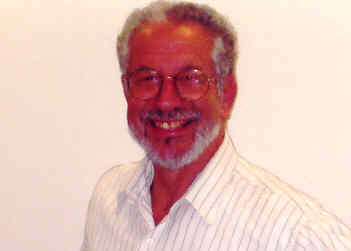
A.B. Yehoshua, at 70, is an Israeli novelist. Just having completed a new work of fiction, "Friendly Fire," that deals with one week of two Israelis relating to the Arab-Israel conflict, he was interviewed by the Washington Post.


Here are some excerpts from Looking at Israel Through Many Eyes

...I am very disturbed by what is happening to the Israeli Arabs. Generally, in these 60 years, we could find a modus vivendi between the two sides. Both sides knew there would be terrible consequences if there were a clash between the majority and minority. My great hope was that with peace they could have full integration. But unfortunately after the Lebanon war there appears to be many cracks and splits.

...The problem is there is so much confusion about the term Jew. I tried to define the term. Jew is the name of a people -- in a minimal way. A Jew is a child of a Jewish mother. It is not like a Christian, who is someone who believes in Christ, or a Muslim, who is someone who believes in the Koran. And the religious people will recognize that a totally secular Jew is still a Jew. When you say Jewishness, all is Jewishness here. . . the Jew in the diaspora is a voluntary Jew. He doesn't have any power over another Jew. I must also face problems that Jews in the diaspora will never have to face. I must decide how much a Jew must torture a Hamas terrorist in order to get information about a bomb that is coming. A Jew in the diaspora will never have to struggle with the problem of selling arms to a murderous regime in Africa to improve the unemployment in our arms industry. . . .

It's as if there are two identities. Israel is what we are doing all the time -- the corruption, et cetera. Then there is the good Jewishness, a box of spicy values you open and say, how wonderful. . . . Even by such things as the angle at which the Israeli soldier holds his rifle in a stormy demonstration of Palestinians along the barrier, this is the place in which Jewish values are judged and determined every day.

What can fiction accomplish in portraying a conflict that is all around you that nonfiction cannot?

Fiction can bring up the complexities, give options that people would never think about. Fiction also introduces human beings. In my first novel, "The Lover," there was an Arab boy who worked in a garage...And I was proud I was able to bring Arab characters to my novels. Of course they are complex, they have problems, but they are real. Fiction can enlarge.


But it is always fiction, right?

Coming Up: Carter vs. Dershowitz - Heavyweight Bout

It's tough taking on a president, even a former one.

Former President Jimmy Carter issued a letter to American Jews on Friday, explaining the use of the term "apartheid" in his new book and sympathizing with Israelis who fear terrorism.

Carter wrote that the letter's purpose was to reiterate that his use of "apartheid" did not apply to circumstances within Israel, that Israelis are deeply concerned about terrorism from "some Palestinians," and that a majority of Israelis want peace with their neighbors.

Carter wrote that he understands Israelis' fear of terrorism, and "reiterated my strong condemnation of any such acts of terrorism."

- - -

"Even though he doesn't mean it in a racial term, to use that term can be nothing less than overly provocative," Rabbi Andrew Straus said.

The reference to apartheid, the word for South Africa's former system of state-sanctioned racial segregation, has angered some rabbis because it appears to equate that system with the treatment of Palestinians.

Carter wrote that "apartheid in Palestine is not based on racism but the desire of a minority of Israelis for Palestinian land and the resulting suppression of protests that involve violence." He called it "contrary to the tenets of the Jewish faith and the basic principles of the nation of Israel."

Carter had planned to go Brandeis University to discuss the book but decided against it after the university requested that he debate Alan Dershowitz about the Israeli-Palestinian conflict. Carter said the outspoken Harvard law professor "knows nothing about the situation."


Dershowitz knows nothing?

I can't wait for Alan's retort.

Here's his first salvo from December 2:-

Sometimes, you really can tell a book by its cover. Jimmy Carter's decision to title his new anti-Israel screed Palestine: Peace Not Apartheid (Simon & Schuster, 288 pages) tells it all. The former U.S. president's use of the loaded word "apartheid," suggesting an analogy to the hated policies of South Africa, is especially outrageous, considering his acknowledgment buried near the end of his shallow and superficial book that what is going on in Israel today "is unlike that in South Africa -- not racism, but the acquisition of land." Nor does he explain that Israel's motivation for holding on to land it captured in a defensive war is the prevention of terrorism. Israel has tried, on several occasions, to exchange land for peace, and what it got instead was terrorism, rockets and kidnappings launched from the returned land.

In fact, Palestinian-Arab terrorism is virtually missing from Mr. Carter's entire historical account, which blames nearly everything on Israel. Incredibly, he asserts that the initial violence in the Israeli/Palestinian conflict occurred when "Jewish militants" attacked Arabs in 1939.


And there's more there.

"Borat" To Get the Oscar?

Here's the film critic of the London Sun, Johnny Vaughan, explaining why Borat should capture an Academy Award.

Sacha Baron Cohen so deserved this Golden Globe nomination and I think he has got to be in with a shout for an Oscar. There are three reasons for that.
Firstly, actors talk about taking risks — Sacha has got to score higher in that department than anyone else.

He physically put his character into the real world.

He risked a lynching from those good old boys at the rodeo. That was no duck walk.

Secondly, suspending disbelief. When I saw it I couldn’t tell what was fact or fiction. Was, for example, Pamela Anderson in on the joke or not?

Thirdly, I don’t think there has been anyone since the days of Robert De Niro in Raging Bull — where he put on 60lb — who has got so immersed in his character.

In fact, Sacha got so immersed that he stuck his face up a 40st man’s a**e. Dustin Hoffman has never been near that.

He even does his interviews in character and remains funny.

We have not had someone who has been a worldwide comedy phenomenon like Sacha since Peter Sellers.

I was never a big Ali G fan. But I am huge Borat fan. The film is sophisticated. It even sends up the viewer.

It is also anti-George Bush and really sends up the brainlessness of anti-Semitism. That is going to win it votes at the Academy. They might nominate Cohen just to annoy Mel Gibson.

Dena Abergel, Chanukah & Christmas

The NYTimes has a unique presentation of how Dena Abergel, a dancer in the New York City Ballet, relates her Judaism to "Nutcracker Suite" Christmas ballet.

Friday, December 15, 2006

Chanukah Gelt

Israelis to spend NIS 50 million for 18 million jelly doughnuts


More than 18 million jelly doughnuts will be sold during this Hanukkah season, Manufacturers Association of Israel said. While Israelis will pay about NIS 50 million for the added calories, this is actually 5 percent lower than last year's number.

The jelly doughnuts, a traditional Hannukah treat known in Hebrew as sufganiyot, cost between NIS 2.5 to 8 a piece, depending on size and filling - prices similar to last year - though it is possible to find bargains such as half a dozen for NIS 11.

Producers started to sell the doughnuts two months ago, and small ones are a hit, with 35-50 gram versions replacing the regular 80 gram ones. About five million of the smaller doughnuts will be sold, compared to only three million in 2005.

The number of candles sold for the holiday is 36 million, up 5 percent from last year.

The cost of all the wax going up in smoke will be NIS 4 million, with an individual package of 45 candles enough to last the 8 days of the festival costing between NIS 2.5 to 4 for regular candles. Special candles can start at NIS 6 a box, and go up well past NIS 12.

Israel will also export NIS 2 million worth of Hannukah candles to countries such as the U.S., France, Australia, Canada and Britain.

Just in Time for Chanukah

Jerusalem Engineer: Temple Mount Ramp May Collapse

(IsraelNN.com) A Jerusalem city engineer warned this week that the ramp leading to the main tourist entrance of the Temple Mount is in danger of total collapse.

Part of the ramp, which leads to the Mograbi Gate, collapsed in the winter of 2004. A wooden bridge which was built over the ramp after the mishap is now also in danger of falling apart.

Within a few months, said engineers from the Western Wall Heritage Foundation, the bridge will become totally unsafe.

Plans for a permanent bridge have been stuck in endless red tape for more than two years.


Main entrance to Temple Mount said in danger of collapse
Nadav Shragai, Haaretz Correspondent

The ramp leading up to the Mugrabi Gate - the main entrance to Temple Mount serving tourists, security forces and visitors - is in danger of collapse, a Jerusalem municipal engineer has warned.

The ramp has not been in use for more than two years, after part of it collapsed into the Western Wall's women's prayer compound in the winter of 2004.

A makeshift wooden bridge was built above the ramp. However, after being used by thousands of people daily for almost three years, the bridge is beginning to wobble.

Engineers of the Western Wall Heritage Foundation say that the bridge is in danger of falling down and in a few months will no longer be safe. The bridge was hurriedly erected after the Jerusalem Police District Commander at the time, Miki Levy, declared it a security need. Levy said at the time that it was imperative for the police to have access into Temple Mount on Friday.

Meanwhile, the plan for the permanent bridge has been stalled for more than two years, bogged down by red tape among the municipality, police, Public Security Ministry and the Israel Antiquities Authority (IAA).

Western Wall Rabbi Shmuel Rabinovitch regrets his hasty agreement to build the temporary bridge, which gnaws into the women's prayer compound, reducing it by more than one-third.

On Saturdays and especially on holidays the congestion there is insufferable. On the High Holidays, emergency services had to evacuate several women who fainted due to the crowding and ushers had to keep many women outside the compound.

Rabinovitch says the authorities might as well close down Mugrabi Gate and bring tourists and security forces to Temple Mount through another gate. He would like the ramp remains, deemed by archaeologists as mere heaps of fill, to be removed, to enlarge the women's compound.

"Today there are as many women worshipers as men, perhaps more, and the women need that area," says Rabinovitch.

The Defense Ministry has delayed its approval for the project repeatedly - once due to the imminent pullout from Gaza, once due to Ramadan, then due to intelligence tips about intentions to raise foment.

The Islamic Movement's Northern Branch issued several warnings against carrying out archaeological work in the collapsed hill of the Mugrabi ramp. The movement said it saw the planned excavations as an attempt to damage the al Aqsa Mosque, and its leaders called on Arab states and Muslims in the world to object to it.

Yehoshua Pollak, head of Jerusalem's Planning and Construction Committee, says the Public Security Ministry has agreed to the municipality's condition to call the bridge a "security requirement" and the process is almost finished.

"Everyone should hurry up before a disaster happens there. Nothing is stable there, not even the temporary wooden bridge," he says.

The IAA says that the part of the ramp that collapsed will probably be removed and the exposed Western Wall part will be added to the women's compound. However, they do not intend to dig below the existing compound, although the upper part of Barclay's Gate is already visible beneath the surface.

Barclay's Gate is one of the original Temple Mount portals, dating from the period of the Second Temple. In the 1970s the Religious Affairs Ministry and archaeologists wished to expose it, but rabbis and the Waqf objected. The gate, named after the 19th-century American consul who first identified it, will therefore remain covered.

MJ Rosenberg Can't Count

As my good friend Lenny Ben-David pointed out in this letter (which didn't make the website of the JPost at the time, just the print edition), MJ Rosenberg, arch-concessionist (email: mj847@aol.com), has used this number of Israeli dead in other presentations, but no one has challenged him before.

December 1, 2006, The Jerusalem Post

Idyllic? Come off it

Sir, - In arguing for Israeli-Palestinian negotiations under virtually any conditions ("What's your solution?" November 24), MJ Rosenberg points to the pre-Aksa war period as almost idyllic - only "half [a] dozen civilians [were] killed inside Israel between the fall of 1997 and the fall of 2000." Wow, that averages out as only two per year.

Unfortunately, it's not true. Look at the Foreign Ministry's list of "Fatal Terrorist Attacks in Israel since the 1993 Declaration of Principles" between Israel and the PLO.

Rosenberg conveniently picks his starting point after July 1997, when 16 Israelis were killed in suicide bombings. What about the five killed in Jerusalem in a September 1997 suicide bombing? Well, the fall equinox didn't occur until two weeks later, so technically they were killed in the summer.

Still, the figures don't add up. Maybe he doesn't count the soldiers killed in terrorist attacks in that period. Perhaps soldiers are legitimate targets in his view.

But the numbers still don't jibe. It appears that Rosenberg elides the dead Israelis who were not "inside Israel" but, as recorded by the Foreign Ministry, were murdered in Alei Zahav in Samaria, in Hebron, in Yitzhar (Samaria), or Moshav Tomer in the Jordan Valley. He not only minimizes the toll exacted by Palestinian terrorists, but apparently also differentiates between the blood of Jews. Is it legitimate, in his view, to attack Jews over the Green Line? Are settlers "asking for it" because of their physical location?

The diplomatic process is vital, but it must be based on reality, not wishful thinking or misrepresentation.


Good going Lenny.

Comedy Central Does Neturei Karta

Here.

Kippa tip: JewSchool)

Oh Boy, An Obama-Olmert Parallel

Barack Obama, Senator from Illinois, seems to be heading for a run for president and is already trying to outflank Hillary Clinton.

But doesn't this following story remind you of Olmert's shady dealing with his house in the German Colony (*)?

Read on:-

The Chicago Tribune broke the story back in November. It begins in 2004 with Obama's $1.9 million book advance for The Audacity of Hope. In June 2005, Obama used the money to purchase a $1.65 million Georgian revival home on Chicago's South Side—$300,000 less than the asking price. On the very same day, Rezko, a Democratic Party fund-raiser and developer, bought the adjacent empty lot at the asking price from the same owner (the house and the lot were previously owned by the same person). Rezko, who had raised money for Obama and known him since the senator attended Harvard Law School, did not develop the empty lot. In January 2006, he sold a 1,500-square-foot slice of it to Obama for $104,000, a fair sum in that market.

Here's the question: Did Rezko orchestrate his same-day purchase of the lot at full price so that the seller would give Obama a break on the price of the adjacent house? Was Obama in on the deal? And did Rezko never intend to develop the lot, giving Obama a nice roomy side yard, a favor which he'd call in later?

Obama says he did talk to Rezko before the purchase, but only because a person who had renovated it for a previous owner had once worked with Rezko, who owns other properties in the South Side. He didn't arrange the joint purchase with him. He bought the house at such a good price, Obama has told the papers, because it was being unloaded in a "fire sale."

There's no evidence that the senator is fibbing or that the indicted fund-raiser asked anything in return for his neighborly behavior (though that might have been just a matter of time). Obama hasn't tried to change his story, even though Rezko is now talking to investigators.


By the way, after the Pal. elections, Obama had said:

"My hope is that as a consequence of now being responsible for electricity and picking up garbage and basic services to the Palestinian people, that they recognize it's time to moderate their stance." and "Palestinians...need to get their own house in order to successfully reign in violent factions and come to the table with Israel speaking with one voice...the US will always side with Israel if Israel is threatened with destruction. The goal should be...Israeli and Palestinian states co-existing, a goal that so far remains elusive."


Referring to Obama's comment, editorial columnist George F. Will coined the phrase "Garbage Collection Theory of History."


(Kippah tip: Wikipedia)

-----------------

(*)

Israel's state comptroller is looking into the sale of acting Israeli Prime Minister Ehud Olmert's Jerusalem house to a U.S. political activist, Olmert said Tuesday, hinting at a possible scandal that might affect Israel's March 28 election.

Olmert told Israel TV that he turned over documents concerning the sale to the comptroller.

The Haaretz daily said the comptroller started his investigation after the paper submitted questions about the deal. Haaretz said Olmert sold the home in 2004 for $2.7 million to an offshore company controlled by U.S. tycoon David Abrams, who contributed to an earlier Olmert election campaign. Olmert continues to live in the house, paying rent at about half the going rate, the paper said.

The paper said the sale price was high but not unreasonable.

So, What Israel Does to Hamas is Okay by Egypt?

Egypt on Thursday arrested several leading members of the Muslim Brotherhood, the banned but powerful opposition group, and more than 140 student members after a campus protest. The government said the group had formed what amounted to militant squads that planned “acts of unrest.”

But what brought on the arrests?

The arrests followed a demonstration at Al Azhar University in which dozens of students, some in militant-type clothing with black masks, paraded through the campus while performing what looked liked martial exercises.

In a statement, Interior Ministry officials charged that the brotherhood had created what it called “deterrence committees,” which were “trained in the arts of combat and provided with knives, sticks and chains, and appointed to start holding strikes and demonstrations and acts of unrest in the university.”...

...Candidates allied with the brotherhood did well in the parliamentary elections last year, weakening the governing party’s monopoly on power...

...But the sight of brotherhood members parading in costumes that resembled the militant attire of the Palestinian group Hamas apparently crossed a red line. The students immediately apologized, and brotherhood leaders said it was a mistake, but the arrests were ordered anyway, and included the detention of one of the group’s top officials.


Ah, so just looking like Hamas can get you arrested in Egypt. So, acting like Hamas (terror, suicide bombing, etc.) should be allowed to get you killed, no?

Gaza Strippers

Ah, you think, Medad is getting into no-no territory.

Not really.

The Gaza Strippers are a rock band.

They have this out - Electric Bible: The New Testament CD

Here they are:

Members:

Rick Sims
Darren Hooper
Mike Hodgkiss
Mark Allen

Rick Sims, the leader of the Gaza Strippers, was the founding member and leader of pioneering and influential Chicago punk heroes the Didjits. Releasing five albums on Touch and Go Records over the course of the late eighties and early nineties, the band toured consistently all over the world. As the Didjits called it quits, an up and coming punk band called The Offspring recorded the Didjits’ tune “Killboy Powerhead” for its blockbuster 1994 album Smash (Epitaph) which has sold upwards of seven million copies. Rick then joined the Supersuckers on their 1994 album Sacrilicous (Sub Pop) and Fred Schneider of The B-52s on his 1996 album Just Fred (Reprise). Also active in local theater in current hometown Chicago, Rick has written and performed music for many productions at the Lookinglass Theater company.

In 1996, after leaving the Supersuckers, Sims got the itch to start a new band of his own. With bassist Darren Hooper and former drummer Todd Marino, the Gaza Strippers were born. Releasing their first single in 1997 and their first album in 1998, Laced Candy (Man’s Ruin), the Strippers began to create excitement around the country with their rousing, bratty and sometimes confrontational live show. Said the Chicago Reader, “(The Gaza Strippers) transfer the hyper energy of the Didjits to outsize ’70s hard rock.” Now the Strippers have channeled that energy into an incredible new record, 1000 Watt Confessions (Lookout!), which will be released in October 2000. With second guitarist Mike Hodgkiss and new drummer Mark Allen, the Gaza Strippers are set to keep rock and roll alive and kicking for many years to come.


Now, imagine an Israeli band calling themselves, hmm, At the Gates of Gaza or Samson's Locks or Delilah's Delights.

Carter & Phoenix Rabbis Clarification (and a response to a Reverend)

I had blogged about this meeting and the "prayer", but now comes the clarification:-

To the Editor:

The executive committee of the Board of Rabbis of Greater Phoenix met with Jimmy Carter for more than an hour, not to “discuss” his book, as you report he said, but to speak on behalf of the greater Phoenix Jewish community and share with him the very serious concerns we have regarding his book.

Mr. Carter referred to our praying together. In essence, it was a closing invocation for peace in the world but was not intended and should not be construed as representing any agreement or conciliation by us with Mr. Carter’s position.

In fact, the opposite is true.

His use of the word “colonization” to describe Israel’s policies in the West Bank, without any consideration for the security concerns of the Israeli government, shows his bias on the issue.

(Rabbi) Darren Kleinberg
Phoenix, Dec. 14, 2006


In another letter there, the Rev. Ralph Lord Roy of Southington, Conn., asks two questions:

How does the continuing expansion of Israeli settlements in the West Bank contribute to peace? Why do so many Americans have a blind spot when it comes to compassion for the suffering Palestinians?...Why can’t we be pro-Israel and pro-Palestinian at the same time?


Well, Reverend, let's be devilish and ask the question this way:

Would the contraction of Arab settlements in Israel contribute to peace (and security)?

I know this is an unfair question to ask. It probably will upset you terribly. But the fact of the matter is that it must be asked because it goes right to the root of the Arab-Israel or Jewish-Muslim conflict. It leads to the real question that you and other supporters of the "Palestinians" must ask of them which is:

Have any of the Arabs, any Arab, genuinely come to terms with the existence of Israel

a) as the Jewish state;

b) as a sovereign state;

c) as a state anywhere in any area the Jews consider their national homeland.


Okay, now I know this may come as a shock to you, being a pacifist and grace-seeking Christian as I presume you are, but ever since Jews initiated the political process of reestablishing their state (the one that all the Prophets in the Bible assured all mankind was the object of the design and desire of the Divinity), no Arab has come to that basic realization.

We Jews have consistently in the past 100 years or so, in addition to reestablishing communities all over the Holy Land - what we refer to, dear Reverend, as the "Land of Israel", what Jesus knew of as Judea, Samaria and Gaza ["Now an angel of the Lord said to Philip, “Rise and go toward the south to the road that goes down from Jerusalem to Gaza.”" - Acts.8.26 and "And they were all scattered abroad throughout the regions of Judea and Samaria, except the apostles" - Act 8:1], what we know as YESHA, have been comrpomising our territory, the territory promised us by the highest forum of international law at the time, the Supreme Council of the League of Nations which, in 1922, granted us the right to "close settlement" on the land.

Really Reverend.

And the Arabs responded consistently with violence, killing espeically the undefended: women, children, old men, religious recluses. They burnt fields, destroyed crops, cut down trees. And I am talking about the 1920s and 1930s. And when they were promised an Arab state in truncated Mandate Palestine, whittled down, the rejected that and went to war, a war they have never stopped pursuing. A war that now has brought us, 13 years after a peace treaty process at Oslo was begun, the grandmother of all suicide bombers,

But one last comment before you say to yourself 'well, he never answered the question'.

"Expanding settlements" (Jewish communities, towns, villages, to you) is the most natural thing to do. And it will surely bring peace because peace must be between peoples. If I can't live at Shiloh among Arabs, why should Arabs live asmong Jews in Haifa? Should we dissolve Arab villages in the Negev and Galillee? Should we create two Arab states out of the Mandate (don't forget Reverend, Jordan was also part of the original area set aside for the Jewish national home) and just one small Jewish one?

These communities will obstruct the establishment of an independent Palestine which has but one raison d'etre: the eradicate Israel.

So, the Yesha committees, Reverend, are the best way to reach peace. A true Peace.

Mt. Zion Communique 1

Following up on these two (I, II,) previous posts regarding the work and activity of the Save Mt. Zion Committee, I will be updating with communiques as they come in.

Negotiations with Holy See on track

14 Dec 2006
[Distributed by Israel Foreign Ministry]

The Bilateral Permanent Working Commission between the State of Israel and the Holy See met Wednesday morning (13 December 2006) at the Foreign Ministry to
continue negotiations on the "economic agreement" concerning fiscal and property matters.

The delegations met in an atmosphere of great cordiality, made progress, and renewed their shared determination to speed up their work in order to conclude the agreement as soon as possible. They agreed to meet again on 29 January 2007.


see my wife's post.

Prof. Ozer Schield z"l


The College of Judea & Samaria (CJS) in Ariel announces with deep sadness the passing of Prof. Ozer Shield (ז"ל), one of the institution's founders and its first president (from 1994-1995).

Yigal Cohen-Orgad, Chairman of the College's Executive Committee, said that Prof. Shield played a vital role in the school's early academic development and deserves great credit for charting the path that has led to the institution's remarkable growth in recent years.

A distinguished researcher in the field of psychology and a member of Israel's Council of Higher Education, Prof. Shield served as Rector and President of the University of Haifa prior to joining the school in Ariel.

The College administration, faculty and student council mourn the loss of Prof. Shield and express their sympathy to Prof. Shield's wife and family.


I knew him well and worked with him on several national projects. He belonged to Techiya, was an intellectual, had a sense of humor and was quite practical.

May his memory be blessed.

Thursday, December 14, 2006

This is a Professor?

This item is ridiculous.

Yakov M. Rabkin, professor at the Université de Montréal, will launch his latest book entitled A Threat from Within: A Century of Jewish Opposition to Zionism in London...

The English translation of Au nom de la Torah, Une histoire de l’opposition juive au sionisme, discusses the sensitive issue of Jewish opposition to Zionism. Not only does it address a major cornerstone of Zionist propaganda, it also outlines historic facts, particularly that of a Middle East where Muslims and Jews have harmoniously coexisted in the past.

The author reminds the reader that traditional Jewish culture discourages all forms of political and military activism, particularly in the land of Israel, whereas Zionism is built on a desire for aggression and conquest.


What tradition?

What Judasim?

Particularly in the Land of Israel?

Is Olmert Rubbing Off on Friends?

Blair questioned in cash-for-honours inquiry

Tony Blair has been questioned by police investigating the cash-for-honours scandal, Downing Street said today.

Officials said that said that police arrived at No 10 shortly after 11am and stayed for almost two hours

Praying with the Devil?

Former President Jimmy Carter prayed with rabbis who are angered by his new book's reference to apartheid in describing the Israeli- Palestinian conflict, but he didn't change their minds.


The Board of Rabbis of Greater Phoenix said they wouldn't call for a boycott of Carter's book, "Palestine: Peace Not Apartheid," but they also won't suggest that anyone read it.

"I don't know if he gets the evil that we are facing," said Rabbi Bonnie Koppell of Scottsdale.

Carter, 82, was met by a crowd of protesters as he appeared at a book store in suburban Tempe to autograph copies of the book.

He said he chose the title to shine light on the festering conflict and give Americans a different point of view than what they're used to.

"I wanted to provoke debate," Carter said. "I wanted to provoke discussion."

Carter met with the rabbis' group for almost an hour, prayed with them and invited them to help him teach Sunday school.

Koppell said she was surprised that he spent so much time with them and felt he would try to be more balanced in the future.

Rabbi Ayla Grafstein of Scottsdale said it didn't matter what promises Carter made.

"In the end, he's not going to change what's in his book," Grafstein said.

Carter's Backyard Apartheid

Plan To Build Mosque Sparks Dispute in Houston Suburb

KATY, Texas - A plan to build a mosque in this Houston suburb has triggered a neighborhood dispute, with community members warning the place will become a terrorist hotbed and one man threatening to hold pig races on Fridays just to offend the Muslims.

Many neighborhood residents claim they have nothing against Muslims and are more concerned about property values, drainage, and traffic.

But one resident has set up an anti-Islamic Web site with an odometer-like counter that keeps track of terrorist attacks since September 11, 2001. A committee has formed to buy another property and offer to trade it for the Muslims' land. And next-door neighbor Craig Baker has threatened to race pigs on the edge of the property on the Islamic holy day. Muslims consider pigs unclean and do not eat pork.

Get Active About Mt. Zion

Want to help save a piece of Jerusalem?

Like Mt. Zion?

JOIN THE BATTLE FOR JERUSALEM
We've dedicated this week before Chanukah to bringing our struggle for Jerusalem to the forefront of public consciousness. Many of our wonderful readers have been writing all week long and asking how they can help.


Go here and get active.

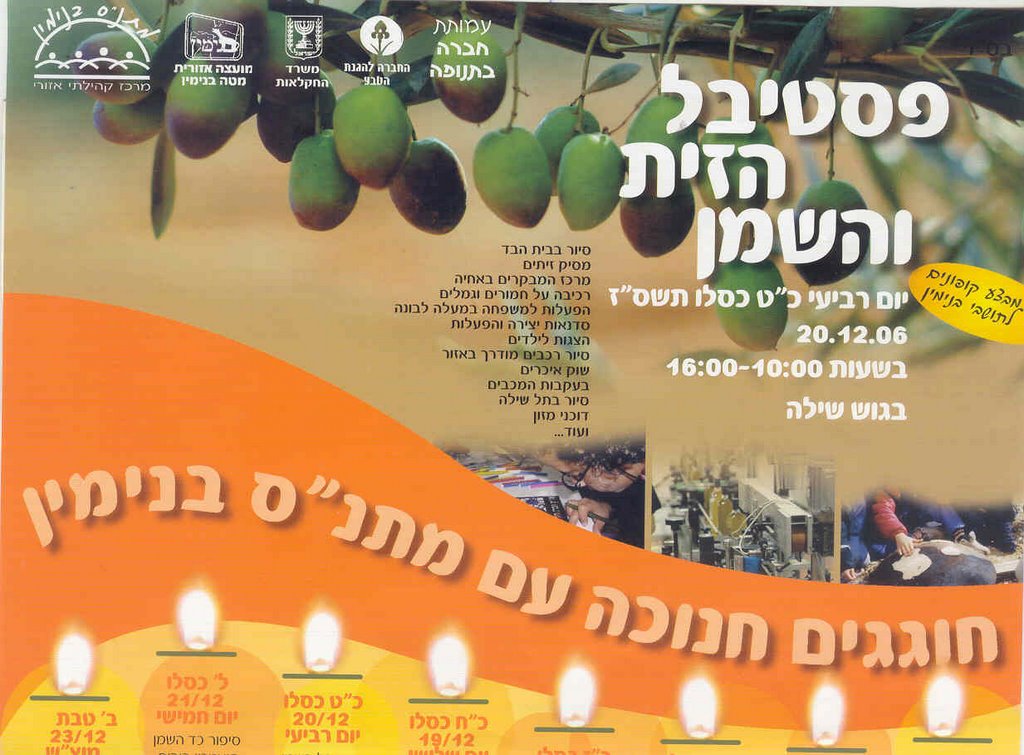
Come to Shiloh During Chanukah

Come for the Olive Oil Festival and other attractions throughout Binyamin.

Mt. Zion Committee Press Release

Jewish organization outraged that Mt. Zion complex in Jerusalem may be handed over to the Vatican as a political gift to the Pope by Israeli Prime Minsiter Ehud Olmert, ending Jewish sovereignty to the Tomb of King David

JERUSALEM, Israel (PRWeb) December 14, 2006 -- The 'Committee to Save Mt. Zion' wishes to alert the public that the Mt. Zion complex in Jerusalem may be handed over to the Vatican as a political gift to the Pope, ending Jewish sovereignty to the Tomb of King David, a traditional site of pilgrimage for persons of all religions and backgrounds; the Catholic Church has been seeking ownership of the location since 1920.

In October 2005, 'The Times of London' reported that Israel was about to hand over control of the reputed 'last supper room' in a building on Mt. Zion in Jerusalem. But due to public pressure, protests, political discussions, and the revealment of suspicious documents, the hand over was halted.

The recent December 2006 threatened handover came to the attention of the Committee to Save Mt. Zion via recent Italian news sources that indicated the Mt. Zion complex is on the agenda for negotiations between the Vatican and Israel. And that it will be a topic of conversation between Prime Minister Ehud Olmert and the Pope on Olmert's recent visit to Rome.

In a statement released to the media, the Committee stated that they find the subject of a handover of the Mt. Zion complex unacceptable. "We speak for Jews, Protestants and even Muslims that all revere the site as a place of pilgrimage, we don't want the Catholic Church to seize what has been a site of pilgrimage and turn it into the Eastern Vatican," said, Rick Halpern, a developer who is voluntarily working to restore major adjoining areas of Mt. Zion. He added, "We are having emergency meetings with members of the Jerusalem City Council, and we will use all democratic and legal means to oppose any agreement with the Vatican over the area in, around, or above the traditional Tomb of King David."

"Mt. Zion is a Jewish treasure," said Ellen Horowitz, an Israeli author and member of the Committee. "Although Israel's ambassador to the Vatican, Oded Ben Hur, denies any such negotiations over the Upper Room/Cenacle Shrine--Catholic and Vatican news sources continue to relentlessly promote such a concept," Horowitz added.


And there's more there.

Hear That Rustling Noise of Those Scurrying About?

Here's the first part of Daniel Johnson's hardhitting op-ed:-

Ahmadinejad's Western Allies

"It began with Israel and it will only end with Israel!" It was the authentic voice of the British Broadcasting Corporation, or at least one of its most renowned and respected presenters, at a cocktail party last week. The Iraq Study Group, he declared, had finally sounded the death knell of the Bush doctrine. A chastened president would now have to kick out the neocon kids and listen to the "grownups." And the top priority would now be the unfinished business not just of 2001, but of 1967 and even of 1948. Had not James Baker himself — the most grown-up of all the grownups — endorsed both the return of the Golan Heights and the Palestinian right of return in his celebrated report?

The BBC now has a huge audience in America as well as in the rest of the world for its endless reiteration of the implied thesis that the Jewish state is the root of all evil — not only of war in the East but of terrorism in the West too — and that the "Israel lobby" rules in Washington. Gloating over the supposed triumph of Realpolitik since the midterm elections, the BBC can hardly contain its Schadenfreude at the departure not merely of Donald Rumsfeld but also of John Bolton.

Interviewing Mr. Bolton shortly before he announced his resignation, the same BBC presenter was taken aback by the acerbic ambassador's refusal to apologize for the invasion of Iraq, or indeed to agree with any of his assumptions about American policy: past, present, or future. The habitual hostility with which Bush administration officials are treated by the BBC was, unusually, turned back on the interviewer. "How do you know what my expectations were in 2003?" Mr. Bolton wanted to know.

The BBC has a much more deferential attitude toward another figure about to leave the United Nations: Secretary-General Annan. When he recently granted a valedictory interview to the BBC, the story was Mr. Annan's view that the situation in Iraq was now not only worse than under Saddam Hussein, but also "worse than civil war" — a view that is not only absurdly exaggerated but also incoherent. He was not asked a single question about matters for which he had personal responsibility. Not a word about the role of Mr. Annan's son in the oil-for-food scandal, nor about the United Nations' record in some of the worst acts of genocide since 1945: notably Rwanda, Srebrenica, and Darfur.


and here's the last part:-

Worst of all, however, was Mr. Annan's failure to mention the conference of Holocaust deniers in Tehran this week. Though his office issued a brief statement rejecting Holocaust denial in general, he pointedly refrained from any specific condemnation of Iran. The BBC has reported this gathering of ghouls as if it were a mere eccentricity of the Iranian president, Mahmoud Ahmadinejad, rather than the culmination of a concerted policy intended to accomplish nothing less than the delegitimization, and ultimately the destruction, of Israel.

Such an open advocacy of genocidal anti-Semitism by a state of 70 million people is rare enough, but this one is backed up by a $50 billion-a-year oil income, much of which is being spent on a huge program to create weapons of mass destruction and a levée en masse of terrorist "martyrs." It was not Mr. Annan, who can of course speak with impunity, but a handful of Iranian students who had the courage to call Mr. Ahmadinejad a "fascist" at one of his rallies this week. I expect that David Duke and the other delegates to the conference would agree with the students about Mr. Ahmadinejad: That is why they like him so much.

What is surprising is that Mr. Ahmadinejad's toadies appear to have friends in high places in Washington and London. Mr. Baker is reported to be pushing for a "Madrid-2" conference, ostensibly on Iraq, but actually intended to give Iran, Syria, and Saudi Arabia a platform, while excluding Israel. It would also offer "a unique opportunity for the United States to strike a deal without Jewish pressure," according to an unnamed administration official, who also claims that this plan is backed by such heavyweights as John Negroponte, Condoleezza Rice, and Nicholas Burns.

These reports would be alarming if they were not so incredible. The idea that Israel's fate could be decided without Israelis even being consulted exists only in the fantasies of a self-styled "realist."


(Kippah tip: DB)

Evelyn Gordon Agrees With Me

I had a letter in Sunday's Ha'Aretz (in Hebrew) proposing the exact theme that Evie Gordon promotes in this op-ed:-


Teach the Green Line

Education Minister Yuli Tamir's plan to teach the Green Line in schools has provoked a bizarre storm of outrage on the Right. What makes this reaction bizarre is not that outrage is unwarranted; it is that the outrage has focused on the wrong issue.

The Right is up in arms over Tamir's decision that textbook maps of Israel should include the Green Line. Yet on this point, Tamir is obviously correct. Schools are supposed to give children the basic knowledge they need to function as informed citizens, and in Israel that means knowing where the Green Line is. Without that knowledge, it is impossible to form an intelligent opinion on the No. 1 political issue of recent decades: whether Israel should withdraw to the Green Line or its vicinity.

Indeed, the Right should be the first to demand that children receive this information. For years, it has accused the Left of obfuscating the dangers inherent in withdrawal, but it is precisely the widespread ignorance of the Green Line's location that makes this possible. How can anyone understand how vulnerable withdrawal to the Green Line would leave central Israel if he does not know just how close that would bring Tel Aviv to Palestinian rocket launchers? Or how easily gunmen could hit at Kfar Saba from the Green Line? Or how quickly an army stationed on the Green Line could march to the sea and sever Israel in two? For precisely this reason, a study conducted two years ago by two Hebrew University professors, which was quoted in last week's Haaretz, found that when university students who identified themselves as rightists were shown maps of the Green Line, their professed willingness to engage in political activism rose sharply. Before seeing the maps, most had pictured the West Bank as much smaller than it is; learning the truth made them realize just how high the stakes really are. (In contrast, the maps had little impact on students who identified themselves as leftists.)

Clearly, it would be wrong for textbooks to show the Green Line as a border, which it is not now and never was: It is the War of Independence armistice line, which neither side accepted as a final border. However, there is no indication that Tamir intends any such thing, and the problem is easily avoidable - for instance, by making borders solid lines and the Green Line a dotted one...


...Finally, there is the inevitable effect of peer pressure. In classes where most students are on one side of the debate - a likely outcome in many schools, given that political views in Israel tend to fracture along religious and geographical fault lines - students on the other side will be reluctant to press their case for fear of antagonizing their peers. That will make the debate still more one-sided.

The result is that students who come into class without strong views on the subject are likely to emerge thoroughly indoctrinated by whichever political position is adopted by the teacher and the majority of the other students - both because they will not have heard the other side's best arguments, and because the combination of teacher and peer pressure is highly unconducive to forming independent views. And that is a gross abuse of the education system's power.

Schools are supposed to give children the information they need to function as adult citizens, and knowledge of where the Green Line is located is indeed essential for an Israeli citizen today. But when schools cross the line from instilling knowledge to political indoctrination, democrats of every political stripe should rise up in protest.

Cutting Up Carter

Two developments on Carter's aparthied book.

One is the ADL NYT ad which at present I am having trouble uploading so just the text follows (with no graphics) and Ken Stein's elaboration.

The ad read:-

There’s only one honest thing about President Carter’s new book.

The Criticism.

‘Offensive And Wrong’

That’s what senior House Democrat and Civil Rights Leader John Conyers calls
President Carter’s Palestine: Peace Not Apartheid. Rep. Conyers says the expresident’s use of apartheid “does not serve the cause of peace” and is “against
the Jewish people in particular.”

Conyers is not alone.

Leading Democrats like Speaker of the House-elect Nancy Pelosi and DNC Chairman
Howard Dean have ignored party ties and denounced Mr. Carter’s screed.

Even the former Executive Director of The Carter Center, Dr. Kenneth W. Stein,
dismisses the book as a “one-sided” rant, fraught with “factual errors,”
“invented segments” and “glaring omissions.”

The mistruths and distortions are overwhelming. Mr. Carter disregards Israel’s offer of a Palestinian state at the 2000 Camp David Summit. He ignores the
parliamentary election of Hamas — a terrorist organization sworn to destroy Israel. He even blames the Middle East crisis on myths like Jewish control of the government and media.

MR. CARTER DOESN’T ADVANCE PUBLIC DEBATE,

HE DIMINISHES IT.

and here's excerpts from the Stein interview:-

Professor Describes Carter 'Inaccuracies'

Professor Kenneth Stein, who resigned last week from his post at The Carter Center over the book, listed two "egregious and inexcusable errors" and several other inaccuracies in Carter's Palestine: Peace, Not Apartheid.

"History gives no refunds, no do overs," Stein said in his class on the Arab-Israeli conflict, where he presented his criticisms of the Carter book. "You have to take what is and build on it. You can't bend the [facts] to suit a need."

In his book, Carter writes that the resolution says, "Israel must withdraw from occupied territories" it acquired by force during the Six-Day War in 1967 between Israel and Egypt, Jordan and Syria. But the word "must" never appears in the actual U.N. resolution text. Stein argued that each word in the resolution was carefully chosen and by inserting the word "must," Carter changed the implications of this key resolution.

Stein said Carter makes a second "inexcusable" error in describing the impact of the 1978 Camp David Accords, which details how Egypt and Israel would normalize relations.

Carter writes that the accords called for "the dismantling of [Israeli] settlements on Egyptian land." But the accords never actually refer to the settlements. In fact, the Israeli leader at the time, Menachem Begin, was so opposed to discussing the issue that he wouldn't have signed any document mentioning them, Stein said.

Stein's third objection to Carter's book is that the former president de-emphasizes the importance of U.N. Resolution 242, he said.

This resolution called for the "territorial integrity, political sovereignty and independence of all states in the region." By emphasizing subsequent resolutions over 242, Stein said, Carter suggests that a solution to the Arab-Israeli conflict could be imposed on the states by an outside party. That would change the central premise of all Arab-Israeli negotiations, Stein said.

"As soon as [Carter] put the idea out there, he made it an issue of debate," Stein said.

Carter has consistently defended his book's accuracy against Stein and other critics.

Besides his major concerns, Stein pointed out Carter's use of inaccurate dates. For example, Carter said he met with Syrian leader Hafez al-Assad in Switzerland in June 1977 when he actually met Assad in May. Additionally, Stein said Carter mistakenly wrote that Israeli Prime Minister Golda Meir resigned in June 1974 when, in fact, she resigned a month earlier.

Stein also took issue with Carter's account of the now-infamous Egyptian Cement Scandal. Carter wrote that "authorities" intercepted humanitarian aid in 2004 and sold it for profit, but he did not specify that it was the Palestinian authorities who intercepted the aid. This could lead readers to believe the Israeli authorities seized the aid, Stein said. "If he intentionally didn't put 'Israelis' in there, then that's an error of commission, not omission," Stein said.

Finally, the professor contested Carter's description of the West Bank wall that the Israeli government constructed to prevent terrorist attacks. In his book, Carter says the wall "separates Palestinians from other Palestinians." But Stein said the wall separates Israelis from Palestinians in all but a few sections. Any comparison to apartheid - in which the South African government forced blacks to live in disparate "homelands" scattered throughout the country - is unfair, Stein said.

"[A book can] shape outlooks and cause sides to feel attacked or emboldened," he said. "Rather than shedding light, this [book] sheds heat. That's the essence of it."

Other AJS Sessions

From the schedule of the American Jewish Studies Conference on the West Coast:-

Session Number: 3.11

Session The Settlers Community and the Disengagement Plan

In August 2005, Israel evacuated the Jewish settlements in Gaza Strip - mainly in Gush Katif - as well as four settlements in northern Samaria. This action, known as the “Disengagement,” constituted a profound crisis for a significant section of the Israeli population most closely identified with religious Zionism and with the settlement movement in the Territories. The crisis was not only on the national level, as the state dismantled communities that it had established and nurtured for decades, but also on the communal level, as thousands of people were evacuated and their homes destroyed. The Disengagement also stirred a religious crisis, testing the very foundation of the beliefs that had guided the political and religious behavior of this section of the population.

The disengagement plan accelerated the tension between State an Religion. The fast and almost smooth way that the plan was implemented had shown to all that further withdrawals could be done. And indeed, a proposal to evacuate further settlements is being proposed by the winning party of the Israeli elections- Kadima headed by Ehud Olmert. Therefore, the settlement movement Gush Emunim is facing one of its crucial moments. This panel shall address several aspects concerning the settlers’ reaction to the disengagement, and suggest a framework for understanding some of the processes the Israeli society is currently going through.

Chair, Samuel M. Edelman (University of Judaism)

Motti Inbari (University of Florida, Gainesville)
The Attitude of the Rabbinical Leadership of Gush Emunim toward the
Disengagement

The disengagement plan, as a result of which Israel demolished Jewish settlements in the Gaza Strip and northern Samaria, created a dramatic and profound religious dilemma. After the Six Day War (1967), an increasing number of religious Zionists saw the realization of Zionism as a manifestation of God’s desire to redeem His people. This perception led thousands of religious Israelis to join the Gush Emunim settlement movement in the territories occupied in the war. However, the Israeli governments failed to act as expected and instead decided to return territory to Palestinian control, which was perceived as a violation of God’s order. The peak of this process came with the disengagement. This process raised a difficult theological
question regarding the proper approach toward a Jewish state that relinquishes territory and destroys settlements: What supreme religious significance could be attributed to these events? Was the State of Israel no longer to be considered a Divine tool for the redemption of the Jewish people?

In my lecture, I shall examine the internal mechanism applied by a group of religious Zionist rabbis in response to their profound disillusionment with the
behavior of the state, reflected in an increase in religious radicalization due to
the need to cope with the feelings of religious and messianic failure.

Elisheva Rosman (Bar-Ilan University)
Empowering People? The Gaza Disengagement as a Test Case for the Mediating Function in the Gari’nim Program of Women’s Midrashot

Despite various religious prohibitions cited by those opposing compulsory military service for women, approximately 30 percent of female religious highschool graduates serve in IDF ranks, both as recruits and as officers. Approximately 70 graduates per year choose to defer their service, spend a year in an institution of religious study (midrasha), after which they enlist together as a group called a 'garin' (nucleus). Before the actual implementation of the disengagement from Gaza, the media and public discourse focused on the pre-army programs for men; speculating whether these soldiers would disobey orders en masse or participate in the evacuation
of settlements. No one considered that students from the women's programs would be charged with the task of bodily carrying protesters to buses.

Surprisingly, it was female garin members -- more than male hesder, shiluv or mekhina students -- who found themselves faced with this dilemma. As a rule, female students did not disobey orders and were supported in most cases by the staff of their study program. The study programs also attempted to assist their students in a more concrete way, holding preparatory seminars before the disengagement and debriefing them after it. Interviews conducted immediately after the Gaza redeployment with female participants, clarified that most students felt their study programs helped them cope with a difficult situation. This did not necessarily influence the students' decision to ultimately obey orders. They all stressed that they made their own decision and that the midrasha’s input was not the only factor they considered. But knowing their teachers' opinions did reassure them once they made their decision to obey orders. Interviewees also said they were aware that their teachers did not necessarily agree with the disengagement politically, but nevertheless attempted to support their students to the best of their ability.

This paper will describe how generally the study program attempted to assist and support students during the disengagement and how students behaved during the
occurrences of August 2005. It will also discuss how students viewed the situation and how they related to their respective midrashot in light of the

Michael Feige (Ben-Gurion University of the Negev)
The Disengagement and the National Religious Camp: A Sociological Perspective

Most of the active opposition to the disengagement plan came from the National Religious camp. Mobilizing all its resources, this camp regarded the plan as a key event in its relationship with the Israeli society in general. While it is doubtful whether the evacuation will register as a major Israeli trauma, it is signaled as a defining moment in the complex history of nationalism and religion in Israel. This paper examines the events of August 2005 from a sociological viewpoint, using a comparison to the April 1982 events - namely the evacuation of the Yamit region – to reach insights on the social and political processes involved. Such a perspective reveals a change in the Greater Israeli discourse and national symbolism, the rise of new social forces, and the deployment of new strategies vis-à-vis the government and the army.

Years of settling in the occupied territories created new groups and interests, all highlighted in the struggle over Gush Katif. With the destruction of the settlement region, the encounter moves to the realm of memory wars: the way in which the events will be constructed in Israeli memory will influence, maybe determine, how the National Religious camp will position itself with and against the rest of Israeli society.

Rebecca Stein (Duke University)
Souvenirs of Conquest: The Israeli Occupation as Tourist Event

Missing from most historical accounts of the 1967 war are the ways it functioned as a tourist event. The gradual easing or dissolution of borders between Israel and its newly occupied territories in 1967 generated numerous new possibilities for travel between territories that had been divided by militarized borders since 1948. This meant the sudden availability of the newly occupied territories as tourist sites, landscapes, and/or markets for Israeli Jews and Palestinians.

To take 1967 seriously as a tourist event is not merely to interrogate the relationship between Israeliness and tourism, but to complicate the ways we understand this crucial moment in Israeli history – that is, the immediate aftermath of the war that established Israel as an occupying power in the West Bank, Gaza, Sinai and Golan Heights. To do so, I turn away from the issues that have traditionally animated historians of the war (notably, issues of postwar diplomacy, and the Israeli government debate over the future of the occupied territories) and turn towards another set of issues regarding the popular, quotidian practice of Israelis (particularly Israeli Jews) as they encountered and explored the occupied territories and peoples in the days immediately following the cessation of violence in June, 1967.

My suggestion is that this encounter took shape in and through tourism in crucial
ways; more pointedly, that tourism was a (if not the) primary register by which
Israeli civilians experienced and found value in the occupation -- its territories,
peoples, vistas, and markets. Such a line of questioning helps us reanimate the traditional historical questions about occupation, territorialism, settler expansion, et al. I will argue that the mass tourist phenomenon of 1967 was crucial in laying the groundwork for the subsequent state investment in the occupation. Using the tools of postcolonial discourse analysis, this paper is based on a close reading of the Hebrew press from the weeks after the cessation of violence in 1967. As such, it is also a meditation on the utility, and the limits, of postcolonial theory for making sense of Israeli colonial


And at another session:-

Aaron Hahn Tapper (University of California, Santa Barbara)
From Gaza to the Golan: Religious Nonviolence and the Politics of Interpretation

“Jews hate Muslims. Muslims hate Jews.” It’s an understatement to call
generalizations such as these stereotypes, as they are rampant throughout the world, especially in the Middle East. In Palestine and Israel communities have inflicted violence against one another for decades, often justifying their actions using religiously charged rhetoric. Citing ayat from the Quran or pesuqim from the Torah zealots continue to murder 'others' in the name of God. Jewish Israeli and Muslim Palestinian religious leaders have issued teshuvot and fataawa, respectively, to defend the violence. Yet there are other rabbis and sheikhs who have distributed religious responsa supporting an entirely different theological means to achieve a similar end, one that is extremist in its own right. These leaders endorse nonviolent action as a means of political gain -- nonviolence carried out in the name of God. Rooting their ideologies in passages from the Torah and the Quran they are using religious tenets to raze the walls of perceived political injustice, fighting a battle often construed as political using theology. The hermeneutics of this process is clearly intertwined with politics; the line separating the political and theological character of these beliefs appears nebulous. This study analyzes the
boundary that ostensibly separates the political and theological ‘essence’ of
nonviolent, explicating the process that encapsulates how distinct interpretations of the same text can – and do -- lead to polar opposite behaviors.

I Grew Up In Queens

And went to Yeshiva High School - the Chofetz Chaim Yeshiva Preparatory High School - in Forest Hills.

So, I found this very interesting (at p. 13-14):-

Forest Hills, New York: A Jewish Golden Land

Judith F. Rosen (CUNY Graduate Center)

One hundred years ago, in 1905, the Long Island Railroad extended its train routes to Queens. Taking immediate advantage of this in 1906, the developer,
Cord Meyer broke ground for a new housing subdivision in Whitepot adjacent to the railroad line. Renaming the bucolic area Forest Hills, his advertisements were designed to allure buyers to leave their over crowded city apartments and move to the suburbs.*

Three years later (1909) the Russell Sage Foundation purchased from Cord Meyer 142 acres to be known as Forest Hills Gardens adjacent to the Forest Hills section. Established in the years when newly arrived immigrants flooded the neighborhoods of Manhattan the newly founded neighborhoods in Forest Hills were a ticket to escape the teeming streets of New York and to improve living conditions. In order to protect the civility and integrity of the Forest Hills and Forest Hills Gardens communities each set up deed restrictions which through a “gentleman’s agreement”
prevented Jews from buying homes in these locations.

Although Jews were initially restricted and discouraged from settling in Forest Hills, they began arriving in the 1920’s and continued to do so as more apartment buildings were built. They began to thrive and organize. The first religious institution to be established in the area was the Forest Hills Jewish Center founded in 1931.

The Jewish community grew larger and stronger over the decades, particularly after the war years. By 1957 the majority of the children and teachers in PS 206 and other local elementary schools were Jewish. By the 1960’s the Forest Hills Jewish community was perhaps the most dynamic Jewish community in the country. It boasted multi-Jewish denominational institutions and organizations. It supported kosher butchers, restaurants, takeouts, delicatessens, bagel stores, Jewish-style bakeries, appetizing stores, a Jewish book store and Barton's candy stores. As the community grew in stature its leaders began to play important roles in New York city-wide and national Jewish organization and in local and national government, art, education, law and industry.

Changes in New York City approaches to education and housing integration and new Jewish immmgration waves challenged the equilibrium of Forest Hills over the decades. Yet, Jewish Forest Hills continues to thrive. This paper will present the fascinating story of the growth and evolution of the dynamic, heterogeneous Jewish Community of Forest Hills.

Wednesday, December 13, 2006

I Haven't Heard of Lou Dobbs...

...nor have I heard previously of a Rabbi Bogomilsky but now I've read about both:-


NEW YORK (CNN) -- Merry Christmas! That's right, Merry Christmas. Whether you're Christian, Jewish, Muslim, agnostic, pagan, barbarian or whatever, Merry Christmas!

It's what most of us say in this country come this time of year. It's about who we are, where we are and where we've been. And all the namby-pamby, little sensitive darlings among us who can't handle this verbal assault on their delicate senses should immediately begin seeking emergency psychiatric care.

This week we were treated to the spectacle of an easily offended and highly offensive rabbi who walked into an airport, gazed upon Christmas trees all around him and suddenly was overwhelmed with an immense, and apparently irresistible, urge to sue the management of the Seattle-Tacoma International Airport because nowhere among all the Christmas trees was a single menorah. Rabbi Elazar Bogomilsky of the Chabad-Lubavitch movement of Seattle even delivered to the airport's management a draft of a lawsuit he would file if they didn't sprinkle menorahs around the Christmas trees.

Political correctness in this country reached an entirely new level of absurdity some years ago. But occasionally, and the situation at Sea-Tac is just such an occasion, we exceed ourselves. The militant fundamentalist rabbi so flummoxed Sea-Tac management with his threat and their perceived obligation to be "politically correct" that, rather than think rationally or simply tell him to stuff it, they started hacking away at all those artificial Christmas trees and quickly descended into a public relations nightmare in which they managed to offend reason, cultural values and the vast majority of Americans.

As CNN senior legal analyst Jeffrey Toobin told me, "The Supreme Court has held since 1984, the famous 'Reindeer Rule,' that if a symbol of Christmas is mostly secular, like a reindeer or a Christmas tree or Santa Claus, that is not a violation of the separation of church and state."

The irony that escaped the rabid rabbi and the timid Sea-Tac management team is that the Christmas tree's likely origin dates back to pre-Christian pagan cultures. The Christmas tree is not by any means a religious symbol, and when we're honest about it, the tree's become a purely commercial symbol more closely associated with shopping, roasting chestnuts and guzzling eggnog than a nativity scene with baby Jesus...


It goes on here.

Somehow, I don't think this is playing well in Crown Heights.

So, Was Mt. Zion Discussed?

"Punk is Jewish"

You don't believe?

Read "Punk is Jewish."

In this history of the jarring music that rose from New York's battered Lower East Side in the 1970s, that opening line comes across, at first, as overreaching, even absurd. Yet by the end of this agile, well-researched book, author Steven Lee Beeber's proclamation seems not only obvious, but something of an understatement.

It's not just that punk pioneers such as Lou Reed , Blondie's Chris Stein , and half of the legendary Ramones , Joey and Tommy, were Jewish, or that the celebrated (and recently shuttered) Bowery dive CBGB, punk's original home, was owned by Hilly Kristal, a fellow Jew. Punk, Beeber exhaustively argues, was infused with a singular Jewish sensibility forged by hardship, perseverance, and a potent cocktail of optimism and cynicism that gave the music -- and the larger cultural movement -- its twitchy swagger.

"Punk reflects the whole Jewish history of oppression and uncertainty, flight and wandering, belonging and not belonging, always being divided, being both in and out, good and bad, part and apart," Beeber writes in the introduction to his book "The Heebie-Jeebies at CBGB's: A Secret History of Jewish Punk."

"The shpilkes , the nervous energy, of punk," he contends, "is Jewish."

Even those unfamiliar with that Yiddish word can understand what Beeber means if they've ever heard such abrasive anthems as Richard Hell & The Voidoids' "Blank Generation," or watched clips of the spontaneous combustibility of punk musicians. Propelled more by attitude than ability, their songs weren't just two- or three-minute spurts of bratty rage, but the defiant rhythm of a fierce heart shaped by displacement, prejudice, and what Beeber calls a self-conscious identification "with the sick and twisted."

Finally, Consideration for Females

Did you know that in Cairo a conference of high-ranking Muslim theologians has agreed that the practice of female genital mutilation is irreconcilable with Islam?

Here:-

Muslim scholars and academics from Germany, Africa and the Middle East spent two days discussing female genital mutilation. The goal of the conference was to declare this form of circumcision to be incompatible with the ethics of Islam as a global religion.

It was a German who organized and funded the conference. In 2000 Rüdiger Nehberg, 71, a man known for adventurous exploits that have included crossing the Atlantic in a pedal boat, founded Target, a human rights organization dedicated to fighting female genital mutilation. Since then Nehberg, accompanied by his life partner Annette Weber, has been traveling throughout Africa with his video camera, documenting the inhuman practice and attempting to win over political and religious leaders for his cause. Wherever he goes, Nehberg says: "This custom can only be brought to an end with the power of Islam." In organizing the conference, which was held at Cairo's Al-Azhar University under the patronage of Egyptian Grand Mufti Ali Jumaa, Nehberg has come one step closer to his goal.

Many important Muslim scholars attended the event. The Egyptian minister for religious charities, Mahmoud Hamdi Saksuk, condemned the practice, as did the Grand Sheikh of Al-Azhar University, Mohammed Sayyid Tantawi. Even the renowned and notorious Egyptian religious scholar and journalist Yusuf al-Qaradawi, who enjoys great popularity in the Middle East as a result of his commentary on the Aljazeera television network, attended the Cairo conference.

Qaradawi did full justice to his reputation as a hardliner by initially criticizing the fact that the conference was paid for by a foreign institution, and not the practice of mutilation. He also complained that the title, "The Prohibition of Violation of the Female Body through Circumcision" was biased and presumptuous.

But after plenty of hemming and hawing, even Qaradawi managed to agree that the Koran states that it is forbidden to mutilate God's creation. "We are on the side of those who ban this practice," he said, but added that doctors ought to have the last word.

This wasn't enough for women's rights activists. Mushira Chattab, the Egyptian first lady's special ambassador and chairwoman of the National Council for Childhood and Motherhood, called upon the legal scholars at the meeting to take a clear position against female circumcision. Then she turned to Qaradawi and said: "You should not leave it up to doctors to condemn this practice."

Every doctor at the conference agreed that there is no medical justification for female genital mutilation. Heribert Kentenich, physician-in-chief of the women's clinic at the DRK Hospitals in Berlin expressed a "complete lack of understanding" for the fact that 75 percent of circumcisions are now performed by doctors in Egypt. "I find it almost more horrifying that doctors are enriching themselves by doing this," he added. The drop in the estimated incidents of female circumcision has dropped significantly -- some believe as much as from 97 percent to approximately 50 percent -- but it is impossible to obtain precise figures. Even at 50 percent, that would still represent roughly 400,000 girls a year. Kentenich believes that the "medicalization of female genital mutilation makes it seem more acceptable."

The direct consequences include hemorrhaging, as well as severe pain and anxiety that can lead to trauma. Besides, the practice can also cause infections in the urinary tract, the uterus, the fallopian tube and the ovaries. Other consequences such as tetanus infections, gangrene and blood poisoning can be fatal. Besides, women who are subjected to pharaonic mutilation experience increased pain during menstruation, when blood accumulates in the vagina because the opening is too small to permit normal flow. Mutilated women are also at greater risk for becoming infected with HIV.

Circumcised women can face complications during pregnancy, and both the mother and child are at greater risk of dying in childbirth.

There is no religious justification for this practice. All three major monotheistic world religions define man as a perfect creation of the Almighty, and condemn doing any harm to God's creation. In Sura 95, Verse 4, the Koran states: "We have created man in our most perfect image." Besides, in Islam men and women are meant to experience sexual fulfillment, and it is considered the husband's matrimonial duty to satisfy his wife -- a near impossible task when a woman is circumcised.

Although the conference's attendees were generally in agreement over these facts, men repeatedly insisted on defending circumcision as an established custom. "Our women have been circumcised for thousands of years, and they have never complained," said an agitated elderly man in the audience. The conference, he said, was a Western conspiracy, and showing pictures of circumcisions was a crime.

Temple Mount in State Dept. Int'l Religious Report

Restrictions on Religious Freedom

The Haram al-Sharif (Noble Sanctuary), contains the Dome of the Rock and the al-Aqsa Mosque, among the most holy sites in Islam. Jews refer to the same place as the Temple Mount and consider it the location of the ancient Jewish temple. The location has been, with all of East Jerusalem, under Israeli security control since 1967, when Israel captured the city (East Jerusalem was formally annexed in 1980, and thus Israel applies its laws to East Jerusalem). The Haram al-Sharif is administered, however, by the Islamic waqf, a PA-affiliated but Jordanian-funded and administered Muslim religious trust for East Jerusalem, the West Bank, and the Gaza Strip. The Israeli police control the compound's entrances, and limit access to the compound. The waqf can object to entrance of particular persons, such as non-Muslim religious radicals, or to prohibited activities, such as prayer by non-Muslims or disrespectful clothing or behavior, but lacks authority to remove anyone from the site, and thus must rely on Israeli police to enforce site regulations. In practice, waqf officials claimed that police often allowed religious radicals (such as Jews seeking to rebuild the ancient Temple on the site and to remove the mosques) and immodestly dressed persons to enter and often were not responsive to enforcing the site's rules.

While non-Muslims (except guests of the waqf) were not allowed to enter the Haram al-Sharif/Temple Mount from September 28, 2000 (the date of former Likud party head Ariel Sharon's visit which sparked unrest) until August 2003, non-Muslims could visit the site during designated visiting hours. The Israeli government, as a matter of stated policy, has prevented non-Muslims from worshipping at the Haram al-Sharif/Temple Mount since 1967. Israeli police consistently did not permit public prayer on public safety grounds and publicly indicated that this policy has not changed in light of the renewed visits of non-Muslims to the compound or the court ruling on the issue. Waqf officials contend that the Israeli police, in contravention of their stated policy and the religious status quo, have allowed members of radical Jewish groups to enter and to worship at the site. Spokesmen for these groups have claimed successful attempts to pray inside the compound in interviews with the Israeli media. The Waqf interprets police actions as part of an Israeli policy to incrementally reduce Waqf authority over the site and to give non-Muslims rights of worship in parts of the compound.

Since October 2000, the Israeli government, citing security concerns, prevented most Palestinians from the West Bank and Gaza from reaching the Haram al-Sharif by prohibiting their entry into Jerusalem. Restrictions were often placed on entry into the Haram al-Sharif even for Palestinian residents of Jerusalem, such as a frequently implemented restriction on males under the age of forty-five.

There were also disputes between the Muslim administrators of the Haram al-Sharif/Temple Mount and Israeli authorities regarding Israeli restrictions on waqf attempts to carry out repairs and physical improvements on the compound and its mosques. In 2005 Palestinian workers under direction of Jordanian engineers worked on restoring tiles on the Dome of the Rock and Ottoman-era stones on the southern and eastern walls of the compound. Israeli authorities prevented the waqf from conducting several improvement projects or removing debris from the site, alleging [!] that the waqf was attempting to alter the nature of the site or to discard antiquities of Jewish origin.

Hungry for Hungary

The New York Times goes for Satmar delicacies (not those in Teheran*).

As a writer concentrating on Jewish food, I always get letters and e-mail asking for old recipes from Hungary. Most of what I know about these foods I have read in books. Some are still made in Hungary, and I’ve come across Americans who make noodles and cabbage with poppy seeds or who remember shlishkes. But with assimilation, shortcuts, the passage of time and the passing of old cooks, many of these recipes may soon be lost.

So I was thrilled to find these famous dishes in this village about 45 miles north of the George Washington Bridge. The women of the Satmar Hasidic community here have preserved delkelekh and shlishkes, and many other staples of the Hungarian Jewish kitchen.

One of the world’s largest groups of Hasidic Jews, the Satmar originated in Szatmarnemeti, Hungary (now Satu Mare, Romania). There are communities in Williamsburg and Borough Park, Brooklyn; Monsey in Rockland County; and here in Orange County.

The founder of the Satmar Hasidim, Rabbi Joel Teitelbaum, was saved when more than 12,000 Jews from Szatmarnemeti were deported to Auschwitz. With the remnants of his sect, he settled in Williamsburg in 1946.

Concerned about assimilation, Rabbi Teitelbaum wanted a modern shtetl in America. In 1977 he bought a tract here and settled 14 families. Now there are 3,000 families, most of Hungarian descent, in Kiryas Joel.

“Oftentimes what we think of as an old-world shtetl is in fact a community where Jews and non-Jews lived alongside,” said David N. Myers, a professor of Jewish history at U.C.L.A., who is co-writing a book about the Satmar Hasids here. “That is what is so interesting about Kiryas Joel. Ironically, in America, it turns out to be possible to create a shtetl that is exclusively Jewish.”

A typical marriage may produce 10 children or more, giving the village the fastest growth rate in the state. The large families, I was told, are to help “replace the 6 million” lost in the Holocaust. Partly because most households have so many children, 62 percent of the villagers live below the poverty level, according to the 2000 census. Because of its rapid expansion and insular way of life, Kiryas Joel has come into conflict with neighboring towns over schooling, sewage, water use, taxation and voting.


----------

(*)
Rabbi among the rabble-rousers

Among the throng applauding Iranian President Mahmoud Ahmadinejad's anti-Israel tirade in Tehran yesterday was a Brooklyn-born Orthodox Jewish rabbi whose grandparents were exterminated at Auschwitz. As the head of the Neturei Karta sect in Monsey, Rockland County, Weiss proudly calls himself an anti-Zionist, and regularly burns the Israeli flag at demonstrations.

Yesterday, he was front and center at a conference denying the Holocaust took place. He applauded Ahmadinejad's keynote address urging Israel be "wiped off the map."
While Ahmadinejad has also called the Holocaust a "myth," Weiss has stopped short of agreeing with him.

"We don't want to deny the killing of Jews in World War II, but Zionists have given much higher figures for how many people were killed," Weiss said yesterday. "They have used the Holocaust as a device to justify their oppression."

"Judaism is a religion of spirituality, to serve God. ... Zionism is an apostasy, it is a rebellion against God, and a rebellion against the Torah, it is blasphemous," Weiss said in a 2003 interview.

On its Web site, Weiss' Neturei Karta boasts having thousands of followers and temples in Brooklyn and upstate. But Orthodox Jews in Borough Park said Weiss was off his rocker.

"He's acting like a non-Jew," said Simon Akerman, 19, of the large Bobov Hasidic community.

Another Bobov, Mark Berkowitz, 29, added, "I've heard of people like that but not around here. Someone should really explain to him that you don't join the enemy."


and Jameel has a picture.

Olmert's Road Leads to Rome

Olmert's road leads to Rome and he surrenders Jewish territory there, too.

HOLY SEE WILL ASK ISRAEL THAT 'UPPER ROOM' PASSES UNDER CATHOLIC SUPERVISION


The President of the Pontifical Council for the Unity of Christians will ask Israel, it hands over to Catholics, overseeing of the Å’Upper Room¹, the place in which Christ celebrated the Last Supper, and instituted the Eucharist and the Priestly Order.

The EFE agency informed yesterday, it had access to a document, saying that Cardinal Walter Kasper arrived in Jerusalem ³with a pre-agreement² stipulating that the Holy See would preserve the historical character of the place, and that it would remain open to pilgrims and tourists and that Israel would provide security.

According to the agency, the Vatican representative ³asked for the use of the Upper Room for liturgical offices², and ³that custody will be handed over to the Franciscan Order.²

The Upper Room chapel, was used during John Paul II¹s visit in 2000. There, he presided over a historical private Mass, the first one in centuries in this specific place.

The history of the building where the Upper Room is located, reflects the complex history of the region. During the Middle-Ages, the Franciscans set up there first convent in the Holy Land, but they were expulsed by the Ottomans in the year 1551. The invaders built a mosque there, arguing that King David¹s tomb was located in the same area.

The building was then taken over by the Israeli Ministry of Culture in 1967, and is now being used as a hebrew school and a synagogue.

Art


A detail from the painting "Ten Days of Penitence" by Moshe Heimain.

Tuesday, December 12, 2006

More Said on the Red-Dead

The news came out of Amman that Jordan, Israel and the Palestinian Authority are relaunching a feasibility study to help save the rapidly vanishing Dead Sea.

Let's recall where that came from and let's not forget the late Professor Yuval Neeman.

A Med-Dead or Red-Dead Canal as a cooperation-inducing desalination project

A final example of cooperation-inducing design involves plans for a large-scale regional desalination project...

What follows is a conceptual proposal for a regional desalination complex, including sections on (1) background (the Agro-Industrial Complex [1960s] and the Med-Dead Canal [1980s]), (2) project description, (3) economic considerations, (4) environmental impacts, and (5) implementation in the framework of a regional water development plan.

Historical background

The plan was given a boost by Senate Resolution 155, sponsored by Senator Howard Baker, which supported development at three likely sites in Egypt, Israel, and Jordan. Recently declassified reports show that a fourth site, at Gaza, was also planned in conjunction with a project for refugee resettlement (Oak Ridge National Laboratories, Gaza Area 1970) (see appendix I, map 26.)...Fifteen years later, in the early 1980s, the Israelis began planning a canal designed primarily for hydropower by bringing Mediterranean sea water across the Negev Desert and under the Judaean Hills to drop it 400 m to the Dead Sea, the lowest point on the earth. The 800 MW of electricity that would have been made available by this Med-Dead Canal would, by itself, just have been worth the cost of the project, estimated at US$1,500-$5,000 million, but the benefits of several ancillary projects, made possible by the salt water for cooling or artificial lakes, added viability to the scheme (Mediterranean-Dead Sea Company Ltd 1983). That project was finally shelved, mostly on the question of the final cost.

The core of the complex would be either a Med-Dead or a Red-Dead Canal, with a new emphasis on desalination fuelled by hydropower and augmented with solar and conventional energy generation. Whereas the original plans were focused on power generation and unilateral development, a new approach would make available power and water, both fresh and salt, for agriculture, fish and algae ponds, industry, and even recreation on artificial lakes, in sparsely populated areas, to the benefit of populations from Egypt, Israel, Jordan, Gaza, and the West Bank...A large plain south and east of Gaza and El-Arish, the Plain of Pelusium, was one site suggested for an agroindustrial complex (and, in 1902, as the possible site of a Jewish State) because of its suitability for a wide variety of agriculture. Similar tracts exist further inland in both the Sinai and Negev deserts if the intake were placed at Qatif, as planned for the Med-Dead Canal.

...The 400 m drop at the Dead Sea could be used not only for hydropower generation, but, in conjunction, could also be exploited for reverse-osmosis desalination - a pressure-dependent method using selective membranes adding even more fresh water as output...Such a Med-Dead, or Red-Dead, agro-industrial project would take advantage of sparsely populated lands for agricultural and industrial production utilizing two ports (Gaze and/or Eilat/Aqaba), add impetus to regional cooperation and refugee resettlement, and help to alleviate the area's water shortage.

...Either route would face clear obstacles in terms of political viability. One optimistic note, however, is that proponents of both the Med-Dead and the Red-Dead Canal include prominent nationalists on both sides of the Jordan River. The former Israeli Minister of Science and Technology, Yuval Ne'eman of the right-wing Tehiya party, has been actively supporting the MedDead Canal since its inception, while Jordanian Crown Prince Hassan has been a principal advocate of the Red-Dead Canal...

Bowen Bares

Well, a first-hand account by Jeremy Bowen, the BBC's Middle East Editor, of how he deals with the challenge of 'objectivity'.


As Middle East editor of the BBC, he holds a position of such importance that people from all over the world look to him for an understanding of the course of international affairs.

A recent Daily Telegraph comment piece claimed he was "a thwarted thesp ... [who] whiles away the year in Middle East war zones...

Bowen is more concerned about the opinions of the millions of BBC viewers, and users of its website, who turn to him for his interpretation of the shifts in the sand that affect the most vexing question of our times, the Middle East. He admits there is room for improvement here, and cites the continuing bafflement of viewers as a sign that there is a "perceived and quite serious flaw in our coverage".

"The Middle East is one of those areas where most people don't have any kind of hinterland. Even if they are well-informed people who take their news-watching responsibilities seriously, it's actually quite hard for people to understand. The BBC is the biggest broadcaster in the world and to be the BBC person whose role it is, more than anybody else's, to try to explain the most complex and newsworthy place in the world is a hell of a big job, really."

Not only must he demystify the Middle East, but he must do so in language that does not, through an inappropriate phrase or image, inflame suspicions that the BBC is biased. Bowen, who is a contributor to the BBC's new College of Journalism, is honest enough to say that objectivity is beyond him. "We all come from somewhere; we all have a prism through which we see the world; we all have an education, and views and experiences. It's a false objective to be objective.

"But I think I can be impartial by trying to disentangle all the threads that make up a story. That's an ambitious thing to do in two and a half minutes on TV. You have got to be aware of what your own prejudices and principles are and put them to one side in a box."

In the Middle East, words can be loaded with hidden meanings. Bowen, who lived in Jerusalem for five years, had an early taste of the consequences of getting it wrong when he referred to those bearded men who appear in the aftermath of suicide bombings to mop up every drop of blood of the victims as "zealots".

The BBC struggles to convince Israelis that it will give them a fair hearing, he acknowledges. "It's certainly the case that many Israelis and... many people in the British Jewish community regard us as, if not anti-Israel actively, then certainly pro-Palestinian. Some regard us as being actively anti-Israel and even anti-Semitic. I think it's unfortunate because it is not true. The difficulty of reporting from the Middle East is that what people really want, even if they realise you have to represent all views, is for you to come down on their side. They want you to acknowledge their victimhood and that it's not their fault. If you don't, you are on the other side. The reality is more complicated than that. I'm not a cheerleader for any side."

Bowen was never a thwarted thesp - he was born to journalism. His father Gareth reported the 1966 Aberfan coal slurry disaster for the BBC and became editor of news at Radio Wales. After reading advanced international studies at Johns Hopkins University in both Bologna and Washington DC, he thrust his foot in the door of the BBC.

...Despite his susceptibility to the war drug, he was more truth-seeker than thrill-seeker. "Truth is the only motivation, the only rationalisation or excuse, frankly. I really felt strongly that it was necessary to look into the dark corners of the worst places. I was keen on doing it and I thought I could do it well. I still feel I could do it well actually, but I choose not to take the risks now." He's been to Lebanon, Jerusalem and Amman in the previous fortnight, but his vantage point now is the analytical "rooftop" view that he used to despise.

...Now, he is again delivering his insights on the world's most troubled territories. His current assessment offers little reassurance. The diminishing prospect of a two-state solution in Israel means an increased risk of global crisis, he believes. "In December 1906, people didn't think 1914 was going to happen. The world was globalised by the standard of the time - there were undersea cables, telegraphs, fast ocean liners. They thought they lived in a hi-tech world. There hadn't been a really serious war for some time and it was a period of peace and technological innovation," he says. "The more I see of the instabilities of the Middle East, the more I worry that something terrible could be lying ahead of us unless we are very careful. And lucky."

If Only Politicians Were As Sensitive

Tenor who stormed off La Scala stage vows he will return


Roberto Alagna, the tenor who stormed off the stage at La Scala, Milan, after catcalls and boos from the audience, last night appeared to backtrack on his vow never to return. However, a spokesman for the opera house said that the performer had broken his contract. “His behaviour has created a rift between the artist and the audience, and there is no possibility of repairing this relationship,” said Carlo Maria Cella.

Alanga had grown increasingly incensed on Sunday night during the second performance of Franco Zeffirelli’s extravagant production of Verdi’s opera, as his opening aria was met with a critical response from some sections of the audience. He suddenly stopped singing, glared angrily into the audience, threw off his Egyptian cloak and stormed out, refusing to finish his performance, as the audience at La Scala shouted: “Shame on you.”

For the second performance, the loggionisti — the diehard La Scala operagoers who queue overnight for a seat — were in full cry. As Alagna began the opera’s opening aria, Celeste Aida, a chorus of boos and whistles broke out and he walked off stage.

The public was outraged, but Alagna, 43, was defiant. “I do not deserve this kind of reception,” he said last night.

Zeffirelli, 83, accused the tenor of acting like a spoilt brat: “A professional should never behave in this way. Alagna is too sensitive, it is too easy to hurt his feelings. He does not know how to act like a true star.”


You do get my point, don't you?

On the Slaughter of the Innocents

The New York Times declared that "Hamas denounced the killings" ofthe three children of a high Fatah official in Gaza and went on to 'prove' it:-

“This is a gruesome crime,” said Mahmoud Zahar, the Palestinian foreign minister and a Hamas leader. “Those who committed this crime have no conscience and are using it for political goals.”


Without getting too nitpicking, I would suggest that Zahar did not denounce the killings in the words quoted. He was meerly being factually descriptive. THat's the way it is when perhaps you are the guilty party.

But why wasn't Greg Myre more sophisticated and perceptive in his reporting?

The New York Times Latke Recipe

Getting ready for Chanukah.

Recipe: Potato Pancakes


2 large eggs

3 cups grated drained all-purpose potatoes

¼ cup grated onion

1 teaspoon salt, more to taste

¼ teaspoon freshly ground black pepper

2 to 4 tablespoons matzo meal, or as needed

Canola oil, for frying

Applesauce and sour cream for serving (optional).

1. In a large mixing bowl, beat eggs lightly. Add potatoes, onion, salt and pepper, and mix well. Stir in 2 tablespoons matzo meal, and let it sit about 30 seconds to absorb moisture in batter. If necessary add more to make a thick, wet batter that is neither watery nor dry.

2. Place a large skillet over medium heat, and add 2 tablespoons oil. When oil is hot drop in heaping 1/8 cups (about 2 tablespoons) of batter, flattening them gently to make thick pancakes. When bottoms have browned, after 2 to 3 minutes, flip and brown on other side. Add oil as needed. Drain on paper towels, and sprinkle with additional salt to taste. If necessary, work in batches, keeping cooked pancakes warm. Serve hot with applesauce and sour cream, if desired.

Yield: 4 servings (about 24 small pancakes).

Monday, December 11, 2006

Chomesh at Chanukah


Monday, Dec. 18, 2006, 1:00 PM.

MISTAKES YOU CORRECT

Going back to Chomesh.

If the roads are blocked, the public is requested to proceed on foot.