Showing posts with label said arikat. Show all posts

Wednesday, January 31, 2024

Lesson on 'How to think like Said Arikat'

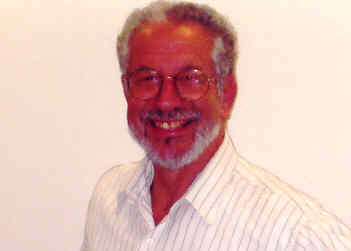
There is nothing like an extensive example of Said Arikat's questioning at the State Department to exhibit how PPPPs (pro-Palestine propaganda proponents) think and how they insert wrong assumptions, untruths and misrepresentations into their questioning. Mehdi Hasan, of course, is another.


Here is from
the State Department Press Briefing of January 30, 2024 (the boldface I have added):-

MR MILLER: Go ahead, Said.

QUESTION: Thank you. Actually, on both points. But on this particular one, I mean, Israel occupies the whole West Bank. They are under their control. They don’t need to disguise themselves as medics and go into a hospital and kill people, which you called non-civilians. They are actually civilians, but that’s beside the point. So —

MR MILLER: I – so that is very much – but hold on.

QUESTION: Just allow me. Allow me just to follow up.

MR MILLER: No, Said, but before you call someone a civilian that Israel has said is a member of Hamas, I need to put on the record that that is very much a question that’s in dispute.

QUESTION: There are civilian members of Hamas; it’s a political organization. I mean, you may disagree with their politics, but that does not make them militants, right? Or —

MR MILLER: I would very much —

QUESTION: Okay.

MR MILLER: I would very much disagree with that, Said.

QUESTION: That is —

MR MILLER: They’re a terrorist organization as have been —

QUESTION: Right, but that —

MR MILLER: — have been designated by the United States of America.

QUESTION: Right, but that’s an accusation of the occupier, a military occupier. They are making the accusation. I want to ask you: Is that a conduct befitting a state or a group of gangsters to go in and kill people, assassinate them as they sat in their beds?

MR MILLER: So —

QUESTION: Is that the conduct of a state? Will the United States ever do something like this under similar circumstances?

MR MILLER: So, Said, I am going to first of all note for the record, because it is important to note for the record, that Hamas is a brutal terrorist organization that carried out the brutal murder of 1,200 people on October 7th and —

QUESTION: We’re talking about the Bank, the West Bank. We’re talking about the West Bank, not Gaza.

MR MILLER: — and there are members of Hamas – and there are members of Hamas in the West Bank. And in addition to carrying out the brutal murder —

QUESTION: Right.

MR MILLER: — of 1,200 people on October 7th, has hid behind civilians in Gaza and been responsible for the death of many, many Palestinian civilians who they use as human shields. So before we talk about the people who died in this operation, I think it’s important to talk about who Hamas is, and it is not just – it is not a political organization, Hamas. It is – or Said. It is a terrorist organization that has carried out terrorist acts to kill civilians and has said it wants to continue to carry out those terrorist acts over and over again, and that context is important because Israel has the right to carry out antiterrorism operations to bring members of Hamas to justice. But as I said, we want them to be carried out in full —

QUESTION: I am asking you —

MR MILLER: Said, let me finish – in full compliance with international humanitarian law.

QUESTION: I’m asking you: Is this a conduct befitting a state that controls every single person in that whole territory?

MR MILLER: We think it is appropriate that they have the ability to bring members of Hamas to justice.

QUESTION: Fair enough, fair enough. That’s your answer.


Tuesday, March 09, 2021

The State Department Press Room as a Battleground for Pro-Palestine Propaganda

Said Arikat, the Washington correspondent for the Al Quds Daily is at it again. Phrasing his questions in the linguistics of pro-Palestine proaganda.

At the State Department Press Briefing on March 8, 2021 we had this exchange with Ned Price:

Said.

QUESTION: Thank you, Ned. Happy International Women’s Day to everybody, and there are dozens of Palestinian women who languish in Israeli prisons. Most of them are there under something called administrative detention. Some of them are nursing babies, some are grandmothers, some are girls, and I wonder if you have a position on this continued awful administrative detention that is being practiced against the Palestinians.

MR PRICE: I don’t have a specific response for you. If there’s anything we would want to offer specifically on that, we’ll follow up. I think generally what I would say – and I’ve had an opportunity to speak to this in recent days – look, our goal is a two-state solution, a two-state solution in which Israel lives in peace next to a viable Palestinian state. And we stand by that two-state solution because it’s not only consistent with our values and in our interests, but it’s actually consistent with the values and interests of those in the region. A two-state solution ensures Israel’s continuing identity as a Jewish and democratic state, just as it fulfills the Palestinians’ legitimate and rightful aspirations for dignity and for self-determination in a state of their own.

QUESTION: But until then, I mean – fine. I mean, that – but until then, what – practices like these – I mean, I can go on and on and on. Last June, for instance, a young cousin of mine was shot dead in cold blood – Ahmed Erekat – on June 22nd. His body is still there. The Israelis have not turned back – this to his family just to torment them. There are 67 cases like this. I just want to ask you, I mean, what are you doing different than, let’s say, your predecessor? The embassy remains in Jerusalem despite being against international law, the office remains closed, resuming aid to UNRWA has not taken place, and I can go on and on and on. So how are you different from the previous one?

MR PRICE: Said, we as an administration do indeed look forward to deepening our engagement with the Palestinian people and the Palestinian leadership. I’d rather not make comparisons, but I will say that is our priority. That is our policy. As part of that, we are reviewing the diplomatic presence that you alluded to. We are ensuring that it will enable us to fully conduct our complete range of activities, including engagement with the Palestinian people, with the Palestinian authorities, public diplomacy, assistance, diplomatic reporting. We’ve talked about our commitment to – for funding for Palestinians, including Palestinian refugees. We are committed to all of that. It is – I think you will see concrete manifestations of that going forward.

QUESTION: Last one on this —

QUESTION: Could you just —

QUESTION: Yeah.

QUESTION: When —

MR PRICE: I don’t want to —

QUESTION: When are we going to see these demonstrable —

MR PRICE: I – we have said consistently that these are priorities of ours. It is the policy of the Biden administration and you will see it going forward.

QUESTION: Sorry, you said we’re reviewing the diplomatic presence you’ve alluded to. Do you mean the – where the embassy is based?

MR PRICE: I mean in – look, there are final status issues, but the details of our diplomatic presence in Israel, including in Jerusalem, those are the details we’re looking at.

QUESTION: Are you reviewing where the embassy is based? Are you thinking about moving it back to Tel Aviv?

MR PRICE: No, I’m sorry, I did not intend to suggest that, yes.

QUESTION: Okay.

QUESTION: The former administration took the word or the designation as occupied territory for the West Bank. Do you stand by that? Are you maintaining the same thing? What are the – what is the – what is the status of the West Bank in your view?

MR PRICE: Well, as a historical matter, I think it is undeniable that Israel occupied the West Bank, Gaza, and East Jerusalem during the 1967 war.

QUESTION: Thank you.

MR PRICE: Again, our policy is a two-state solution, a two-state solution in which Israel – Israelis and Palestinians live side by side in peace and security in states of their own.

QUESTION: But when do you expect these moves that you were talking about when I just said when? I mean, sometime soon in the – or is there really no timeline on it? Because I mean, if you’re looking at this from the Palestinian perspective, they’ve been waiting decades, right, for some kind of – so —

MR PRICE: We certainly understand the urgency of it. You have seen this administration’s commitment to humanitarian assistance in key arenas, and you – we have spoken of our commitment to humanitarian assistance for Palestinians as well.

Propaganda-disguised as journalism.

^


Monday, December 11, 2017

Arikat of the Press Room

There is, in the State Department press room, a representative of the Palestinian media.

Said Arikat.

The Washington Bureau Chief for the Jerusalem-based Palestinian newspaper al-Quds.  And he lectures at an university.  And he was Former UN Spokesman, Iraq.

His job seems mainly to be pushing an agenda.

Last Thursday, he was at it again at the briefing by Under-Secretary of State David Sauterfield, but his first attempt to grab the narrative went awry:

QUESTION: So on --
MS NAUERT: Hold on, hold on.
QUESTION: On the issue of East Jerusalem --
MS NAUERT: Excuse me, Said.
QUESTION: On being from East Jerusalem --
MS NAUERT: Excuse me, Said. I’ll just call on the questions, okay, since he doesn’t know anybody. Elise, go right ahead.
Eventually, he got his chance:

QUESTION: My name is Said Arikat. I just want to follow up on East Jerusalem because it is really – it’s not clear at all. Not in my mind. So what happens to the Palestinian population of East Jerusalem? Do they now become automatically Israeli citizens, would have full rights, and so on? What happens to 300,000 Palestinians?

AMBASSADOR SATTERFIELD: Said, the President’s proclamation yesterday, his decision, have no impact on those issues. He is recognizing a practical reality. Jerusalem is the capital of Israel. And all of the other aspects – boundaries of sovereignty – we’re not taking a position. It’s for the sides to resolve.

QUESTION: So if you’ll just bear with me for a second. So why not say West Jerusalem? I mean, the Russians have done that. It did not cause any problem and so on. Or why don’t you say that this part, East Jerusalem, as been negotiated as you yourself have been involved for so many years, this portion is designated to become the capital of the Palestinian state?

AMBASSADOR SATTERFIELD: Said, the President’s decision speaks for itself. There are many words that are in his statement, in his remarks; there are words that aren’t. We recognize Jerusalem as the capital of the state of Israel. He didn’t go beyond that, and I’m not going to go beyond that.

And then was shut down:
QUESTION: Can you – can you share with us --

MS NAUERT: We need to move on (inaudible).

QUESTION: -- just one last thing?

MS NAUERT: Said, (inaudible).

QUESTION: Could you share with us, sir --

MS NAUERT: Said, (inaudible).

QUESTION: -- one national security interest of the United States that this recognition has served? Can you identify one national security interest of the United States that this recognition has identified?

AMBASSADOR SATTERFIELD: The President is committed to advancing a peace process between Israel and the Palestinians. In his view upon reflection, this step, he believes, assists in that process. Full stop.

^