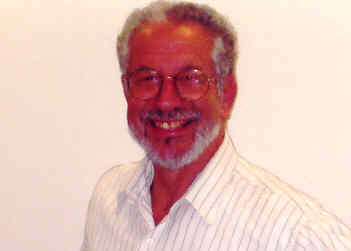
Showing posts with label Yossi Klein Halevi. Show all posts

Wednesday, November 24, 2021

To Yossi Klein Halevi on Canceling

Yossi published over at TOI this

To the students who walked out on Palestinian-Israeli dialogue

commented:

To: "You can’t cancel the Palestinian people, you can’t cancel the Israeli people. Both the Jews and the Palestinians are indigenous to the same little tortured piece of land."

But you can cancel the supremacy of a presumed right of an Arab collective to claim they have a better right to this country they call "Palestine" (and until the 1920s, they called it "Southern Syria") than Jews possess. And you can justify this line in the preamble of the League of Nations decision to grant Jews a national home: "recognition has thereby been given to the historical connection of the Jewish people with Palestine and to the grounds for reconstituting their national home in that country" as well as the total ignoring therein of Arabs and any special rights as Arabs per se other than simply being residents. You can cancel their strategy of terror, their refusal to compromise and their rejection of negotiations. And after so many cancellations and many more, one can come to a certain conclusion.

That's it.

Tuesday, June 23, 2020

Yet Another Not-Published Letter

After reading Yossi Klein Halevi's op-ed in the Wall Street Journal, "Annexation Would Be a Mistake—and a Tragedy"I sent this 'Letter-to-the-Editor' in.

I cannot seem to find it published.

Yossi Klein Halevi, writing in his "Annexation Would Be a Mistake—and a Tragedy" (June 15), posits that "With every Palestinian rejection, the map of a potential Palestine has gotten smaller. Time is not on their side."  He adds: "Mr. Trump, they are effectively saying, is a useful idiot whose plan will serve settler interests now, and then fail to deliver on a Palestinian state later".

As regards the element of time, ever since 1922 when the Jewish National Home lost all areas of historic Palestine east of the Jordan River, and the 1937 and 1947 Partition Schemes which were to deny Jews more than 60% of the remaining territory west of the river, on through the 1968 Allon Plan, the 1977 Begin Autonomy Plan, the 2000 Camp David II Plan and the 2008 Olmert Plan, among others, how much time would Klein Halevi presume that Israel wait and waste for security and arrangements that will assure as much of a peaceful reality for Israel and its citizens as possible?

Moreover, if anyone will fail to deliver on a Palestinian state, it will be the Arabs-called-Palestinians who will not fulfill the very logical, rational and moral conditions for doing so that the Peace-to-Prosperity Plan sets out. As President Trump detailed in his January 28 remarks, "we are asking the Palestinians to meet the challenges of peaceful co-existence. This includes adopting basic laws enshrining human rights; protecting against financial and political corruption; stopping the malign activities of Hamas, Islamic Jihad, and other enemies of peace; ending the incitement of hatred against Israel — so important; and permanently halting the financial compensation to terrorists." 

Trump is certainly being useful here, but is far from being an idiot. I will avoid judging Klein Halevy on this matter.

^

Thursday, October 01, 2009

Oh, So Old Ideas Are Good Ones

The Goldstone report may well mark the end of Israel's limited wars against terrorist groups. Israel cannot afford to continue to be drawn into mini-wars against terrorists hiding behind their own civilians to attack Israeli civilians, given that each such conflict inexorably draws the Jewish state one step closer toward pariah status. Limited victories on the battlefield are being turned into major defeats in the arena of world opinion.

That untenable situation may well leave Israel no choice but to return to the post-1967 policy of preventing altogether the presence of terror enclaves on its borders. Better, Israelis will argue, to deal decisively with the terror threat and brace for temporary international outrage than subject our legitimacy to constant attrition, even as the terrorist threat remains intact.


Yossi Klein Halevi
On Second Thought...
Issue No. 15 October 1, 2009
Adelson Institute

Tuesday, July 28, 2009

Quotable Words

By referring only to the Holocaust, and ignoring the historical Jewish attachment to the land of Israel, the president has inadvertently reinforced Muslim misconceptions regarding Jewish indigenousness. The Holocaust helps explain why Israel fights, not why Israel exists. It doesn't explain why thousands of Ethiopian Jews walked across jungle and desert to reach Zion; nor for that matter why some Jews leave New York and Paris to raise families in a Middle Eastern war zone.


Yossi Klein Halevi

Tuesday, February 10, 2009

And Returning to the Dugout From Far-Left Field...

My good friend and debate partner (sometimes even on the same side of an opinion), Yossi Klein Halevi, had an article published in yesterday's International Herald Tribune and I've selected this portion to be highlighted because some commentators at my blog just can't grasp the enormity of what this position means:


Terror enclaves aligned with Iran - Hezbollah in the north, Hamas in the south - have formed on our borders. For the first time since the 1948 war, the Israeli home front has become the actual front.

Meanwhile, an Iranian regime whose threats to destroy Israel have become so routine that they are scarcely reported anymore may be about to cross the nuclear threshold. And the notion that Israel's very existence is a moral affront is spreading, not only in Muslim countries but in the West.

I moved to Israel in 1982...For the first time, many Israelis were questioning the justness of their nation at war. The apocalyptic images of May 1967 no longer seemed adequate to explain the moral and political complexities of the conflict.

That self-doubt intensified during the first intifada of the late 1980s. I...became convinced we needed to make almost any concession to end this pathological conflict. Concluding that Israel was partly culpable came as a kind of relief: If we shared blame for the conflict, that meant we could help solve it.

I joined the growing number of Israelis reaching out to the other side...I discovered that even as many Israelis were trying to understand the Palestinian narrative, Palestinian society was teaching its children that the Jewish narrative was a lie.

There was no ancient Jewish presence in the land of Israel, no Temple on the Temple Mount, no Holocaust. One leading Palestinian moderate told me that the Jews weren't a people, only a religion, and that after the return of Palestinian refugees to Israel, the Jews would resume their status as a religious minority.

He was hardly alone: The notion that the Jews aren't a people and have no right to a state is endemic throughout Palestinian society, in fact throughout the Arab world.

The Israeli left won the debate over the need to end the occupation, but lost the debate over the viability of peace.


The fear of losing our ability to defend ourselves explains, in part, the motivation with which Israeli soldiers fought during the recent war in Gaza. It explains too why so many young Israelis, who came of age during the suicide bombings and missile attacks, will be voting for right-wing parties in Tuesday's Israeli election.

Meanwhile, we move from one unresolved conflict to the next, finding ourselves increasingly isolated and condemned. Yet we know we have no choice but to fight this war we tried to avert. We know too that, this time, there will be no easy victory, no Six-Day War to dispel the demons of May 1967.

Sunday, January 04, 2009

Ah, But He Was So Much Smarter Then...

From Yossi Klein-Halevi's Washington Post piece on his son going to war and Yossi's political thinking:

A majority of Israelis emerged from the first intifada convinced that we need to do everything possible to end the occupation and ensure that our children don't serve as enforcers of Gaza's despair. That was why I initially supported the 1993 Oslo peace process that took a terrible gamble on Yasser Arafat's supposed transformation from terrorist to peacemaker. And even after it became clear that Arafat and other Palestinian leaders never intended to accept Israel's legitimacy, I supported the unilateral withdrawal from Gaza in 2005, simply to extricate us from that region, knowing that we would not receive peace in return.

And now my son is fighting in Gaza. The conflict he and his friends confront is far worse than my generation's experience in Gaza. In our time, we were confronted with mere rocks and Molotov cocktails; my son faces Iranian-supplied anti-tank weapons -- one more price we will pay, along with the missile attacks on our towns, for the Gaza withdrawal, just as the Israeli right had warned.

Still, I don't regret that withdrawal. If Israelis are united today about our right to defend ourselves against Gaza's genocidally minded regime, it is at least partly because we are fighting from our international border. My son and his friends have one crucial advantage over my generation's experience in Gaza: They know, as we did not, that Israel was ready to make the ultimate sacrifice for peace, uprooting thousands of its citizens from their homes and endorsing a Palestinian state. My son confronts Gaza knowing that its misery is now imposed by its leaders. He knows that his country was even prepared to share its most cherished national asset, Jerusalem, with its worst enemy, Arafat, for the sake of preventing this war. That empowers him with the moral self-confidence he will need to get through the coming days. The face of my Gaza enemy was a teenager throwing rocks; the face of Gavriel's Gaza enemy is a suicide bomber.


My question is: what of those, who, like me, didn't need all this experience of Oslo, and the Second Intifada and all the rest, including that expulsion scheme? Are we better morally to face the enemy? Are we better at understanding what the real problem is between the Arabs and us? Are our solutions more rational and more just?

Or are we incidental to the story? Are our experiences fairly negligible?

In justifying his current relative 'hawkish' position, was his relative 'dovish' position wrong or just misplaced at the time?

Ah, but was he so much smarter then?
(with apologies to Bob Dylan*)

===================

...In a soldier's stance, I aimed my hand
At the mongrel dogs who teach
Fearing not that I'd become my enemy
In the instant that I preach
My existence led by confusion boats
Mutiny from stern to bow
Ah, but I was so much older then
I'm younger than that now.

Yes, my guard stood hard when abstract threats
Too noble to neglect
Deceived me into thinking
I had something to protect
Good and bad, I define these terms
Quite clear, no doubt, somehow
Ah, but I was so much older then
I'm younger than that now.