Showing posts with label Voice of America. Show all posts

Friday, March 07, 2008

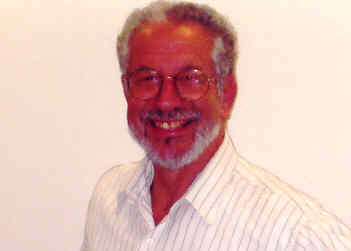
My Interview on VOA

Yisrael Medad, a spokesman for the West Bank settlers, says the Amona settlers should be allowed to stay, as should all Jews who decide they want to live in the West Bank.


"There is an argument about a dozen [outposts] and that is for the courts to decide,” he said. “But the principle is that there should not be any limit to having Jews live anywhere in the land of Israel, just as Arabs can live throughout the state of Israel anywhere they want to. The impediment to the peace process is the Arab intransigence to see Jews living anywhere in the state of Israel."


The entire broadcast text (the video should be here):-

During his recent visit to Israel and the Palestinian territories in January, President Bush called on Israel to honor its commitment to remove unauthorized settlements and outposts from the West Bank. But with more than 120 settlements and illegal outposts in the West Bank, dismantling any of them will not be easy. VOA's Jim Teeple traveled to the West Bank and has this report.

This is what happened the last time Israeli forces tried to evacuate an outpost in the West Bank.

This is Amona, outpost Israeli forces tried to dismantle two years ago. This footage shows the kind of resistance Israeli security forces might face if they return, or try and dismantle other outposts.

This is all that is left of the nine houses destroyed that day.

Ydit Levenger lost her house in the confrontation. Levenger called Amona home for nearly a decade. Now she lives in this nearby trailer, as do the other settlers who live in Amona. If they are forced to leave, they will probably move down to Ofra - a major West Bank settlement. She says, "For me it is not 10 years old, it is 4,000 years old. Abraham was here and Jacob dreamed his dream here. The prophets lived nearby here and I tell my children their stories."

Under a court order, no new settlers can move to Amona. But the court has yet to decide if Israeli troops will return to dismantle these trailers and force the settlers to leave.

Yisrael Medad, a spokesman for the West Bank settlers, says the Amona settlers should be allowed to stay, as should all Jews who decide they want to live in the West Bank.

"There is an argument about a dozen [outposts] and that is for the courts to decide,” he said. “But the principle is that there should not be any limit to having Jews live anywhere in the land of Israel, just as Arabs can live throughout the state of Israel anywhere they want to. The impediment to the peace process is the Arab intransigence to see Jews living anywhere in the state of Israel."


Back on the West Bank here in Silwad, people feel differently. Silwad is the Palestinian town closest to Amona and Ofra.

Palestinians used to walk down this road to their fields in what is now Ofra and Amona. Now the road is blocked and the only traffic are Israeli troops who Silwad residents say stage nightly raids in their town looking for militants and their supporters.

Mohammed Issa lives in Silwad but he says much of his family land now lies beyond the Israeli roadblock in Ofra.

Issa and his mother say they have not been able to visit their land since the 1970s when it was seized by Israel. He says these documents from the 1930s prove his ownership but Israeli authorities reject their validity because they are in his father's name, "We have taken them to court and we have the documents to prove this. They do not recognize my ownership of the land and tell me to bring my father who is dead."

Issam Aruru, who directs a Jerusalem legal aid and human rights center, tries to help people like Mohammed Issa fight their cases with the Israeli authorities. He says a Palestinian state will not be possible until settlements and outposts like Ofra and Amona are dismantled.


Issam Aruru
"When we talk about a viable Palestinian state these outposts affect movement in the West Bank,” Aruru said. “They affect the economic living of Palestinians. Many of them were established on agricultural land taken from Palestinians, so if we want a viable prosperous state we need to keep these resources."

These bleak hills are now the frontline in the Israeli-Palestinian conflict. Whether or not Israel's government can honor its pledge to dismantle outposts like Amona could determine whether or not Israelis and Palestinians can reach a peace agreement by the end of this year as their leaders

Friday, November 30, 2007

And Now, the Video

My VOA "10 second sound & sight byte" here.

About one minute into the clip.

Thursday, November 29, 2007

VOA Interview

Mixed Reactions Voiced by Israelis and Palestinians to Annapolis Peace Conference
By Jim Teeple


Street musicians serenade the strollers on Jerusalem's Ben Yehuda Street. The pedestrian promenade is where Israelis come to stroll, shop and relax. Some, like Tamar Zeldon, said they are thinking about the Annapolis peace conference, where Israeli Prime Minister Ehud Olmert and Palestinian President Mahmoud Abbas pledged to resume peace negotiations aimed at the creation of a Palestinian state.

"I always hope something will change, because we really need change. Yes, I think if they take it seriously it will make a real difference," he said.

While some Israelis like Tamar Zeldon are optimistic, others like Jerusalem lawyer Daniel Mauden are less so. Mauden says he hopes for the best, but says he is not confident that leaders on either side can do the job.

"I do not think the Palestinians are to blame, and I do not think the Israelis are to blame," he said. "I think that in the past few years they do not have the leadership they deserve, and we do not have the leadership that we deserve. We have two leaders that really cannot do a lot."

About 450,000 Israelis live in West Bank settlements and in East Jerusalem, land Israel captured in the 1967 Arab-Israeli War. West Bank settlers and their political supporters are already denouncing the conference. Settler spokesman, Yisrael Medad, tells VOA that if Prime Minister Olmert tries to dismantle West Bank outposts, as he has pledged to do, he will not survive politically.

"I presume his coalition will collapse. He is one of the weakest prime ministers Israel has had in a long time - politically, in a judicial sense in terms [of] ongoing criminal investigations, and his health issues. I do not think that the year will bring us the peace that he wants. The peace he wants I do not want," said Medad.


Just a few kilometers from downtown Jerusalem, in the West Bank city of Ramallah, there is also widespread skepticism among Palestinians about what might develop from the Annapolis peace conference. Lawyer Mahmoud Qua'reem's reaction is typical of many in Ramallah.

"We have long experience with Israelis. They do not want to make peace. The Israelis are not qualified to make peace because they want to take all of Palestine," he said.

Polls show that about 70 percent of Palestinians supported the Annapolis peace conference, but most also believe that few tangible results will come from the effort. Palestinian political analyst Hani al-Masri says he is not hopeful, but at least now people are once again aware of the plight of Palestinians.

"Now the Palestinian issue is at the head of the agenda of the whole world. Now they do not blame the Palestinians like before. That is good, but not enough," said al-Masri.

There are Palestinians in Ramallah who have hope that benefits may result from the Annapolis conference. Taxi driver Mahmoud says it is time for Israelis and Palestinians to end their decades-long conflict.

"I hope that something changes in our lives here," he said. "Stop the bloody killing, stop the soldiers and the problems we have here in the West Bank. We, each one in our beliefs, we believe in peace for all. We can live together."

Palestinians in Ramallah and Israelis who live a few kilometers away have little in common. But, many in both communities say they hope the Annapolis peace conference will lead to an easing of tensions and a change for the better.

Thursday, June 07, 2007

My VOA Interview

On the morning of June 5, Israel launched air strikes against Egyptian, Syrian, Jordanian and Iraqi airfields. In the days that followed, Israeli ground forces swept into the Sinai, up the Golan Heights and eastward to the River Jordan, fighting their way into the heart of Jerusalem's Old City and to the Western Wall. In six days, Israeli forces defeated three Arab armies and reunified Jerusalem. Yisrael Medad says the 1967 War resolved issues left over from Israel's War of Independence in 1948.

"You could say a lot of people felt that the '67 War was the last stage of the '48 War that had never been finished," he explains. "Here, we felt what should have happened in '48 - a very strong military and uncontested victory - made clear that Israel is here to stay and we are not temporary and foreign. That was a sense of emotion that ran through many people."


Source.

And there's a MP3 audio, too.