Showing posts with label AFSI. Show all posts

Thursday, January 20, 2011

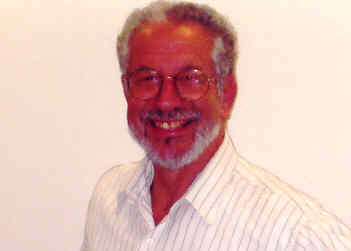
Herb Zweibon z"l

I have been informed that Herb Zweibon, head of Americans for a Safe Israel, passed away last night in New York. The funeral will be held tomorrow in upstate NY.


Sincere and heartfelt condolences to his wife, Sheila and his family.

Herb was a stalwart of a vibrant, forceful expression of Israel and Zionism, a champion of the Land of Israel, the Jewish communities throughout Judea, Samaria and Gaza and a follower of Shmuel Katz. He promoted the idea of a full realization of the Jewish national identity in deed, in thought and in achievement.

I was prvileged to know him for over three decades and to work with him and for him.

He will be missed so very much.


- - - - -

Herb in Hevron with Noam Arnon, the community's spokesperson and Bill Mehlman, head AFSI of Israel to Herb's immediate right:


I received this from Cheryl Jacobs Lewin, Chicago co-chair AFSI: -

We all mourn the sudden passing of our beloved President, Herb Zweibon z’’l. His passing is an unsurmountable loss to all of us. May he rest in peace.  His funeral is Friday morning, Jan. 21, in Dobbs Ferry, NY. Further details are pending.

Karma Feinstein Cohen with Herb Zweibon z"l from this past October:


The following eulogy was written by his dear friend, Ruth King:-

Herbert Zweibon, the President and founder of Americans for a Safe Israel (AFSI) died last night after a brief illness.

Herb was a perfect person where it counts the most. His only agenda in life was to do the right thing always.

He was a proud Zionist who was never dazzled by momentary hallucinations of peace and recognition from Israel's enemies. He remained unbowed in the face of trendy feel-good pretense and was committed to the fact that only a safe, secure and impregnable Israel within its legitimate and historic borders was the sole guarantor for the safety of Jews in the world.

He was also eternally optimistic. Only on Tuesday he spoke of the need for better leaders in Israel and the hope that dialysis would offer him more life.

He was playful and cheerful. My granddaughters Cece and Lila adored him, sat on his lap and giggled when he told them of the big chocolate house he was building with a room for each of them.

He adored his wife Sheila and his sons and daughters-in-law and grandchildren. Only a few weeks ago he spent a holiday with the entire family and extended family in Jamaica. He was exultant in describing it even as his health deteriorated. His only complaint was that he could not play tennis.

His memory will always be a blessing and an inspiration for me. My husband always said about Herb:

"They just don't make them like him anymore."

They don't.

- - - - -


Herb called upon me to assist in the collection of the articles of Shmuel (Moekie) Katz so as to establish a site to promote his ideasHere is an extensive interview Ruthie Blum-Leibowitz conducted with him.

And here is an interview broadcast five years ago:


P.S. David Wilder's appreciation.

__________

The NYT obituary:

ZWEIBON--Herbert, 84, beloved founder and Chairman of Americans for a Safe Israel/AFSI, is mourned by all who knew and loved him. Herb lived his life as a proud Zionist who remained constant in his conviction that only a safe, secure, and impregnable Israel, within its legitimate and historic borders, was the sole guarantor of Jews throughout the world. He will be remembered for his kindness, wisdom, dedication, vision, and concern for Israel and the Jewish people. He headed Z&R Management Corp. in NYC. He leaves behind a loving family - his wife, Sheila, of 58 years, his sons, Donald and wife Robin, Mark, and Kenneth and wife Jessica, and grandchildren Zachary, Jesse, Danielle, Michelle, and Shou, and his sister and her husband, Lillian and Carl Rudnick. The funeral will take place on Friday, 11 AM, January 21, at the Greenburgh Hebrew Center, 515 Broadway, Dobbs Ferry, NY. Shiva will be observed at the Zweibon home. Memorial donations may be made to AFSI.


The NYSun eulogy.

Helen Freedman's obit.

And this from Philly AFSI.

^

Thursday, November 01, 2007

Herb Zweibon Talks

I have been acquainted and worked with Herb Zweibon for three decades and more. Here's his JPost interview with Ruthie Blum, also a long-time friend.

One on One: Purely Right

'The fact is that everyone has a responsibility to prevent someone else from committing suicide," says Herb Zweibon, chairman of Americans for a Safe Israel (AFSI), a conservative, New York City-based organization promoting "peace through strength," rather than "land for peace."

This, according to Zweibon, is what the Bush administration should be doing - not allowing Israel to put itself at existential risk by withdrawing from territory that is not only crucial militarily, but central to its "covenant." Pretty heavy stuff, coming from someone who hails from the United States, and who is neither Orthodox nor claims to be a "Jew first."

For, while Zweibon, who resides two months of every year in Herzliya, made his living in the real estate business, his life has been devoted to a different sort of passion for property - that of the right of the Jewish people to the Holy Land. And, if his uncompromising posture vis-a-vis political deal-making is anything to go by, he's probably not someone you'd want to come up against when buying a house. So hard a bargainer is he, in fact, that he has kept the running of his non-profit group - established in the early 1970s - as close to his chest as his heart. Or, more to the point, his mouth.

"Expanding would require a lot of money," explains Zweibon, whose demeanor is as affable as his doomsaying is direct. "Then we'd have to be beholden to the people who gave it to us, and I don't want to be told what to say."

Indeed, anyone familiar with AFSI's monthly publication, appropriately named Outpost, can attest to its pull-no-punches polemics. Edited by founder Rael Jean Isaac, the 12-page newsletter - in which Zweibon and associate Ruth King, among other hawkish contributors, such as former Knesset member Elyakim Ha'etzni, have regular columns - Outpost is distributed free to Congress, pundits and other opinion-makers. (It is now in its 37th year, with a circulation of around 6,000, and currently being reproduced in Canada.)

Like Zweibon and the like-minded evangelical Christians with whom AFSI has cultivated close relations, his organization's rhetorical vehicle is anything but apologetic when it comes to its relentless support of "the state and the land of Israel."

This undying loyalty, as Zweibon hastens to point out, is "not a question of supporting the government; it's a question of supporting the integrity of the land, because it is essential. And it makes little difference to us whether the government of the United States or the government of Israel believe that they can somehow compromise with the Muslim community. This just will not happen."

Are you a Jew first, or an American first?
I'm an American Jew; I find it very difficult to separate the two. I have loyalty to the United States - I served in the army in World War II - and I have been heavily involved in Jewish affairs almost all my life, at least for the last 40 years of it.

Is that why AFSI doesn't have the word "Jewish" in its title?
That's correct. Though most of our membership is Jewish, we do have non-Jews. As a matter of fact, AFSI reached out to Christian groups as early as 1984. We even invited the Reverend Jerry Falwell to speak at our conference. Whereupon, many of our members asked me, "Are you off the rail?" [he smiles] "Have you lost your marbles?"

Why did they respond that way?
They thought that the Christians either weren't friendly, or that their motivations were not appropriate to a group that was mainly Jewish and concerned about Israel. But we knew that was not so.

You mean motivations like conversion?
Yes, conversion, and the bringing on of the messiah. When Falwell finished his presentation, and we opened the floor to questions, somebody asked him: "Isn't it true that you want all of us to make aliya so that the messiah can come?"

His answer was: "My dear friend, if you think the good lord is going to wait for you [Jews] to go to Israel in order to decide when [the messiah is coming], you have another thing coming."

Anyway, this relationship between us has gone on for a long time, and I believe that it's borne fruit. We have made many, many friends in that community, and they have been very helpful politically in regard to Israel's needs.

On the one hand, both AFSI and the evangelical Christians maintain that Israel's well-being is in the political interest of the United States. On the other, you both talk about the Jews' biblical right to the Holy Land. Which is it?
I always say to people who are interested in AFSI that it makes little difference how one comes to support us or the State of Israel. Is it scripture? Fine. Is it connected to Israel's strategic requirements? Good. Is it a matter of international law and the rights of the Jewish people to this land? Welcome. Any and all of these are appropriate for involvement in supporting the state and integrity of the land of Israel, which is primary to AFSI.

Doesn't your ideological purism - which seems like the opposite of realpolitik - cause you political problems? After all, by believing in the integrity of the land of Israel because of the Jews' right to all of it, you necessarily oppose any deal that involves relinquishing any of the land.
I'm not so sure [it's the opposite of realpolitik]. There are many people in Israel who, as a result of the political situation, agree that the integrity of the land is essential. When leaders of the country talk about Judea and Samaria as being dispensable, you have a serious problem - which goes back to two matters. One is security. We know that the area of Judea and Samaria - what some call the West Bank - is hill country, overlooking the Coastal Plain. There are points along the Coastal Plain that are as narrow as 9-12 miles - a very dangerous situation, when you have a potential enemy up high, and you're down low. Following Israel's recovering of the land in 1967, the American Joint Chiefs of Staff did a report in which they laid out certain parameters, among them retention of the mountain ridge running north to south in Judea and Samaria. There were other things that they suggested be retained, as well. Sharm e-Sheikh, for example. The Golan, certainly. So, military experts saw the situation in this part of the world, and after reflecting on it, this was their recommendation. Such things don't change, particularly in the Middle East, where the enemy is very persistent and determined.

That is one aspect. The other is the recognition by the Western world that the Jews had a claim to the land of Israel, based on scripture. And what are the places on which they base that recognition? The hills of Judea and Samaria. Those are the places that are part of the covenant, if you will.

We are aware of Christian elements who espouse replacement theology. But those who support us and understand the rights and needs of the Jewish people in the land of Israel hold fast. I'm thinking right now of a group called CUFI - Christians United for Israel - established by Pastor John Hagee. I must admit, I was somewhat nervous about Hagee's statements early on, because he said [his group] would support the government of Israel no matter what it did. I sent him a letter asking him how he can reconcile this with scripture, and told him that making nice with the government of Israel - or playing kissy with AIPAC - doesn't help us. I must say, the statements that emerged in the last CUFI convention in Houston were first class, though I don't take any credit for influencing Hagee.

If the head of a left-wing organization had written such a letter about not supporting the government of Israel at all costs, would you not view it as disloyal? I remember right-wingers calling people who engaged in such practices traitors.
As I said before, it's not a question of supporting the government; it's a question of supporting the integrity of the land, because it is essential. And it makes little difference to us whether the government of the United States or the government of Israel believe that they can somehow compromise with the Muslim community. This just will not happen.

Some would argue that the reason former prime minister Ariel Sharon was able to carry out disengagement was that a majority of the population was persuaded that demography was not in Israel's favor. Even a number of conservatives said - albeit sadly - that the settlement movement and mass aliya had both failed. In other words, if Jews like yourself had come here in droves and settled the land whose integrity is of such concern to you, Israel wouldn't be in the situation it is today.
Well, I'm not sure this analysis is right, but it has no bearing on the problem of security and Jewish rights. The fact that the electorate in Israel is confused doesn't surprise me at all. The results of elections in this country are beyond understanding, as is the fact that Kadima came away with 29 seats when it's not really a party, but rather a collection of opportunists. Now the people are apparently prepared for another kind of change - one that in my book is not so dramatic.

You mean Bibi Netanyahu?
I mean Bibi Netanyahu.

Why is that not such a dramatic change?
Well [he sighs], Bibi, whom I know and admire, has a problem that most Israeli politicians have, particularly those who spent a lot of time in the United States. I call it Washingtonitis. They are so impressed with the power of the United States - with the strength and breadth of the nation - that they believe Israel is totally dependent.

Isn't it?
No, I don't think it is.

Not even economically?
I wonder.

Not militarily?
Militarily, the resupply in a conflict, perhaps. But then, who did the resupplying? When I'm asked who the best president whoever dealt with the needs of the State of Israel was, I say Richard Nixon. At a very crucial moment, it was Nixon who overrode the advice of people like Henry Kissinger. All the others - going all the way back to the Rogers plan and since then - say, "Give up the land, give up the land."

So you have to ask yourself: Do they really understand the nature of global conflict that Norman Podhoretz has named World War IV?

You fought in World War II. Did the American government understand what dire danger the Jews were in then?
I don't think they cared. The proof is that they did relatively nothing to save the Jews. So, the reality is that we must learn to depend on ourselves, and be strong and stay strong for a long period. Otherwise, all of Israel's great accomplishments could disappear in a flash. Even the US, had it not maintained its strength, would have lost to the Soviet Union. Today, the influence of radical Islam - in Europe especially, but in the US as well - threatens to undermine that strength. Democracy is at risk when you provide the ability for a group to take control of a political situation. Can it happen in the US? I don't think so. But, I don't know whether the president truly understands the nature of the problem.

President George Bush doesn't understand the nature of the problem?
Yes, well, the Bush Doctrine is a bit foolish. Democracy in the Middle East? Where has it ever existed?

Natan Sharansky argues that democracies emerged where it had been thought impossible.
In Germany and Japan?

Yes, and the Soviet Union.
There was a prelude to the forming of democracy in Germany and Japan, and I'm not sure that in the Soviet Union - or what's left of the Soviet Union - is exactly going forward with democracy. Germany and Japan were defeated. We occupied and stayed there for decades.

Wasn't that what Bush had in mind for Iraq?
I don't think so, but even if it was, I don't think that democracy - which is antithetical to [radical] Islam - can survive in Iraq. When the president calls Islam a "religion of peace," come on, I mean, doesn't he understand? And then when he further says that there can be two states in this little piece of land called Israel?

In fairness to Bush, Sharon and his adviser, Dov Weisglass - and subsequently Prime Minister Ehud Olmert and Foreign Minister Tzipi Livni - all assured him that a two-state solution was a viable option. Is Bush supposed to be more Catholic than the pope?
Yes, definitely. When he was governor of Texas, Bush was taken by the very same Sharon on a [helicopter] tour over Judea and Samaria, landing in the Golan Heights. He got a full explanation of Israel's military requirements, and understood them full well. For anybody today to say that you can put a potentially dangerous entity on the hills of Judea and Samaria - don't tell me that it is because of Sharon, Weisglass or anybody else. The fact is that everyone has a responsibility to prevent someone else from committing suicide. If you're standing on the precipice, it is my duty to pull you back.

Aren't your expectations too high? After all, the president, however well-informed or well-intentioned, is a politician who has to maneuver his own political system.
I don't believe for a minute that there is any political advantage to a lame duck president creating [the illusion of] peace in the Middle East. Nothing could be further from the truth.

Maybe it's a smoke screen to divert attention from his intention to bomb Iran.
What does one have to do with the other? If he believes that Israel has to pay the price for bringing other Arab nations to the American side when and if they decide to act in Iran, well, which of these countries is prepared to help? Saudi Arabia, armed to the teeth, never fired a shot at anybody. The Syrians? I don't think so. Who? Who will it be? There is nobody there. You can provide all the goodies you like to the Arab countries; they will not join us in an attack on Iran, even if it is in their interest.

Why does it matter whether they join such an attack?
It matters because we seem to be offering up Israel's well-being and safety in the interest of bringing together Muslim nations in the conflict with Iran.

Are you saying that the United States doesn't really view Israel as crucial to its interests in the Middle East?
I find it difficult to believe that putting a potential enemy in the high ground of the State of Israel is in any way indicative of a country concerned about Israel's well-being.

But the Palestinians are located in the "high ground" of Judea and Samaria anyway; and the weapons and terrorist cells are already in Gaza. Perhaps the attempt at coming to an arrangement is a way of minimizing the danger that already exists.
You have to make a distinction between Gaza and Judea and Samaria, because at this moment, the IDF is still in Judea and Samaria. And since the disengagement from Gaza, missiles have been flying regularly. Every terror group in the world now exists there, which wasn't the case before disengagement. So, all the ideas of Sharon and everybody else in favor of "separation" from the Arabs - well, we haven't separated from anybody. On the contrary, we've given them a solid base pointed at the heart of Israel, and they are having a grand old time. Meanwhile, there is the two-headed snake behind it all - Saudi Arabia and Wahhabism on the one hand, and Iran's nuclear ambitions on the other - that has to be defeated.

If this "two-headed snake" is at the root of the global conflict, what difference do the Palestinians really make? If radical Islam is defeated, doesn't the rest follow? Why are we so focused on the Palestinian-Israeli conflict? Aren't the Palestinians merely pawns in the greater clash?
Yes, absolutely. They are part of the worldwide conflict. And as part of it, they mean us no good.

Not just Hamas.
No, not just Hamas. All the Arab residents of the land of Israel.

What about Jerusalem? Do you believe it's about to be divided?
[He laughs uncomfortably, and shifts in his seat.] Well, I don't believe it's going to happen, but when you put something on the table, it's in play. The danger is that Jerusalem is now in play. When Tzipi [Livni] says we've got to have a Palestinian state, where is she coming from?

Condi-land, one supposes.
Now, [US Secretary of State] Condoleezza Rice is another story, because so far she has not been successful at anything. Condi was supposed to be an expert in Soviet relations. She can supposedly speak Russian. Nu? So, what's happened? We're in worse shape today vis-a-vis [Russian President Vladimir] Putin than before. She hasn't been effective in almost any of the things she's tried to do, and it reflects on what she's trying to do here. And when you're dealing with the weakest element that ever existed in the State of Israel, you can put the pressure on.

Look at it for a moment. I believe that a two-state solution is an existential threat. And who are the people presenting this plan? A prime minister with the lowest rating of any prime minister in the history of the state; Abu Mazen [Palestinian Authority Chairman Mahmoud Abbas], who left Gaza, barely able to get his trousers on; and a president of the United States who is a lame duck under pressure.

These three people - who really have no clout - are trying to decide the fate of the Jewish state and the Jewish people. This is a grave situation.

Wednesday, April 25, 2007

My Article in May's OUTPOST

OUTPOST is the magazine of AFSI.

Here's the official site.

SHILOH ON THE HILLS OF EPHRAIM

For me, there is no more potent verse than Joshua 18:3: “How long will you be slack to go in to possess the land, which the Lord, the God of your fathers, has given you?” It reverberates, today, in the hill country of Ephraim, Samaria and Judea, the spine of the Jewish heartland

After a few years of participating in the settlement movement Gush Emunim (including participating in its first settlement attempt at the Sebastia train station and volunteering in its English-language information department), my wife and I arrived in Shiloh on September 1, 1981. Our three daughters arrived the day before so as to be there for the opening of school. Our two-month old son came with us, having no choice in the matter. We were slack no longer.

As I tell the many visitors to my home and community, I am doing what I consider it normal for any Jew to do, just as any Frenchman or Englishman would do: to reside where his forefathers dwelled, his kings ruled, his prophets spoke and his priests served. My windows offer a 3,000 year-old unobstructed Jewish view. Looking east to the hills over the lower Jordan valley, there is not a “demographic problem” to be seen.

Shiloh was Israel’s first capital, where the Holy Tabernacle was set up. (Joshua 18:1) It was at Shiloh that Joshua divided the land into tribal portions and it was to Shiloh Elkanah made his pilgrimages. Hannah prayed here for a son and here her child Samuel grew up. Achiyah the Shiloni prophesied here. Jews lived in the hills of Judea and Samaria as shepherds and tribal chieftains as well as princes and religious leaders. We were conquered and forcibly dispersed and returned. We were again exiled but we returned over hundreds of centuries under the most difficult of political, religious and economic conditions. We insisted that as a people, an ethnic-religious community, we possessed a homeland, a territory that was by definition Jewish land as well as the land of, and for, the Jews. It was the land of Shiloh, of Hebron, Bethel and Jerusalem.

With my wife and children I have been living for more than a quarter of a century in a community whose destruction a former president of the United States, Jimmy Carter, specifically demanded. Prime Minister Begin famously admonished Carter by pointing out the numerous locations in the United States named Shiloh he found in a geographical dictionary, where Jews are not prohibited from living. “How can I not allow Jews to live in the original Shiloh?” he said.

Our population at Shiloh has modestly but steadily increased. The construction of homes has never halted. Schools, the Yeshivah, religious institutions such as synagogues and mikvaot and industrial parks have been built. Agriculture flourishes. The brand-new olive press of Meshek Aviyah is producing some 7% of Israel’s olive oil. You can purchase wine, very good wine, grown in Shiloh’s fields and honey, too.

Shiloh’s facilities include health and dental clinics, an occupational therapy facility and emergency medical vehicles. We have a grocery store and a vegetable vendor, a library, three industrial areas, several clothing stores, a gift shop, and a cemetery. There’s also a pool and an outdoor sports complex including tennis, handball, basketball, and soccer as well as an indoor sports center. Does this sound like a town near you?

When Jews returned to Shiloh 29 years ago, circumstances demanded they assume the identity of an archeological excavation team. Official recognition of the community came only a year later. Archeology remains central to Shiloh. Digs by a Danish group in the 1920s and 30s unearthed Greek, Byzantine and early Islamic artifacts and two basilicas. Another dig from 1981 to 1984 found Late Bronze pottery associated with the period of the Judges. I have seen arrowheads, spear heads, pagan figurate and gold jewelry come out of the soil as well as World War I shell fragments. After all, on the hill-line above the Arab village of Sinjil, the British troops held positions for three months opposite the Turkish-German troops below. Ze’ev Jabotinsky was there, occasionally raiding the enemy defenses.

This last summer the magnificent mosaic floor of a third church was uncovered with many geometric designs as well as illustrations of fauna and flora. An inscription, dated to the late 4th century, was revealed which reads “Blessings to Seilun [Shiloh] and its Inhabitants.” This reminder from 1700 years ago of the sacredness of our land and the theological significance of our presence comes at a very important moment. At Shiloh, we have found and preserved Muslim and Christian sites. And now, because of our presence, Jewish artifacts are also preserved.

While the past is important for the modern-day residents of Shiloh, the future is even more critical. Despite all the calumny, the media bias, our own government’s treatment of Shiloh as a ‘whipping-boy’ to serve its political needs, Shiloh continues to flourish. Although we have lost seven residents to terror (a five-month old infant, Yehuda Shoham, four teenagers and a mother of seven children) and although we are far from, and on the wrong side of the security barrier, young couples, immigrants and others continue to arrive. The outpost communities surrounding Shiloh are also growing. Quite simply, there are still proud Jews in Israel, committed to Zionism.

My living in Shiloh is not a foreign, intrusive act. I am not some transient opportunistic “settler.” I am back where I belong. I am no more an “occupier,” and less a “colonizer” than the Arab in Jaffa or Um El-Fahm. While the term “settlement” is used by the international media as a term of opprobrium, for us “settling” is the most natural thing for a Jew to do: to reside where his forefathers dwelled. Does nobody recall that the Mandate awarded to Great Britain in 1922 by the League of Nations recognized the Jewish right to “close settlement” on the land?

We at Shiloh violate neither international law nor justice. We do not practice ethnic cleansing --although that has been the Arab practice from Tel Chai in 1920 to Kfar Etzion in 1948. We have founded our communities almost exclusively on unused and unpopulated hilltops. Arab terrorists and their supporters justify killing our children and women simply because we live here.

“Disengagement,” “realignment” or any other fanciful euphemism for banning Jews from the historic heartland of their patrimony will not bring peace. Fourteen years after the elaborate show on the White House lawn launching the Oslo Accords, most Israelis recognize the peace process was a terrible mistake. In practice it has led only to rampant murdering of civilians, mostly children, constant incitement to violence and hatred, the destruction of Jewish holy places — the destruction of the Temple Mount antiquities, the razing of Joseph’s Tomb, the torching of the Jericho synagogue. All these reveal the true intentions of the Arab leadership, should it gain full control of the “territories.”

A few months after my family and I moved to Shiloh, I witnessed a scene that no foreign news media has captured but which reflects the problems of land issues here. The government decided that a portion of land adjacent to Shiloh was needed for security purposes. In such cases the military government’s legal procedure required that the mukhtars of nearby Arab villages be notified so that anyone claiming private ownership rights could come forward. On the day and at the appointed hour, several Arabs stepped out, as requested, onto the area. They were then asked to stand on what each claimed as his private plot. Within minutes, a fight broke out between two villagers who insisted that each was the owner of a particularly fertile section. A minute later they were throwing stones at each other. With the claimants lacking any documents, tax receipts or maps to support their claim, the land was declared “state land” and assigned to its new use. All we could do was to stand amazed, experiencing yet another snippet of Middle East reality.

Shiloh of the Bible is rich in spiritual and national memories. Today, we fashion new memories, which we expect to be recalled for generations to come. In 1978, there was but one community here, started when eight families arrived at Shiloh for a “dig.” Today, the view from my hilltop residence takes in Eli, Maalaeh Levona, Shvut Rachel, Givat Achiyah, Givat Harel, Givat Haroeh, Esh Kodesh, Adei-Ad and Keidah with a new start planned for Kol-Tziyon. Over 1,000 families are home, proud of our past, living our present and working to assure our future.